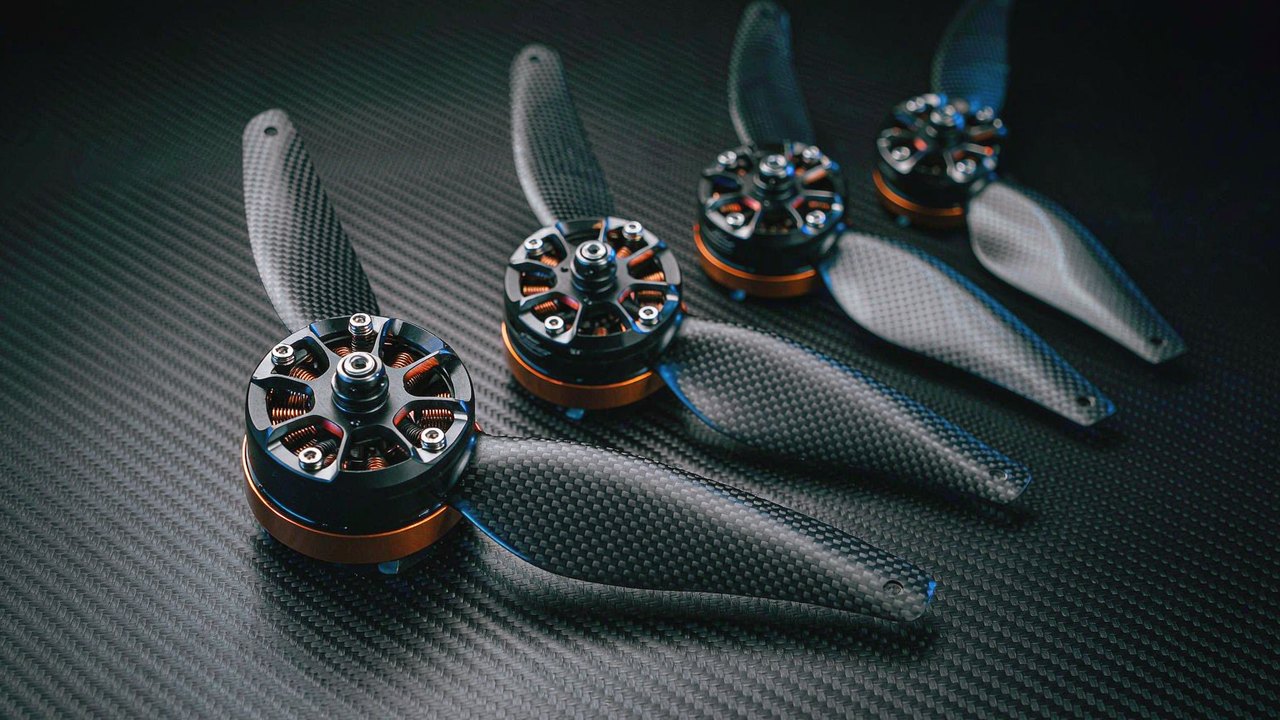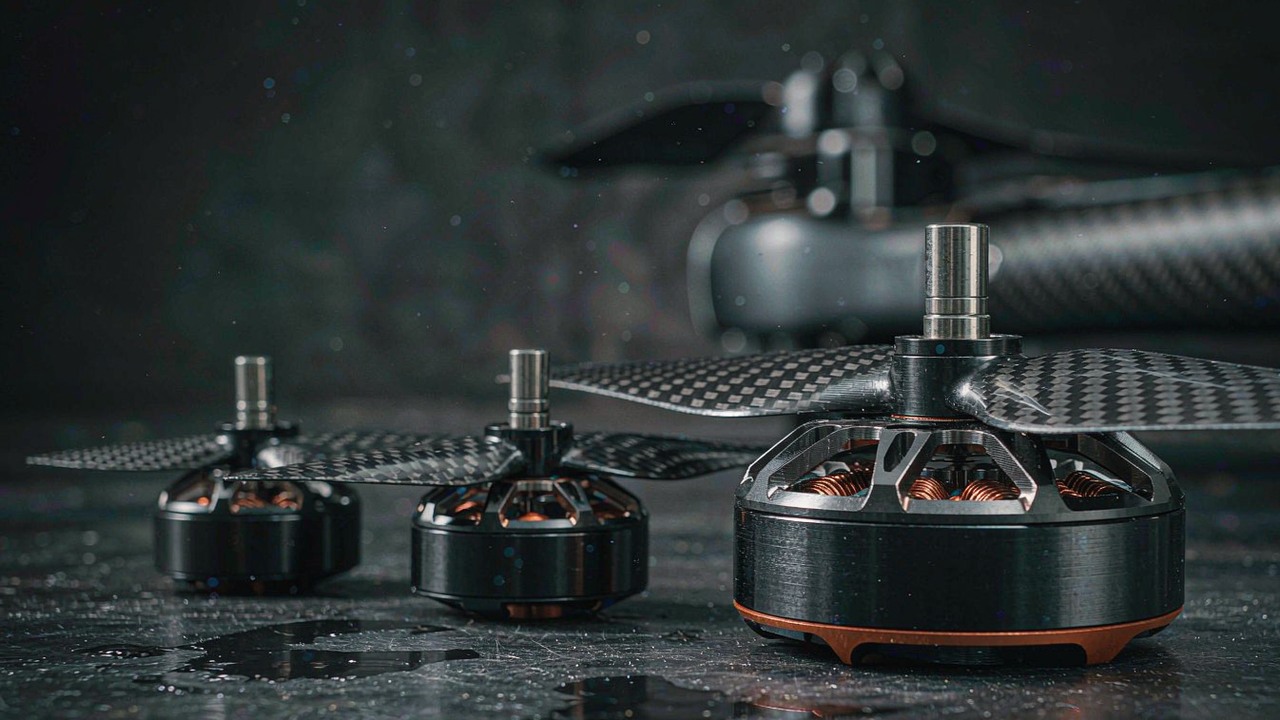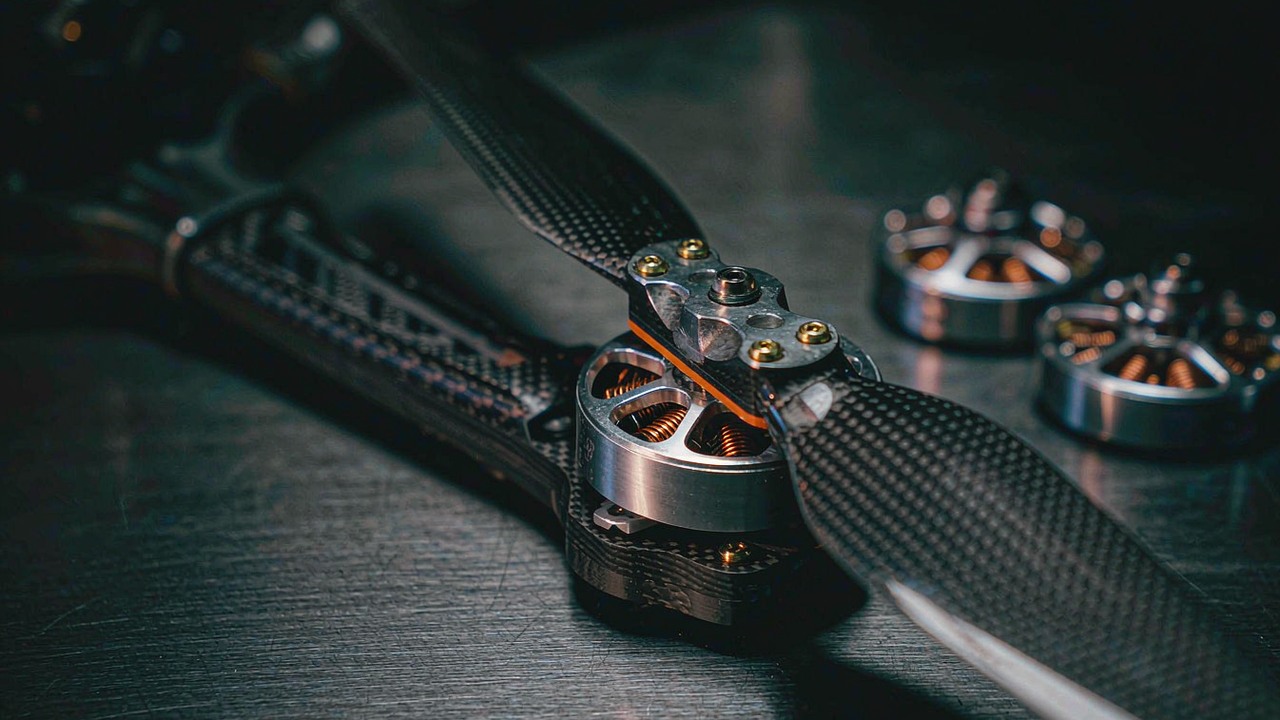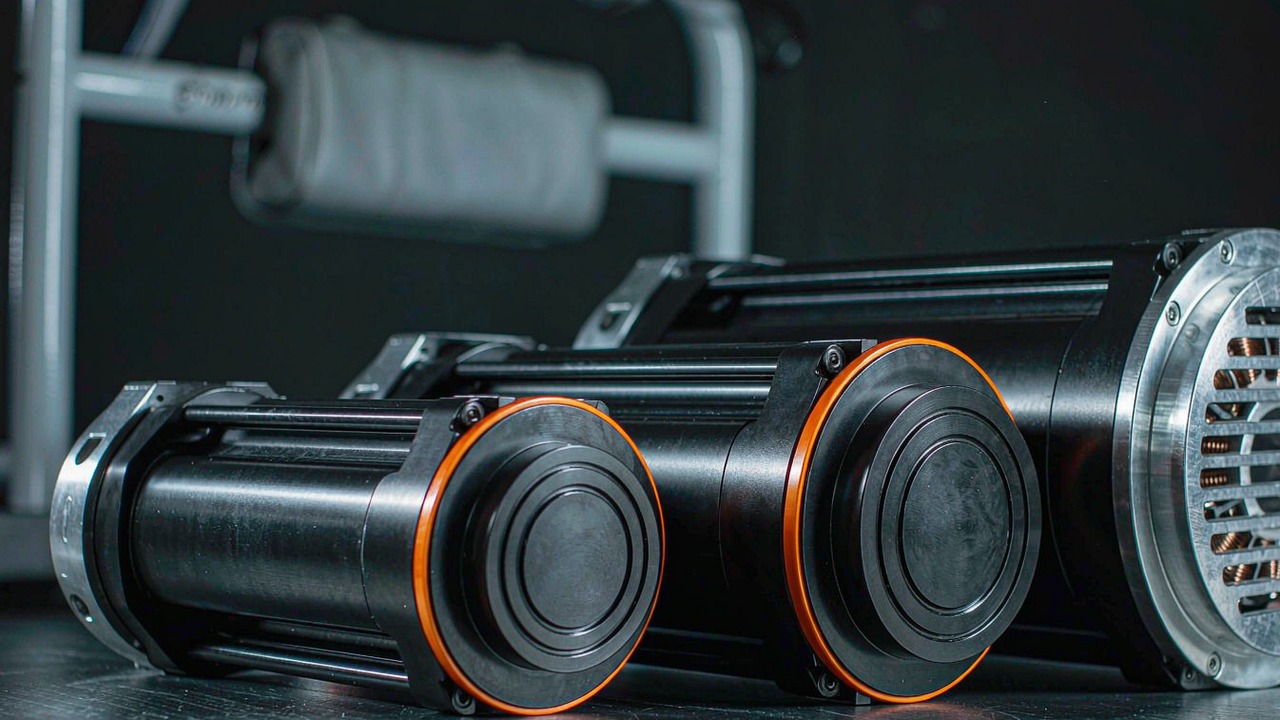
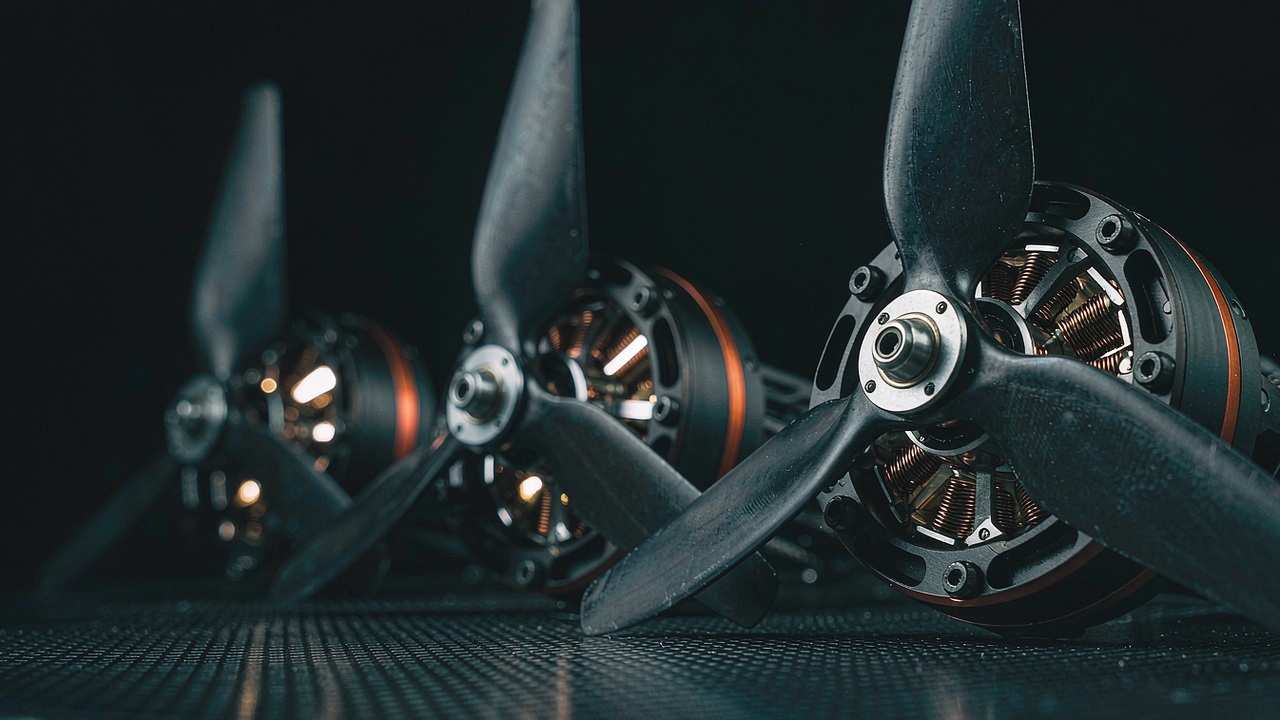
A VTOL airframe asks one set of motors to do two opposite jobs: hold the aircraft up in hover, then get out of the way while the wing carries it. The three T-Motor V series units currently grouped in the VTOL Drone application - V505 KV260, V602 KV180 and V605 KV210 - are all lift-leg motors, and on a large slow propeller they develop between 8741 g and 12761 g of thrust from a motor mass of between 215 g and 340 g. Those two columns are what a lift-leg shortlist is built from, and they are not the columns that settle the cruise leg, which is a different duty served by a different class of motor. Working out which figure belongs to which leg is the whole of VTOL drone motor selection.
Quick Answer
The selection splits in two because the flight splits in two. On the lift leg a motor is asked for maximum thrust at low shaft speed on a large propeller, and it is asked for that output only while the aircraft is climbing, descending or holding altitude. On the cruise leg the same aircraft is asked for a moderate output held for as long as the mission lasts. The two briefs pull a motor in opposite directions, so a shortlist for VTOL drone motors is normally two shortlists, and the lift leg is the one these three records belong to.
For the lift leg, three figures decide the pick and they decide it in order. Thrust on the largest propeller the airframe can carry comes first, because it sets how much of the all-up mass the lift units can hold. Motor mass comes second, because every gram of motor is a gram that the airframe either lifts or trades away from payload, pack or structure. Peak current comes third, because it is the figure the ESC and the pack have to survive during transition and in a gust, and it is not the figure the motor carries for most of the flight.
In the group currently listed here the three records separate on exactly those terms. The V505 KV260 is the lightest at 215 g and develops up to 8741 g of thrust; the V605 KV210 is the heaviest at 340 g and develops up to 12761 g; the V602 KV180 sits between them at 300 g and 9749 g, on the lowest KV in the group - the winding that suits a very large propeller turning slowly and a disk loading that has to stay low. All three are 24N28P units with a 6 mm shaft, and all three are published for a 12S bus.
Two consequences follow for a shortlist of VTOL drone motors. The published 180 second power figure is carried by all three records, so that column can be read across the group; even so, the thrust column is the one that matches the lift duty and the one to sort on first. The second consequence is that the cruise leg of the same aircraft is not addressed by any of these three records at all, and the class that does address it is the subject of the fourth section below.
Why VTOL Is a Two-Regime Problem
A multirotor spends its whole flight in one regime and a fixed-wing model spends its whole flight in another, so each can be specified against a single operating point. A VTOL aircraft does both in one mission, and the two operating points are not close together. The lift phase wants a large propeller turning slowly with a great deal of torque behind it; the cruise phase wants a smaller propeller turning faster for a long time at a modest current. A motor optimised for one of those is, by construction, not optimised for the other.
Two duties, one set of motors
The airframe can resolve the conflict in one of two ways: it can carry two sets of motors, one for lift and one for cruise, or it can ask one set to compromise. Both arrangements exist, and both are found in the same product category, which is why the records grouped under this application include both lift-class units and, further down the category, units from the fixed-wing class. Read as a specification set, the conflict is visible in the columns: the T-Motor V series lift records carry high pole counts, large envelopes for their mass and thrust figures published at full throttle, while the fixed-wing cruise records carry the opposite profile.
The hover duty: thrust delivered briefly
Hover and the vertical part of a transition are when the lift motors carry the entire weight of the aircraft, and they are also when airflow over the motor is poorest - there is no forward speed to feed the propeller, and the motor is often sitting under the propeller rather than in clean air. The consequence is that thrust per unit of motor mass is the figure that matters, and that the demand is short. A climb that lasts a minute or two is a very different thermal proposition from a cruise that lasts an hour, and the lift-leg records here are published against exactly that short window rather than against a continuous rating.
The cruise duty: efficiency at a steady current
Once the wing is carrying the aircraft the propeller only has to overcome drag, which is a small fraction of the power that hover demanded. What changes is not the size of the requirement but its duration: the cruise current runs for the whole mission, so a loss that costs a fraction of the input at cruise costs that fraction for the entire flight. That is why the two legs are specified with different columns. Thrust decides the lift leg, and efficiency at a moderate current decides the cruise leg, and a single record rarely leads on both.
The Lift Leg: What a Hover Motor Optimises
The T-Motor V series records in this group share a construction pattern, and it is not an accident of one manufacturer's tooling. All three are 24N28P machines with a 6 mm shaft and a published 12S bus, and the pattern follows directly from what the duty asks: low shaft speed, high torque, a large propeller and a short burst of full throttle.
Lower KV and the propeller that follows
KV is quoted in revolutions per minute per volt, so a low KV figure means a low shaft speed for a given bus voltage. A large propeller cannot be turned quickly without its blade tips going supersonic and its efficiency collapsing, so a large propeller needs a low shaft speed, and a low shaft speed at a useful voltage means a low KV. The three records here run from 180 to 260 KV, which is a narrow band by the standards of the wider category: the FPV units in the same product category are published at several times those figures. The narrow band is the signature of a group that has all been sized for the same kind of propeller.
Stator configuration and the torque it buys
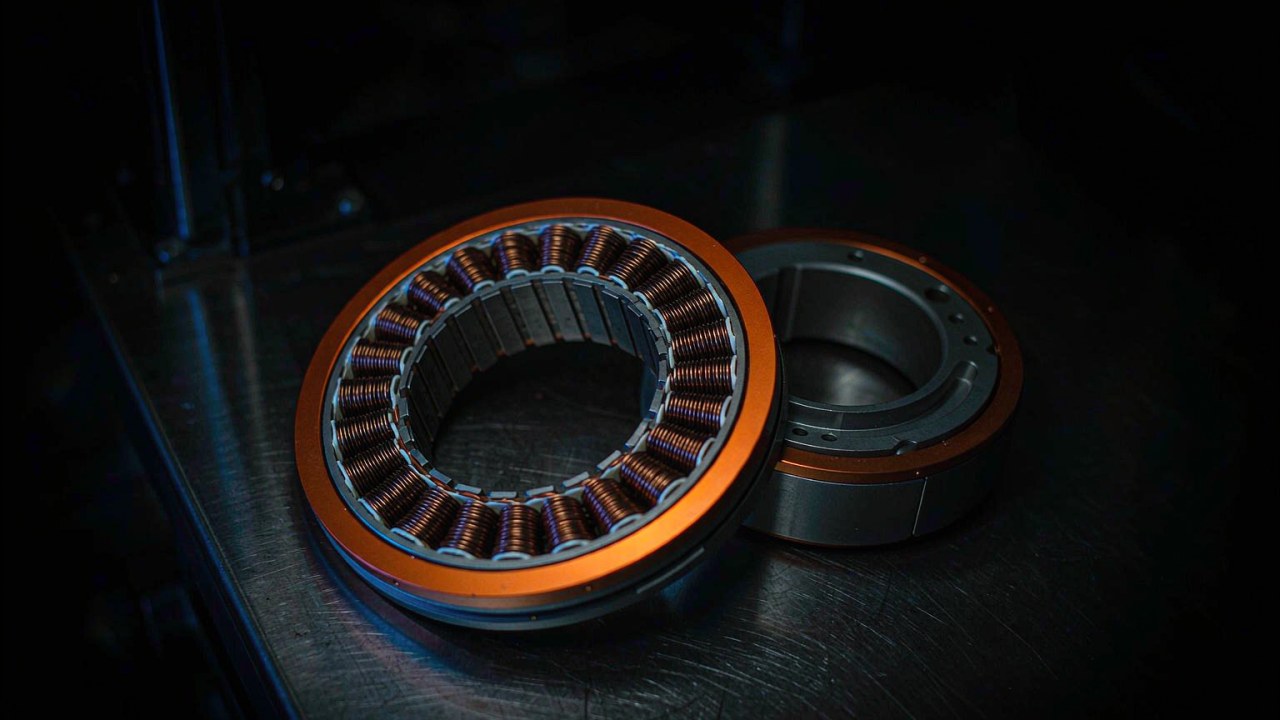
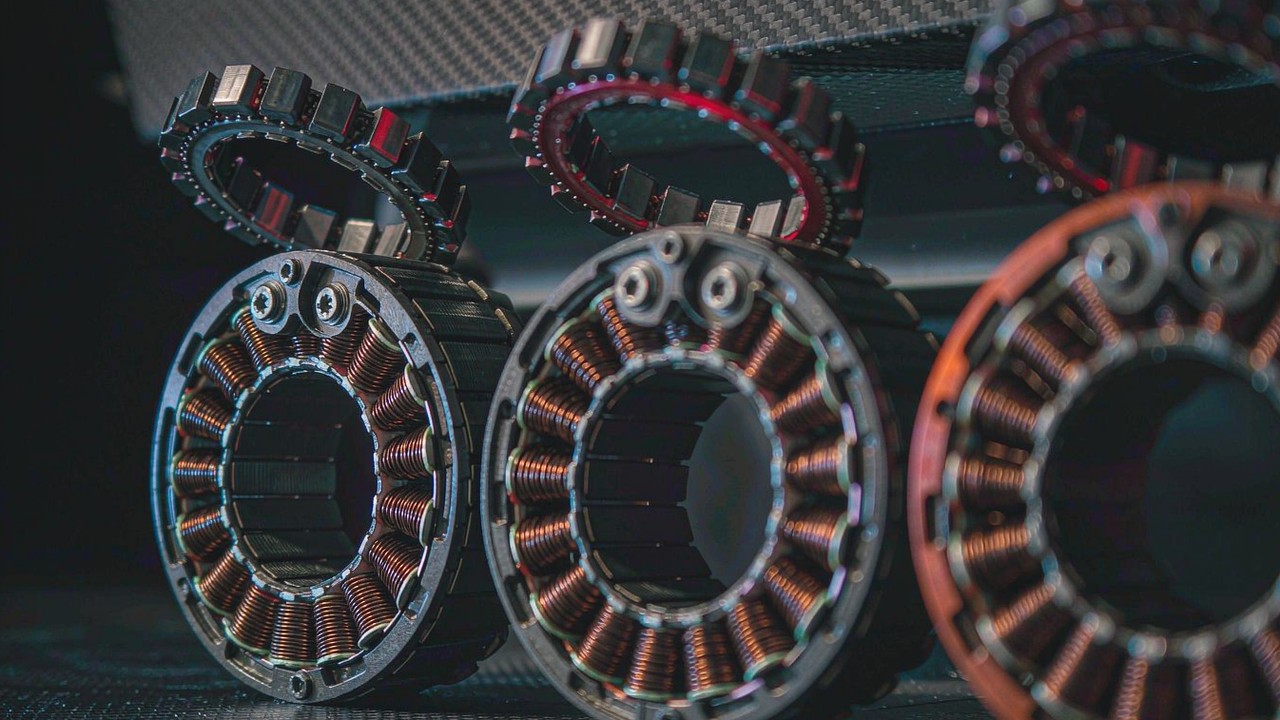
Slot and pole count describes the winding and magnet layout. A high count - 24 slots and 28 poles here, against 12 slots and 14 poles on the fixed-wing records in the same category - produces a smoother torque output at low shaft speed, because the magnetic circuit steps through more positions for every revolution. Smooth torque at low speed is what a large propeller on a hover duty needs, and it is the reason the count is high across the lift group rather than only on the largest unit. The cost is that electrical commutation frequency rises with mechanical speed at a higher count, so the ESC timing and the maximum electrical speed have to be checked against the winding rather than assumed from the mechanical figure.
Peak current is a lift-leg figure
The published peak current for the three records is between 45 A and 70 A. That figure belongs to the lift leg: it is the current the motor draws at the top of its thrust curve, which is where a vertical climb and a transition sit. It is a sizing figure for the ESC and the pack rather than a figure the motor is expected to hold, and reading it as a continuous rating is the most common way a lift-leg drive ends up under-equipped. The duty is defined by how long the peak lasts, not by how high it is.
The Cruise Leg Is a Different Motor Class
The two legs of a VTOL mission are different selection problems, and the practical answer has been to stop treating them as one. The lift leg is served by the lift-class records above. The cruise leg is served by motors built for continuous wing-borne flight, which on this platform is the fixed-wing class, and those units are grouped under a separate application rather than under this one.
Fixed-wing class is a duty, not a brand
The label describes the operating point a motor is wound and housed for, not the company that sells it. A fixed-wing-class motor is specified around a sustained cruise current, a comparatively high shaft speed and a smaller, finer propeller; its envelope and its mass are set by the continuous thermal duty rather than by a thrust target. That is a different set of constraints from the lift group, and it is why the two classes sit in different application groups on this platform even though several of them share a manufacturer.
Why the AT series is not a VTOL lift motor
The AT series is the fixed-wing class in this product category, and its records are published against a cruise duty: 12N14P stators on the smaller members, a published cell count chosen for a sustained current, and figures selected for efficiency at moderate load. Those are not VTOL lift motors. A lift arm needs peak thrust at low shaft speed on a large propeller, and that is the brief the three V-series records are built to; a winding sized for a steady cruise current is sized for the opposite demand. Keeping the two classes apart is what stops a lift-leg shortlist being built from cruise-leg numbers, and it is also why the comparison table in this article carries lift-class records only.
Where the lift-leg specification stops applying
Once the aircraft is on the wing, the figures that decided the lift units stop being the selection axis. Thrust at full throttle, thrust per gram and peak current describe a vertical phase that is over within minutes of take-off; for the part of the mission that lasts the longest, the governing figures are the current the winding carries at a steady throttle, the resistance that turns part of that current into heat, and the mass of the pack that has to be carried to supply it. A shortlist that mixes the two sets of figures is not comparing alternatives, it is comparing two different phases of one flight. The cruise leg is specified on its own terms in BLDC Motors for Fixed-Wing Model: Matching KV, Propeller and Cruise Power.
Sizing the Lift Leg: KV, Propeller Diameter and Pole Count
For the lift leg the chain runs propeller, then KV, then cell count, and each link constrains the next. Reading the T-Motor V series records against that chain is what turns a table of numbers into a shortlist.
KV against propeller diameter
A larger propeller is a longer lever on the shaft: at a given shaft speed it needs more torque, and torque is produced by current. So a large, coarse propeller on a small motor means either a lower shaft speed or a higher current, and usually both. That is why the low-KV records here also carry the larger envelopes relative to their mass, and why the KV band across the group is as narrow as it is. Within the group, the V505 KV260 at 260 KV reaches a higher shaft speed on a common bus than the V602 KV180 at 180 KV - the ratio of the two figures is about 1.44 - which makes the lower-KV record the one that suits the bigger, slower propeller.
24N28P and what the pole count changes
A 24N28P winding gives 14 pole pairs, and the electrical frequency the ESC has to commutate is that count multiplied by the mechanical speed. At the low shaft speeds this duty runs at, the product stays modest, which is part of why the count is affordable here; the same layout on a unit turning several times faster would push the commutation frequency past what the ESC is typically timed for. The practical reading is that the high slot and pole count belongs with the low-KV, large-propeller end of the category rather than being a general upgrade, and the three lift records are consistent with that.
Cell count and the voltage the winding sees
Cell count sets the voltage the winding works at, and together with KV it sets the no-load shaft speed. All three records here are published for a 12S bus, which is the arrangement that keeps the current down for a given shaft power: holding output constant, a higher bus voltage lowers the current the winding has to carry, which lowers the copper loss and the current the ESC has to source. A 12S lift leg and a 12S cruise leg are therefore the same electrical decision reached from two different directions, one for thrust at low speed and one for efficiency at a steady load.
Thrust per Gram and Thermal Mass over Repeated Vertical Cycles
The lift leg of a set of VTOL drone motors is specified around two quantities that are easy to confuse: the peak thrust a record can develop, and the work it can do repeatedly without its winding drifting past its insulation class. The first is published directly. The second has to be read out of the mass, the resistance and the duty window.
Thrust per gram across the three records
Dividing the published maximum thrust by the published motor mass gives a single figure that compares the three records on the terms the lift leg actually cares about, and it is an arithmetic result rather than a published column. The V505 KV260 returns 8741 g of thrust from 215 g, or about 40.7 g per gram of motor; the V605 KV210 returns 12761 g from 340 g, or about 37.5; the V602 KV180 returns 9749 g from 300 g, or about 32.5. The spread is not large, and the ordering is not the same as the ordering by total thrust - the lightest record leads on thrust per gram while the heaviest leads on absolute thrust, which is the trade a builder faces between lifting more and lifting it more cheaply.
Copper loss as thermal mass
Internal resistance is what turns current into heat, and on a lift leg the current is high for the minutes the motor is working. The three records carry 58 mΩ, 88 mΩ and 48 mΩ, and the figure moves with the winding rather than with the mass: the V602 KV180 is the heaviest at 300 g and carries the highest resistance at 88 mΩ, while the V605 KV210 is heavier still at 340 g and carries the lowest at 48 mΩ. What a lift duty actually needs is enough thermal mass to absorb the burst, which is a function of the stator and housing rather than of the resistance alone; a low resistance keeps the loss from being generated, and the body keeps what is generated from reaching the insulation too quickly.
Repeated vertical cycles and the 180 s window
The published power figures for these records are 180 second figures, and the lift leg is the one duty where that window is genuinely representative, because a vertical climb sits comfortably inside it. What the window does not describe is a sequence of climbs with only short intervals between them, which is the shape of a survey or delivery mission flown from a series of hover points. Each climb is inside the window on its own, and the accumulation across a sortie is what the winding temperature tracks - which is a mounting and airflow question as much as a motor question.
VTOL Drone Motors: Spec Comparison Matrix
The three records currently grouped in the VTOL Drone application are set out below as one specification set, ordered by published thrust so that the step from the lightest unit to the largest is visible in the column itself. Every value is the figure the manufacturer publishes for that model; no cell is estimated, and no record carries a value the record does not hold.
| Model | Configuration | Internal Resistance | Maximum Thrust | Max Power 180 s | Weight | Envelope |
|---|---|---|---|---|---|---|
| T-Motor V505 KV260 | 24N28P | 58 mΩ | 8741 g | 2500 W | 215 g | Ø55.6 × 38.9 mm |
| T-Motor V602 KV180 | 24N28P | 88 mΩ | 9749 g | 2000 W | 300 g | Ø68.8 × 36.9 mm |
| T-Motor V605 KV210 | 24N28P | 48 mΩ | 12761 g | 3200 W | 340 g | Ø68.8 × 39.9 mm |
Model, configuration, internal resistance, maximum thrust, max power 180 s, weight and envelope are the values the manufacturer publishes for each record, ordered by maximum thrust. Envelope is given as outer diameter by body length and excludes shaft, cable and connector overhang. Values are reproduced as the manufacturer publishes them rather than filled with an estimate, and the 180 second maximum power figure is a thermal window rather than a continuous rating; it is published for all three records here. All three units are published for a 12S LiPo bus, and the maximum thrust figures are published at full throttle on the propeller the manufacturer specifies for each model.
The first reading is that mass does not track thrust in the order a shortlist might assume. The V602 KV180 is the middle record at 300 g and returns the lowest thrust of the three at 9749 g, while the V505 KV260 is the lightest at 215 g and returns 8741 g - a gap of just over 10 percent in thrust for a mass penalty of 85 g more. The V605 KV210 is the record that clears 12761 g, and it does so from 340 g, which is 40 g above the V602 for a thrust figure almost a third higher.
The second reading is that the two larger records share an envelope diameter. The V602 KV180 and the V605 KV210 are both Ø68.8 mm across, and they differ by 3 mm of body length - 36.9 mm against 39.9 mm. Within that 3 mm and the accompanying 40 g, the resistance falls from 88 mΩ to 48 mΩ and the thrust rises from 9749 g to 12761 g, which is what a longer stator and a longer magnet circuit buy on the same diameter. The V505 KV260 is the outlier in envelope rather than in duty: at Ø55.6 mm it is a substantially smaller body, and its 58 mΩ sits between the other two.
Reading the Three V Motors by Duty
The table sorts by thrust, which is the right order for a shortlist and the wrong order for understanding what the group contains. Read by the duty each record is built around, the three lift motors for VTOL drones currently grouped in the VTOL Drone application fall into three distinct roles.
V505 KV260: the lightest lift unit
The T-Motor V505 KV260 is the smallest and lightest record here: 215 g in a Ø55.6 × 38.9 mm envelope, 260 KV on a 12S bus and 52 A of published peak current. Its 8741 g of thrust from 215 g is the highest thrust per gram in the group at about 40.7, which is the figure that matters on an airframe where the lift units are being sized against a payload budget. The smaller body is the trade: less stator and less thermal mass than the other two records, which suits a lighter airframe making shorter vertical phases.
V602 KV180: the low-KV endurance pick
The T-Motor V602 KV180 carries the lowest KV in the group at 180, the largest published body length of the three at 36.9 mm on a Ø68.8 mm diameter, and 300 g of mass. Its 9749 g of thrust is the lowest absolute figure here and its 88 mΩ the highest resistance, which together mark it as the record wound for a large propeller turning slowly rather than for the highest thrust from a given mass. That is the profile a long-endurance airframe wants from its lift leg: the lowest disk loading it can achieve, at the cost of some thrust per gram.
V605 KV210: the highest thrust in the group
The T-Motor V605 KV210 is the highest-thrust record here at 12761 g, from 340 g in a Ø68.8 × 39.9 mm envelope, on 210 KV and a published 3200 W inside the 180 second window. Its 48 mΩ is the lowest resistance in the group and its 70 A the highest published peak current, which is the pairing a heavy lift leg shows: the winding is sized to carry the current that the thrust output requires, and the longer body on the shared diameter is what makes that possible. Its published 180 second power figure is the highest of the three, and it carries a published lead length of 600 mm.
Selecting VTOL Drone Motors: A Sizing Sequence
The order below is the order in which the published figures become decisions, because each step removes candidates that a later step cannot bring back. It is written for a lift-leg shortlist drawn from the three records currently grouped in the VTOL Drone application, and the sequence itself does not depend on which records are in the group. A shortlist of VTOL drone motors starts on the lift leg and stays there until the vertical phase has been sized on its own terms.
Fix the all-up mass and thrust-to-weight first
The all-up mass sets the total thrust the lift units have to produce with margin, and the number of lift arms sets the thrust each one has to carry. Once those two are fixed, the shortlist is bounded by the thrust column: the V505 KV260 at 8741 g and the V602 KV180 at 9749 g serve the lighter arrangements, and the V605 KV210 at 12761 g is the record that clears the heavier ones. Thrust per arm, not total thrust, is the figure to compare against, because it is the figure the arm structure and the propeller clearance have to accommodate.
Match the KV to the bus, then to the propeller
With the propeller diameter bounded by the airframe, the required shaft speed is known, and KV multiplied by the bus voltage is what delivers it. The bus is itself a decision, because it sets the pack mass and the ESC rating: all three records here are published for 12S, so the choice within this group is not one of voltage but of KV within a fixed bus - 180, 210 and 260. A lower KV turns a larger propeller at the same voltage, and the lowest figure in the group belongs to the record with the highest resistance and the lowest thrust per gram.
Size the winding against the hover current
The current the lift leg draws in hover is the current the winding carries for the longest single stretch of the vertical phase, and it is the figure the resistance column has to be read against; the peak current at full throttle is brief and is bounded by the ESC and the pack rather than by the winding. This is the step where the resistance column decides a close call: the V602 KV180 and the V605 KV210 share a Ø68.8 mm diameter, and the 88 mΩ against 48 mΩ is the difference that repeated vertical cycles will notice.
Check the cruise leg separately
The lift-leg shortlist does not carry over to the cruise leg, and treating it as if it did is the failure this sequence is written to prevent. If the aircraft cruises on a separate pusher, that unit has to be specified against a sustained current and a small, fast propeller, which is the fixed-wing class described above rather than any of the three records in this table. If the airframe instead tilts its lift units forward and cruises on them, the KV band that suits hovering is being asked to serve a fast forward flight as well, and the compromise shows up as a propeller that is too coarse for cruise or a shaft speed that is too slow for the wing.
The three steps applied to this group give a shortlist rather than an answer:
- Light airframes with a modest payload and short vertical phases. The V505 KV260 carries the highest thrust per gram in the group at 215 g, and is the record to start from where mass is the binding constraint.
- Long-endurance airframes that want the lowest disk loading they can hold. The V602 KV180 at 180 KV turns the largest, slowest propeller of the three on the same 12S bus, at the cost of the group's lowest thrust and highest resistance.
- Heavy lift arrangements that need the most thrust from one arm. The V605 KV210 is the record here above 12761 g, and the one carrying the highest published 180 second power figure and a published lead length to work from.
Frequently asked questions
QWhy is a fixed-wing class motor not a VTOL lift motor?
Because the two are wound for opposite operating points. A fixed-wing class motor is specified around a sustained cruise current, a comparatively high shaft speed and a smaller, finer propeller, and its mass and envelope are set by the continuous thermal duty. A VTOL lift motor is specified around peak thrust at low shaft speed on a large propeller, delivered for the minutes that vertical flight occupies. The AT series in this product category is the fixed-wing class, with 12N14P stators on its smaller members and figures selected for efficiency at moderate load, and it is not a VTOL lift motor. The lift-leg records here are 24N28P units, which is the opposite construction.
QWhich thrust figure sizes the lift motors on a VTOL drone?
The maximum thrust published for the propeller the manufacturer specifies, divided by the number of lift arms, compared against the all-up mass with enough margin left for control authority and for a gust. On the three records here that figure runs from 8741 g on the V505 KV260 through 9749 g on the V602 KV180 to 12761 g on the V605 KV210. It is a full-throttle figure and the margin matters, because the thrust a hovering multirotor has to reserve for attitude control is not available for lifting.
QWhat KV and cell count suit a 12S VTOL lift motor?
On a 12S bus the three records here run from 180 to 260 KV, and the band is narrow because the duty is narrow: all three are sized for a large propeller turning slowly rather than for a fast one. KV is revolutions per minute per volt, so within a fixed 12S bus a lower figure means a lower shaft speed and therefore a larger, slower propeller. The V602 KV180 is the lowest of the three, the V505 KV260 the highest, and the choice between them is a choice of propeller diameter and disk loading rather than of bus voltage.
QHow is thrust per gram read across the three V-series lift motors?
By dividing the published maximum thrust by the published motor mass, which is arithmetic on two published figures rather than a column the manufacturer prints. The V505 KV260 returns about 40.7 g of thrust per gram of motor from 8741 g over 215 g, the V605 KV210 about 37.5 from 12761 g over 340 g, and the V602 KV180 about 32.5 from 9749 g over 300 g. The lightest record leads on this measure and the heaviest leads on absolute thrust, which is the trade between lifting more and lifting it more efficiently.
QWhy is KV not shown separately in the comparison table?
Because every model name in the table already carries its own KV figure: V505 KV260, V602 KV180 and V605 KV210. Repeating the same number in a dedicated entry would add width without adding information, and the space is better used for the envelope, which differs between all three records and is not recoverable from the model name. Where a KV ratio is the point of a comparison, as it is between the V505 KV260 and the V602 KV180 on a shared bus, the arithmetic is given in the text rather than as a column.
QWhat does a 24N28P stator change on a VTOL lift motor?
It smooths torque delivery at low shaft speed. With 24 slots and 28 poles the magnetic circuit steps through more positions per revolution than a 12N14P layout, so the torque a large, slowly turning propeller sees arrives in smaller increments. That is the behaviour a hover duty wants, and it is why the slot and pole count is high across the three lift records here rather than only on the largest one. The cost is that electrical commutation frequency is the pole count multiplied by the mechanical speed, so the ESC has to be matched to the winding rather than assumed.
Official resources
T-Motor publishes an official product page for each unit with its specification panel and its propeller test data, and those pages remain the source of truth for every figure quoted here - for example the V505 KV260 product page, the V602 KV180 product page and the V605 KV210 product page. The resistance, thrust, power, mass and envelope figures in the table above are the values those pages publish, and a duty window, a thermal assumption or a propeller recommendation that a build depends on is a question for the manufacturer rather than a figure that can be derived from the specification panel.
Where to go next
For shortlisting rather than reading, three tools on the platform do the work in sequence. Explore the full Drone Motors category to see the three lift records here alongside the fixed-wing and FPV models in the same category, use Select to narrow by thrust, mass and cell count, then place candidates against each other in Compare Products. The VTOL Drone application page holds the same three records with their filter attributes.
Two further articles carry the parts of this subject that a lift-leg selection does not settle. BLDC Motors for Fixed-Wing Model: Matching KV, Propeller and Cruise Power sets out the cruise-leg chain in full, from propeller diameter to pitch speed to the cell count that settles the answer, and it is the class referred to in the fourth section above. Drone Motors: FPV, Fixed-Wing and VTOL Motor Selection places the lift, fixed-wing and FPV classes side by side within the same product category.
The short version for VTOL drone motors: fix the all-up mass and the thrust each arm has to carry first, because that bounds the lift-leg shortlist before anything else does; match the KV to the 12S bus and then to the propeller diameter second, because a low KV only means a large propeller once a voltage is attached to it; and size the winding against the hover current rather than the peak third, because the peak is a burst that the ESC and the pack have to survive rather than a rating the motor holds. Applied to this group, the sequence separates the 215 g record from the two Ø68.8 mm records before any individual model is weighed against another, and it leaves the cruise leg to be specified on its own terms.