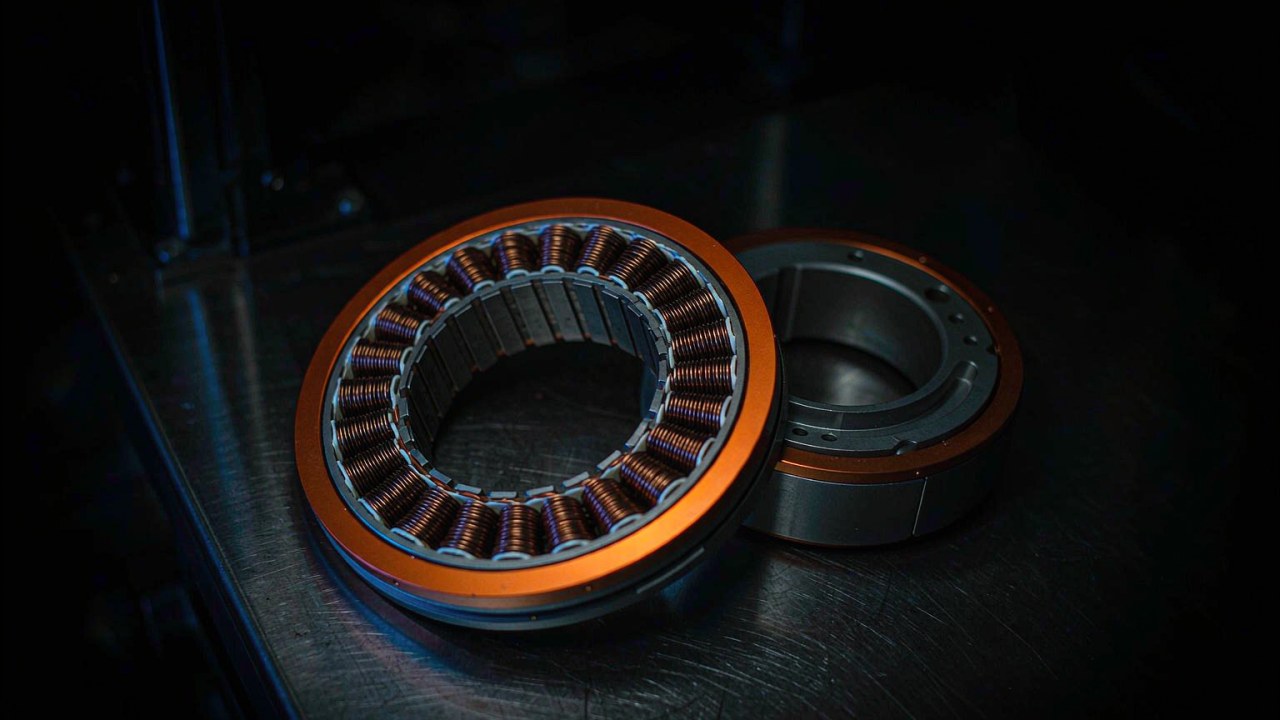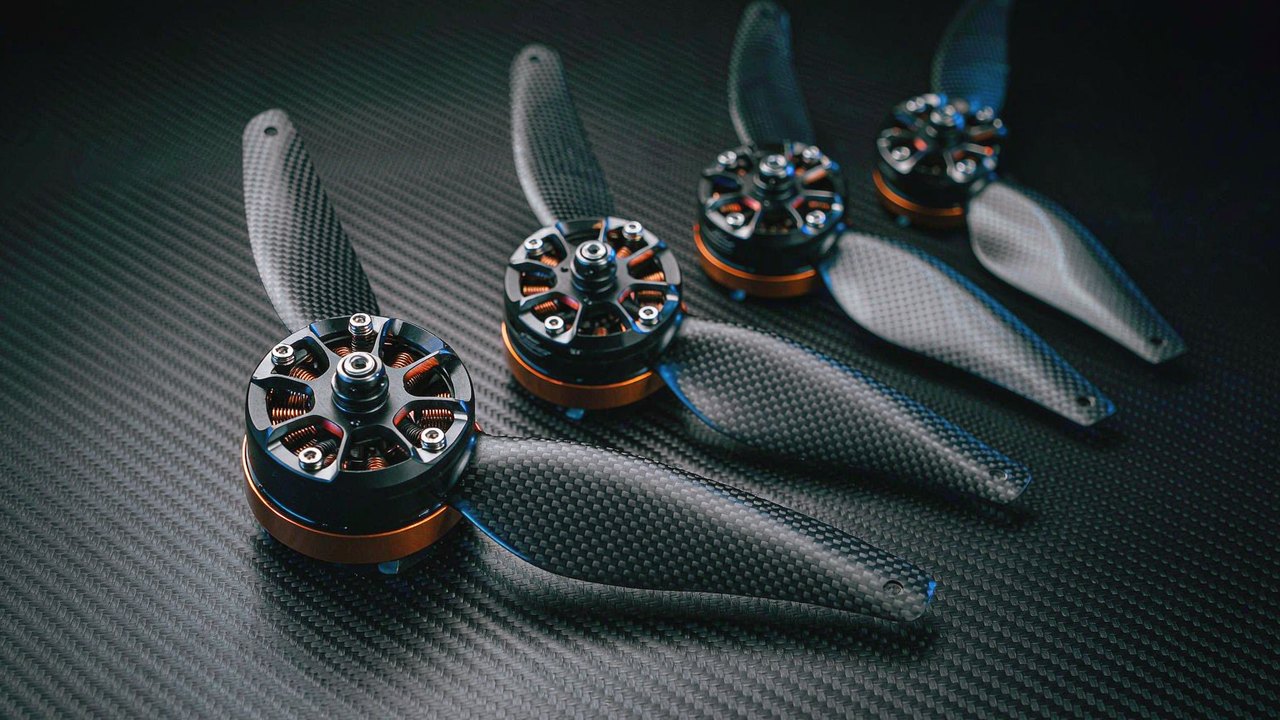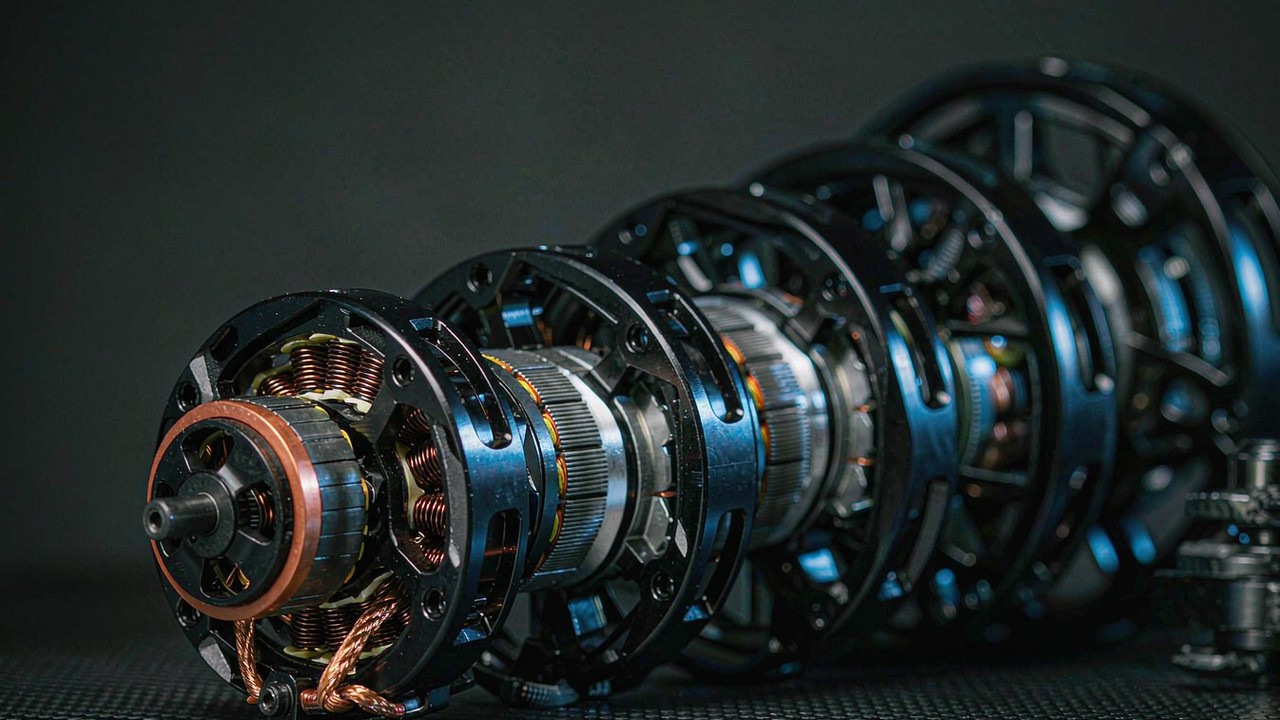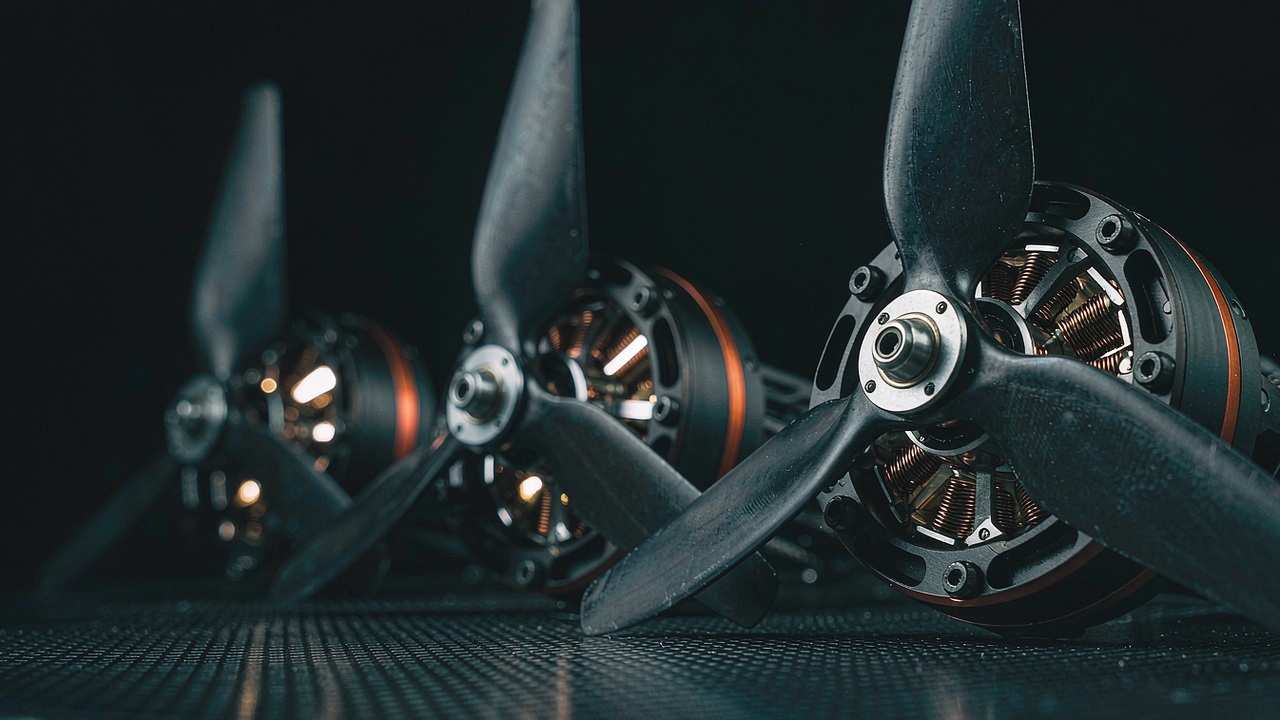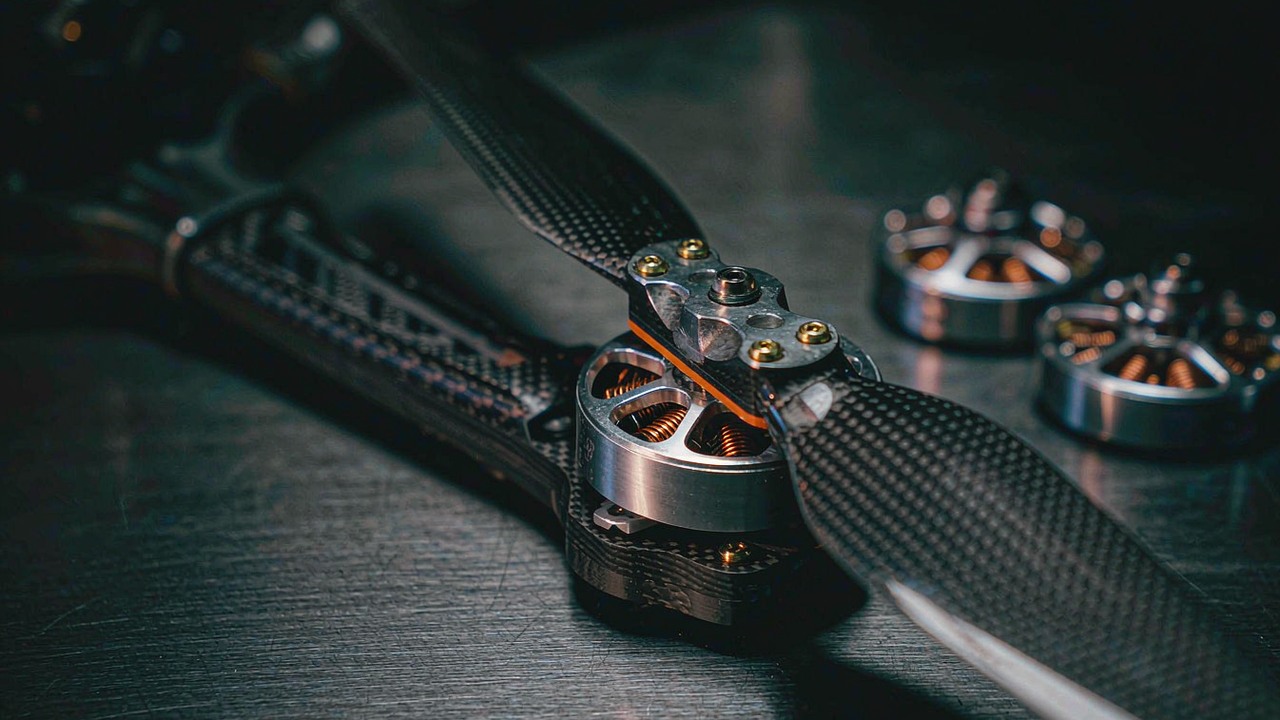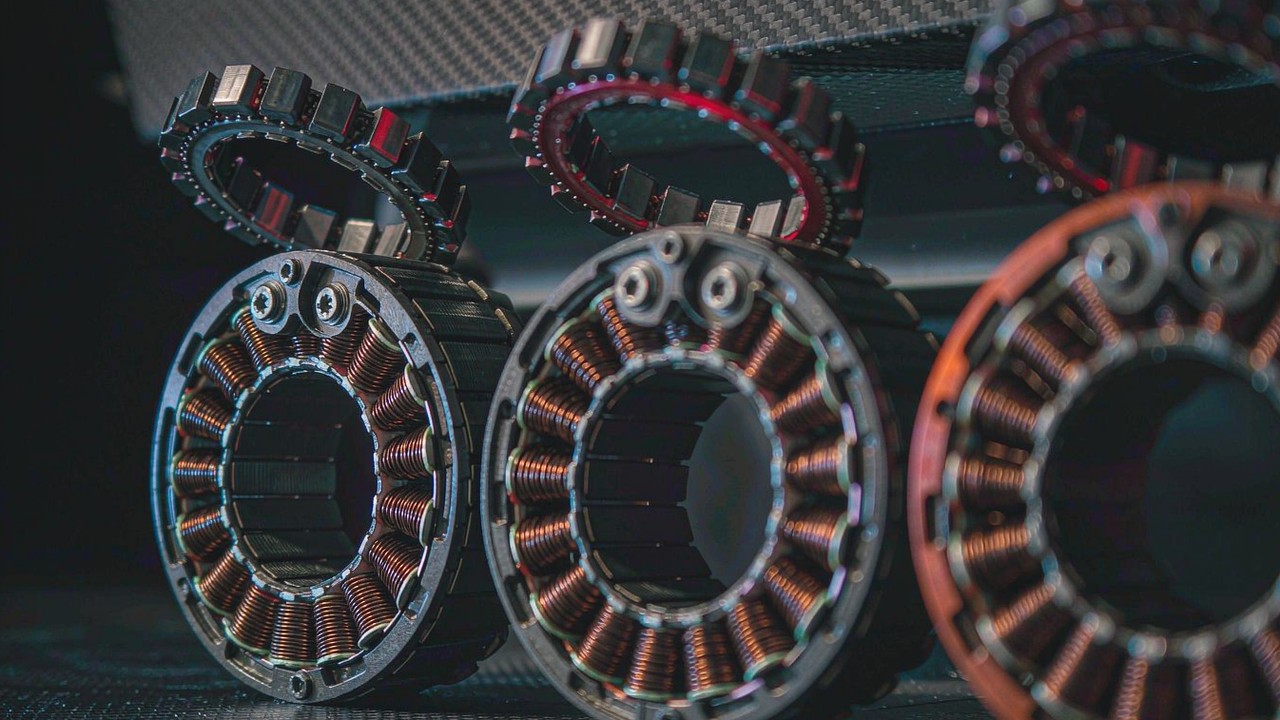
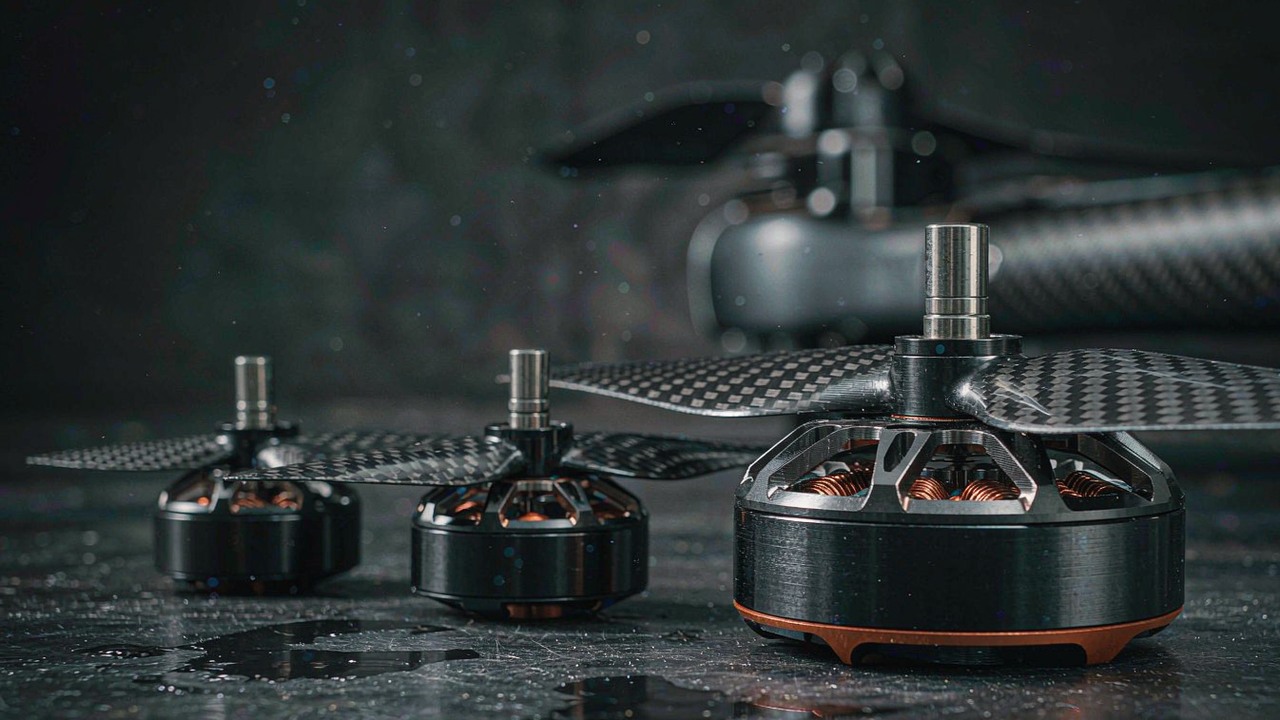
An agricultural drone motor is chosen for a duty that repeats under load rather than for a single performance flight, and the three models currently listed under the Agricultural UAV duty show how far apart two readings of the same specification can sit. Across the group the KV runs from 100 to 700, the published mass from 128 g to 649 g, the internal resistance from 45 mΩ to 80 mΩ, the maximum thrust from 1800 g to 16344 g and the published 180 second power from 500 W to 2700 W. That span has to cover a light multirotor carrying a small tank at one end and a heavy spray platform at the other, so the useful question is not which record publishes the largest number, but what an agricultural drone motor holds at the throttle the airframe actually flies, with power headroom left over for a climb on a full tank. This guide reads the three records against that question, and the same set of models is collected on the Agricultural UAV application page.
Quick Answer
An agricultural drone motor does not spend its working life at the point its specification panel is loudest about. It lifts a tank, settles into a spray run at part throttle, and holds that point for minutes at a time across a season of sorties. The electrical consequence is that the current drawn at the cruise point is paid continuously, while the peak current a full-throttle test reports lasts seconds. A shortlist written against a peak column therefore answers a question the aircraft asks rarely, and leaves the question it asks constantly unanswered.
Three properties carry that duty, and the records below publish them unevenly. Internal resistance is the coefficient on copper loss, which is the loss that runs for the whole sortie rather than in bursts. The published cell-count window decides the current the winding has to carry for a given shaft power, and a higher bus lowers that current. The published 180 second power is a thermal window rather than a continuous rating, and it is best read as a margin signal between candidates of similar duty rather than as a figure to divide into pack energy.
The three records divide first at the thrust they publish and second at the bus they are published for. The entry record publishes 1800 g of thrust on a 3-4S window, the mid record 8414 g on a 6-14S window and the largest 16344 g on a 6-12S window, while the KV falls from 700 to 170 and then to 100 as the published thrust rises. Reading the three as one group, rather than as three separate panels, is what turns the published numbers into a shortlist for an agricultural drone motor.
What makes an agricultural UAV motor different: spray duty, corrosive liquid and dust
A BLDC motor for agricultural UAV duty and a general-purpose multirotor motor can publish the same KV and the same stator configuration and still be asked for different things. The difference is not in the nameplate but in the pattern of the work, and three features of that pattern separate an agricultural drone motor from a general-purpose one.
A mission that repeats with a full tank
The defining feature is repetition under a load that is heaviest at the start of every sortie. An agricultural drone motor works in an airframe that lifts a full tank, flies a defined run, returns with a partly empty tank and launches again after a short ground interval. The motor therefore spends its life not at a single steady point but along a duty that begins near maximum mass and eases as the liquid is dispensed. A shortlist built around one peak figure ignores the fact that the hardest moment is the first climb of each sortie, when the tank is full and the airframe is at its heaviest. A spray drone motor is chosen for that first climb rather than for an average of the run.
Liquid, dust and the air the rotor pulls through
An agricultural airframe works low over a crop in air that carries more than clean air does. Spray drift leaves fine droplets in suspension, dust rises from the ground effect, and both pass through the same column the propeller draws from. That does not change the electromagnetic design of the motor, but it changes what the integration has to survive, and it is a reason to read the mechanical and electrical records together rather than in isolation.
The mass budget a spray airframe sets
The duty also sets a mass budget tighter than a general-purpose build allows. An industrial airframe is flown for the Industrial UAV duty, where the payload is a sensor and the mission is inspection or survey; an agricultural airframe carries a tank whose contents are the payload, so every gram of an agricultural drone motor is a gram that does not become liquid. That trade is why the lighter records in the group below are published at 128 g and 375 g rather than at the mass of a heavy-lift outrunner.
KV and stator size: matching an agricultural drone motor to propeller and tank weight
KV and stator size are the two figures that decide whether an agricultural drone motor turns the propeller an airframe under the Agricultural UAV duty needs, at a speed the airframe can use. They are usually read together, because one without the other describes only half of the match.
KV as turns per volt
KV is the no-load speed of the motor per volt of bus, so a 100 KV winding turns more slowly on the same voltage than a 700 KV winding does. A larger propeller needs a lower useful speed and a higher torque, so a low KV winding is the natural partner for a big, slow disc, while a high KV winding suits a smaller, faster one. The three records below span that range on purpose: the entry model is published at 700 KV for a small multirotor disc, and the two heavier models are published at 170 KV and 100 KV for the larger propellers a spray airframe carries.
Stator size against propeller and tank mass
The stator is where the torque is made, and its size sets how much magnetic material the winding has to work with. Across the group the stator configuration grows from 12N14P at a 41.8 mm envelope to 24N28P at 69 mm and then to 36N42P at 91.6 mm, and the published thrust grows with it, from 1800 g to 8414 g and then to 16344 g. A larger stator at a similar KV is one way an agricultural drone motor buys torque without raising the bus, which matters on an airframe whose mass rises the moment the tank is filled.
Reading KV across the three records
The published KV of the three models is not a ranking of quality but a description of the propeller each is built to turn. The 700 KV record is the light multirotor end, the 170 KV record is the mid-size spray airframe, and the 100 KV record is the heavy-tank end. A shortlist that starts from the propeller diameter and the all-up mass of the loaded airframe will land on the right KV column before it looks at any other figure, and the published thrust of each model is the number that confirms the choice.
Part-throttle torque: holding thrust at cruise instead of chasing peak numbers
Part throttle is where an agricultural drone motor spends much of its flight time, and it is the point a peak-thrust comparison quietly skips. The motor still has to hold the propeller at a commanded speed, and the torque needed to do that does not disappear because the throttle sits below maximum.
Why the cruise point sets the winding
At part throttle the controller chops the bus at a lower duty cycle, so the winding sees a lower average current than it would at full throttle, but the torque it must produce is set by the propeller load at that speed. The winding that holds the cruise point comfortably is the one whose resistance and thermal path can carry that current for the whole run rather than for a test burst, which is why the internal resistance column matters more here than the peak current column.
Peak thrust against holding thrust
A published maximum thrust figure describes what the motor can produce at one condition, usually a short test at a stated propeller and voltage. It is a useful upper bound and a poor description of cruise. The number that matters for the spray run is the thrust an agricultural drone motor can hold at the throttle the airframe flies, and that number is not published directly; it has to be read out of the efficiency and thermal behaviour of the winding at the current the cruise point draws.
What part throttle asks of the controller
A low KV, high-torque winding in an agricultural drone motor also changes what the electronic speed controller has to do well. Slower switching at a lower electrical frequency is easier on the controller than the fast commutation a high KV motor demands, and the current the controller has to carry at cruise is lower on a higher bus. That is one reason the heavier records in the group are published at a 6-12S or 6-14S window rather than at the low cell count of the entry model.
180 s power headroom for climbs with a full tank
The 180 second figure appears on every agricultural drone motor in the group, and it is the one often read the wrong way. It is a thermal window rather than a continuous rating, and the distinction matters at the exact moment the airframe is heaviest.
What the 180 second column measures
A 180 second power figure describes the power an agricultural drone motor can absorb for a bounded period without its winding reaching a temperature the manufacturer treats as limiting. It is the condition a full-throttle test sits in, and it is deliberately short because the copper loss in that window heats the winding faster than the surrounding structure can carry the heat away. Read on its own it says how much power is available in a burst; read beside the continuous current of the same model it says how much headroom that burst represents.
A climb with a full tank against the 180 second window
The hardest climb a spray drone motor faces happens at the start, with a full tank and the airframe at maximum mass. That climb is short, which is exactly the shape of duty the 180 second column describes, so the figure is relevant there rather than in the cruise that follows. A model whose published 180 second power sits comfortably above the power the loaded airframe needs to climb has margin; one whose figure sits close to that requirement has little room for a heavier tank or a hotter day.
Continuous current beside the 180 second figure
Two of the three records publish a 180 second continuous current alongside the power figure, 25 A on the entry model and 38 A on the mid-size model. The largest record publishes a 60 A peak current instead and leaves the continuous figure open, so the two numbers are not directly interchangeable and that gap is worth noting rather than filling in by assumption. Where both are published, the continuous current is the more useful half of the pair, because it describes what an agricultural drone motor can hold across the whole run rather than in the burst.
Field exposure: dust, spray drift and the figures the records leave open
Field exposure does not change the electrical design of an agricultural drone motor, but it changes the integration around it, and it is the part of the duty the published panels describe least. Reading it honestly means separating what the records state from what has to be confirmed with the manufacturer.
Dust and spray drift in the air path
An airframe working low over a crop draws its cooling air through a column that carries droplets, fine dust and, after the spray has passed, a residue that can settle on any surface in the airflow. For an agricultural drone motor this mostly affects the mechanical side of the integration: the air path through the stator, the condition of the bearings over a season, and the cable and connector that run from the winding to the controller. None of these are electromagnetic limits, but all of them are points where a field season differs from a bench test.
The figures the records leave open
What the records in this group do not publish is a sealing, ingress or corrosion rating for any of the three motors, so no protection class should be read into them. The published panels carry mass, envelope, KV, stator configuration, resistance, cell window, thrust and power, and those are the figures this guide quotes. Where a field build needs an ingress figure, that is a specification to confirm with the manufacturer directly rather than one to infer from the electrical data, and the same applies to the long-run effect of spray chemistry on bearings and connectors, which is the point at which an agricultural drone motor is committed to a field build.
Comparing agricultural drone motors: U3 KV700, P60 Pin KV170, P80 III Pin KV100
The three records below are ordered by published maximum thrust, which is also the order in which they suit a rising tank mass for an agricultural drone motor. The table reproduces the published figures for each model, and nothing in it is derived.
| Model | Configuration | Internal Resistance | No. of Cells (LiPo) | Maximum Thrust | Max Power 180 s | Weight |
|---|---|---|---|---|---|---|
| U3 KV700 | 12N14P | 50 mΩ | 3-4S | 1800 g | 500 W | 128 g |
| P60 Pin KV170 | 24N28P | 80 mΩ | 6-14S | 8414 g | 1800 W | 375 g |
| P80 III Pin KV100 | 36N42P | 45 mΩ | 6-12S | 16344 g | 2700 W | 649 g |
Model, stator configuration, internal resistance, published cell count, maximum thrust, 180 second maximum power and weight as published by the manufacturer for the three models currently listed under the Agricultural UAV duty, ordered by published maximum thrust. Maximum thrust and 180 second power are the figures the manufacturer publishes for each model; both depend on the propeller and the bus voltage used in the test, so they are comparable within the group only in the sense that they describe the published condition of each model. The cell count is shown as published, so a range means that model is published across the range. Weight includes the cable and connector where the manufacturer publishes it that way. No KV column appears because every model name in the table carries its own KV figure, and no envelope column appears because the duty described here turns on the electrical columns rather than on body dimensions.
Reading the three across tank mass
The lightest record, the T-Motor U3 KV700 UAV Motor, is published at 128 g with 1800 g of thrust, which places it with the small multirotor end of the spray class where the tank is light and the propeller small. The mid record, the T-Motor P60 Pin KV170 UAV Motor, is published at 375 g with 8414 g of thrust, and the largest, the T-Motor P80 III Pin KV100 UAV Motor, is published at 649 g with 16344 g of thrust. Read in that order the three describe a ladder from a light spray airframe to a heavy one, and the published mass of the motor rises with the thrust it has to make.
Where the three records diverge
The three do not scale evenly. Internal resistance falls from 50 mΩ on the entry record to 45 mΩ on the largest, while the mid record is published at 80 mΩ, the highest in the group; a higher resistance is more copper loss for a given current, which is a figure to weigh against the thrust each model publishes. The cell window widens and then narrows, from 3-4S on the entry record to 6-14S on the mid record and 6-12S on the largest. For an airframe at the heavy end of the spray class, the Heavy Lift Drone duty carries the records above this group, and the T-Motor range behind these three records is collected on the T-Motor manufacturer page.
Shortlisting an agricultural UAV motor: from tank mass to hover thrust, KV, bus voltage and mount
A shortlist for an agricultural drone motor is easier to defend when it is built in the order the airframe is built. The sequence below works from the mass the motor has to lift down to the details that decide whether the chosen record fits the build, and it applies to the records under the Agricultural UAV duty as readily as to any comparable record added later.
Fix the tank mass and hover thrust first
Start from the all-up mass of the loaded airframe, including the full tank, the frame and the payload electronics. The thrust needed to hover and to climb sits on top of that mass, and the published maximum thrust of each candidate is the first column to compare against it. A record whose published thrust sits close to the hover requirement leaves little margin for a full tank on a hot day, which is the condition the 180 second column describes.
Then KV, cell count and the electrical envelope
With the thrust band fixed, the propeller diameter points to a KV, and the cell window decides the current the winding has to carry for that thrust. A higher bus lowers the current for the same shaft power, which is easier on the controller and on the wiring, so the cell window and the pitch of the propeller are read together rather than one at a time. The internal resistance of each candidate is the figure that turns that current into a copper loss, and it is worth comparing across the shortlist at this step.
Then the mount, the cable and the record
The last step decides whether the shortlisted motor drops into the airframe. The published envelope, the mount pattern and the cable length of a shortlisted agricultural drone motor have to match the arm and the routing the airframe uses, and any figure the record leaves open is a question for the manufacturer rather than a value to assume. Closing the shortlist on the integration details rather than on the nameplate numbers is what keeps a promising candidate from failing at assembly.
Frequently asked questions
QWhich KV suits an agricultural drone motor carrying a full spray tank?
A tank changes the mass the motor has to lift, and the useful KV follows the propeller that mass needs. The three records here span 100 KV to 700 KV: the lightest airframe is published at 700 KV on a 3-4S window, and the two heavier records are published at 170 KV and 100 KV on 6-14S and 6-12S. The lower KV figures sit with the larger propellers and the heavier tanks, which is the direction to move as the all-up mass rises.
QHow does stator size change thrust and heat on a spray drone motor?
A larger stator gives the winding more magnetic material to work with, and the published thrust rises with it. In this group the configuration grows from 12N14P at a 41.8 mm envelope and 1800 g of thrust to 24N28P at 69 mm and 8414 g, and then to 36N42P at 91.6 mm and 16344 g. Because more copper and iron spread the same loss over a larger surface, a larger stator at a similar KV also eases the thermal side of the job, which is the part that runs for the whole sortie.
QWhat power headroom should an agricultural drone motor carry for a climb with a full tank?
The 180 second column describes the power a motor can absorb in a bounded burst, which is the shape of a climb with a full tank. In this group the published 180 second power runs from 500 W on the entry record to 1800 W and 2700 W on the two heavier ones. The figure to compare against is the power the loaded airframe needs to climb, and a published value comfortably above it leaves margin for a heavier tank or a hotter day.
QT-Motor P60 Pin KV170 against P80 III Pin KV100: which fits a lighter spray drone?
The lighter of the two is the P60 Pin KV170, published at 375 g with 8414 g of thrust, against 649 g and 16344 g for the P80 III Pin KV100. Where the loaded airframe and its propeller stay within the lower thrust band, the lighter record costs less mass; where the tank and the disc push past it, the larger record carries the thrust. The choice follows the all-up mass rather than the nameplate alone.
QHow do dust and spray drift affect an agricultural drone motor over a season?
The records in this group do not publish a sealing, ingress or corrosion rating, so no protection class should be inferred from them. Over a season, dust and spray drift mainly affect the air path through the stator, the bearings and the cable and connector. Those are points to confirm with the manufacturer for the conditions a specific build meets, rather than values the electrical data can settle.
QDoes an agricultural drone motor need to hold torque at part throttle?
Yes, because the spray run is flown at part throttle, so the current that holds the propeller at cruise is paid for the whole run, while the peak a full-throttle test reports lasts seconds. A model with lower internal resistance turns that cruise current into less copper loss, and a stator large enough for the propeller holds the cruise point without leaning on the peak. That is why the resistance column carries more weight here than the peak current column.
Official resources
T-Motor publishes an official product page for each unit with its specification panel, and those pages remain the source of truth for every figure quoted in this guide about an agricultural drone motor - for example the U3 KV700 product page, the P60 Pin KV170 product page and the P80 III Pin KV100 product page. Each page states the propeller and voltage its figures were measured at, which is the condition to check before comparing any two records.
Where to go next
For shortlisting an agricultural drone motor rather than reading, three tools on the platform do the work in sequence. Explore the full UAV Motors category to see the three records here alongside the Navigator and heavy-lift models, use Select to narrow by cell count, mass and published power, then place candidates against each other in Compare Products. The Agricultural UAV application page holds the same duty with its own filter attributes, and the T-Motor manufacturer page collects the full range behind these records.
Three further articles carry the parts of this subject that an agricultural duty does not settle. UAV Motors: Matching KV, Thrust and Mass to Your Airframe reads the same motors from a general UAV perspective, BLDC Motors for Industrial UAV: Duty Cycle, Redundancy and Payload covers the repeated industrial mission these airframes share, and Heavy-Lift Drone Motors: Three T-Motor Options from 2.85 kg to 101 kg Thrust carries the thrust range above this group. Between them, the three treat the same question, a BLDC motor for agricultural UAV, from duties that sit alongside this one.