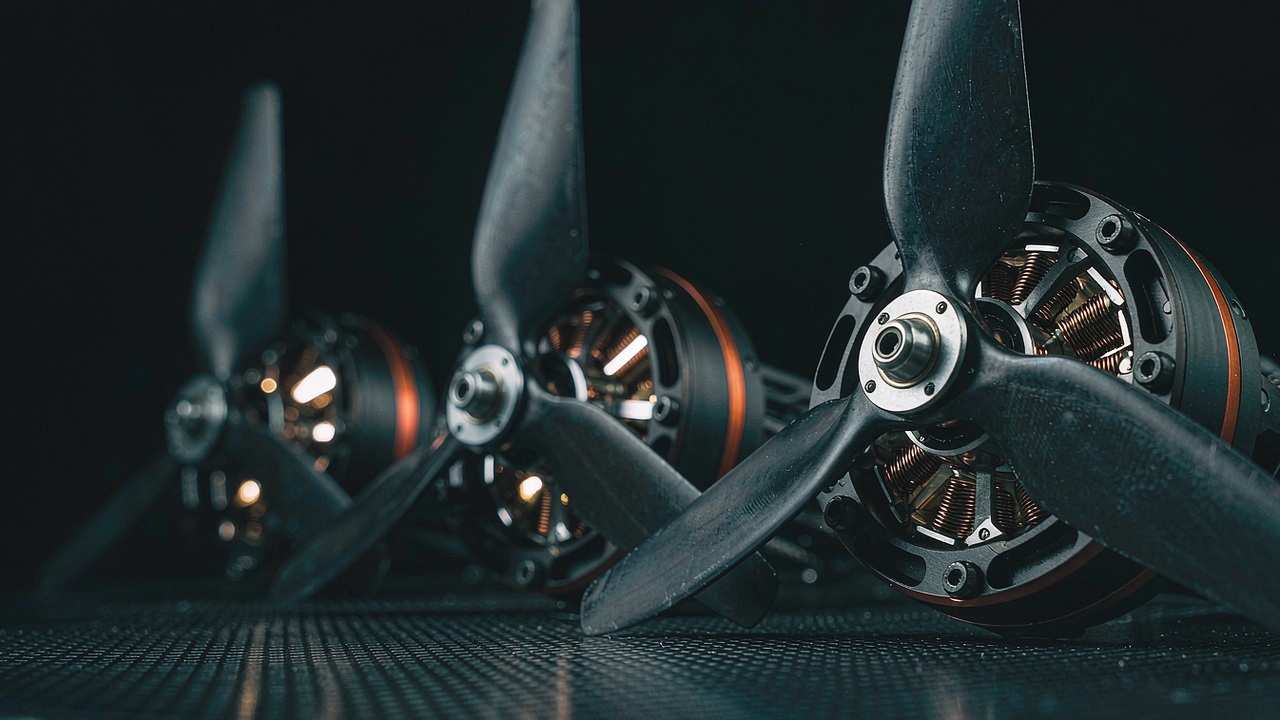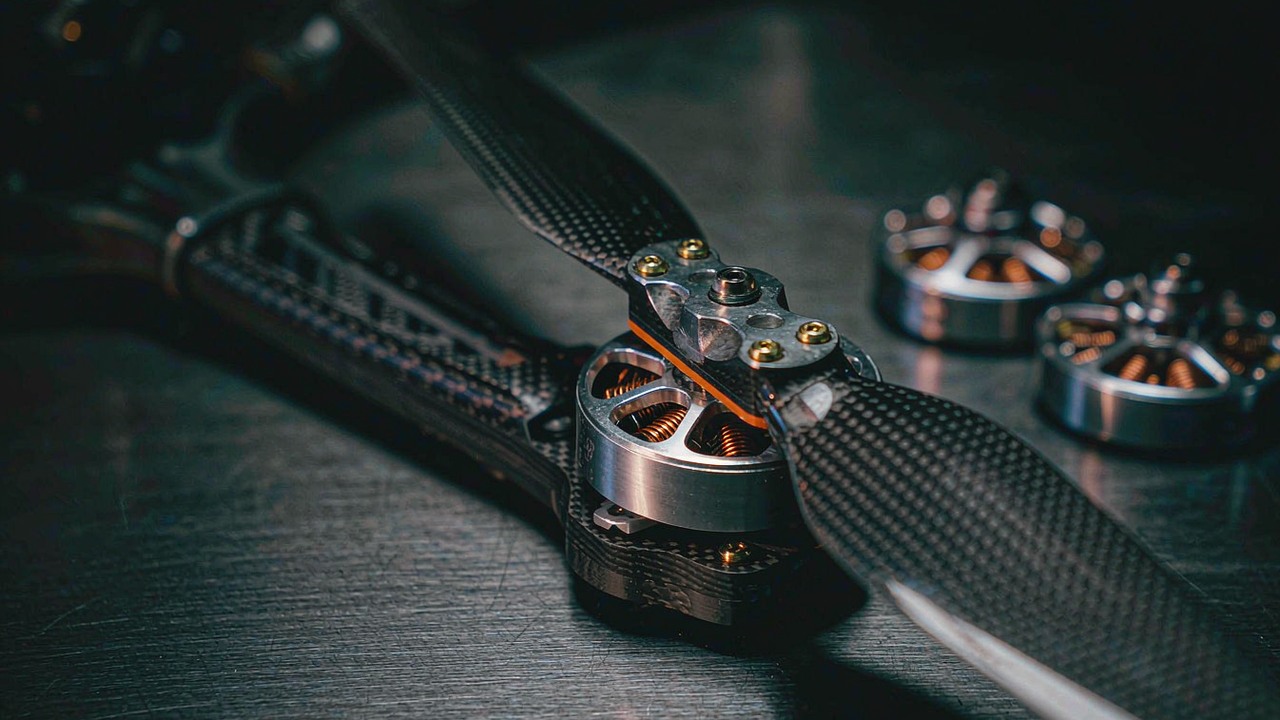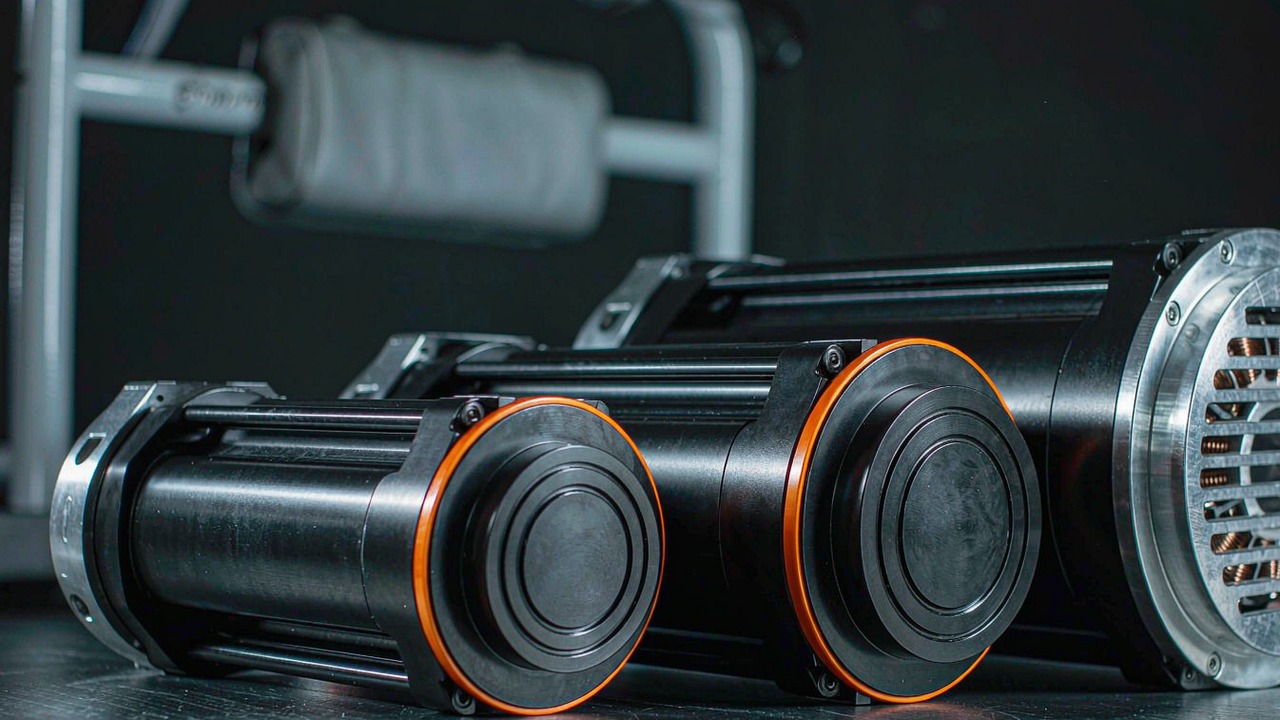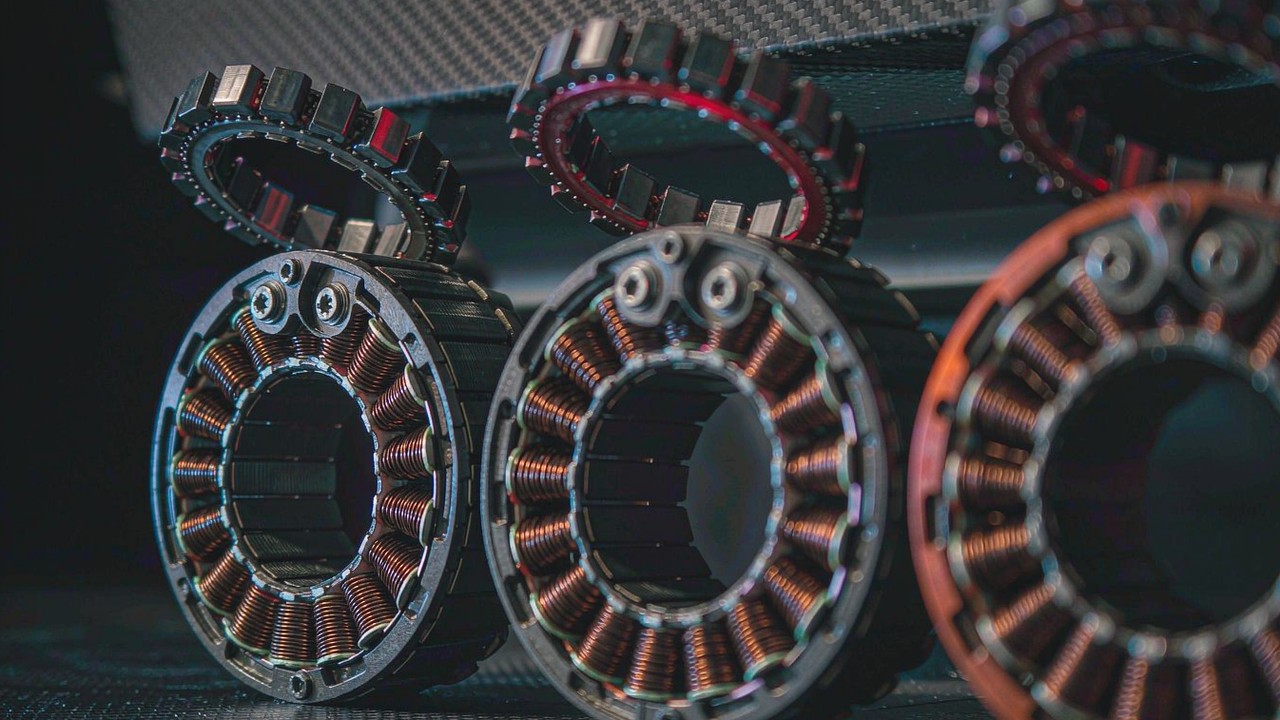
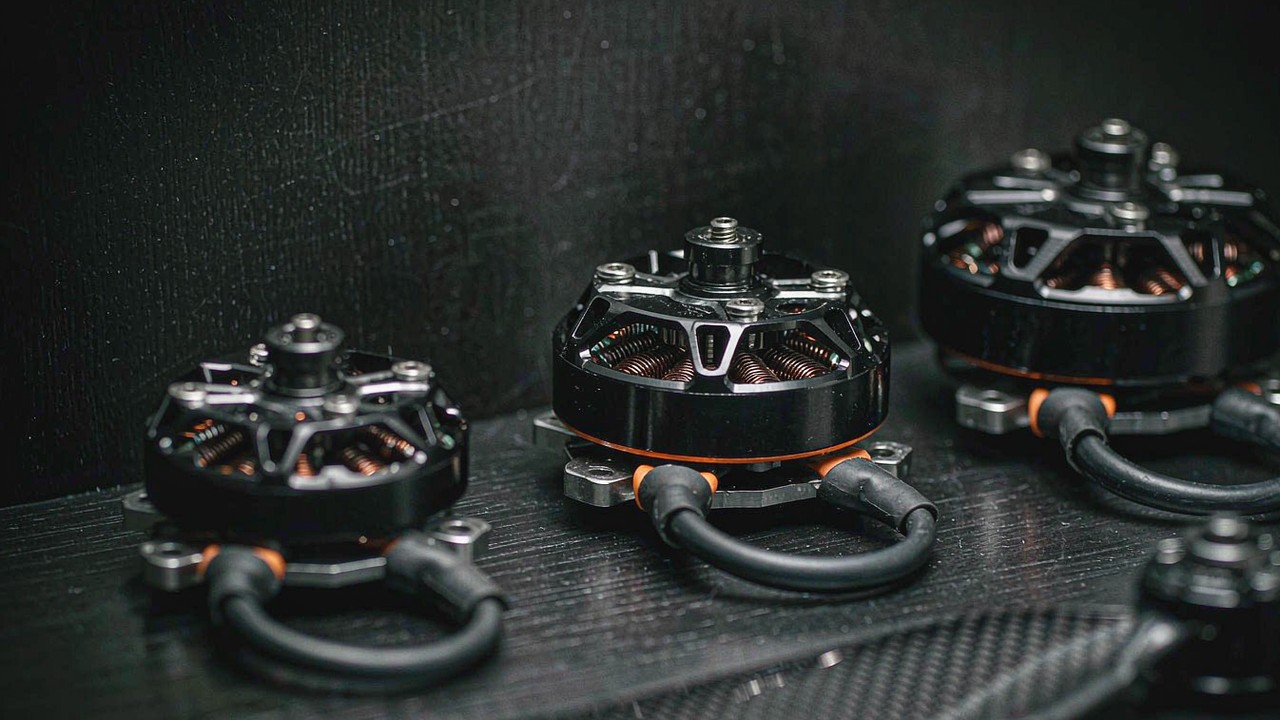
A racing quad spends its flight in the part of the throttle range where nothing is settled: a corner exit, a punch-out, a direction change, a recovery from propwash. A motor chosen for that duty is not selected for the efficiency it shows on a steady bench run, and not for a single peak figure read on its own. It is selected against a short set of published values that together decide whether the propulsion system can repeat the same transient without cooking the windings, and whether the airframe still rotates the way the pilot expects. This guide sets out what to look for in a BLDC motor for FPV Racing Drone use, worked through the six T-Hobby motors recorded against the ToBMS FPV Racing Drone application.
Quick Answer
The first decision is the propeller class, because every other value is read against it. A 3-inch airframe cannot swing a 5-inch propeller, so its motor has to be small, light and wound for a very high rotor speed; a 7-inch long-range frame has the opposite brief. In the six records used here, that single filter separates a 9.8 g unit on a 9N12P stator from five 12N14P motors that run from 28.56 g to 46.6 g. All six are FPV racing drone motors, and all six come from a single application set.
Once the class is fixed, the pack comes next. KV only says how fast the motor turns per volt with no load, so a 2150 KV winding on a low cell count lands the rotor at roughly the same speed as a lower KV winding on a higher cell count. Read KV against the cell figure in the same record, and treat a change of KV as a change of pack or propeller rather than as a change of strength. Four of the six records carry a cell range; the F50 KV2150 record leaves it open, which is a question for the manufacturer rather than a gap to fill in.
The last group is made up of the figures that describe behaviour during a transient: winding resistance, which sets how much of the applied voltage is lost across the copper as current rises; idle current, which is the loss a motor pays while spinning itself; and maximum thrust, which is the published output that the thrust-to-mass budget is checked against. Five of the six records carry a winding resistance, and the one that does not is marked as an open question rather than assumed from a neighbouring model. A shortlist of BLDC motors for FPV racing drones is built in that order: class, then pack, then transient.
What an FPV Racing Drone Demands of a BLDC Motor
Nothing in the construction of a racing motor separates it from any other small brushless outrunner. What differs is the shape of the load, and the shape of the load decides which part of the specification becomes binding.
A race is a sequence of transients, not a cruise
An endurance or heavy-lift airframe spends most of its flight at a roughly steady operating point, and the sizing question is whether that point sits inside a continuous rating. A racing quad spends almost none of its flight there. The relevant envelope is a repeated transient one: how much thrust is available while the aircraft is already moving, how quickly the rotor can be accelerated into it, and how much heat each excursion leaves behind. On a racing airframe the first question a thrust value answers is whether each motor can lift its quarter of the all-up weight with enough left over for control authority, and the second is whether the set can deliver that repeatedly without cooking.
The propeller, not the motor, sets the working point
Thrust is a property of the motor and propeller together, and the propeller is fixed by the frame. A 3-inch frame cannot swing a 5-inch disc, so the motor that drives it has to be small, light and wound for very high rotor speed. A 7-inch long-range frame asks for the opposite: more stator volume, a lower KV and more torque, so that a larger disc can be turned at lower revolutions. Two consequences follow, and both matter more than KV. Rotating mass at the tip of an arm adds to the airframe's roll and pitch moment of inertia, so heavy motors make an aircraft feel sluggish even where they make plenty of thrust. And the published maximum thrust figure is quoted for a specific propeller, so it is comparable only when the propellers match.
Mass at the arm end is paid for on every corner
Between the 9.8 g of the smallest record and the 46.6 g of the largest there is a mass range of nearly five to one, and that spread is not decoration. Every gram sits at the end of an arm, and the moment of inertia it contributes grows with the square of the arm's length, so a motor that is too heavy for its class costs more in agility than it returns in thrust. The practical reading is that weight and thrust belong in the same comparison, rather than on separate shortlists.
Crash loads, not thermal limits, end most motors
A racing airframe is expected to survive contact with gates, the ground and other aircraft. The failure modes that matter are mechanical and electrical rather than strictly thermal: a bent shaft, a bearing that no longer runs true, a lead that fails at the joint, a bell that no longer locks the propeller. These are not values that a specification table carries, but they are the reason a published thrust figure is only the beginning of a selection rather than the end of it.
Six Specifications That Decide an FPV Racing Motor
The six values below are the ones that settle a choice in practice for a BLDC motor for an FPV racing drone. Each is read with the others rather than alone, and where a record leaves one open, that is itself part of the picture.
Stator size against the propeller class
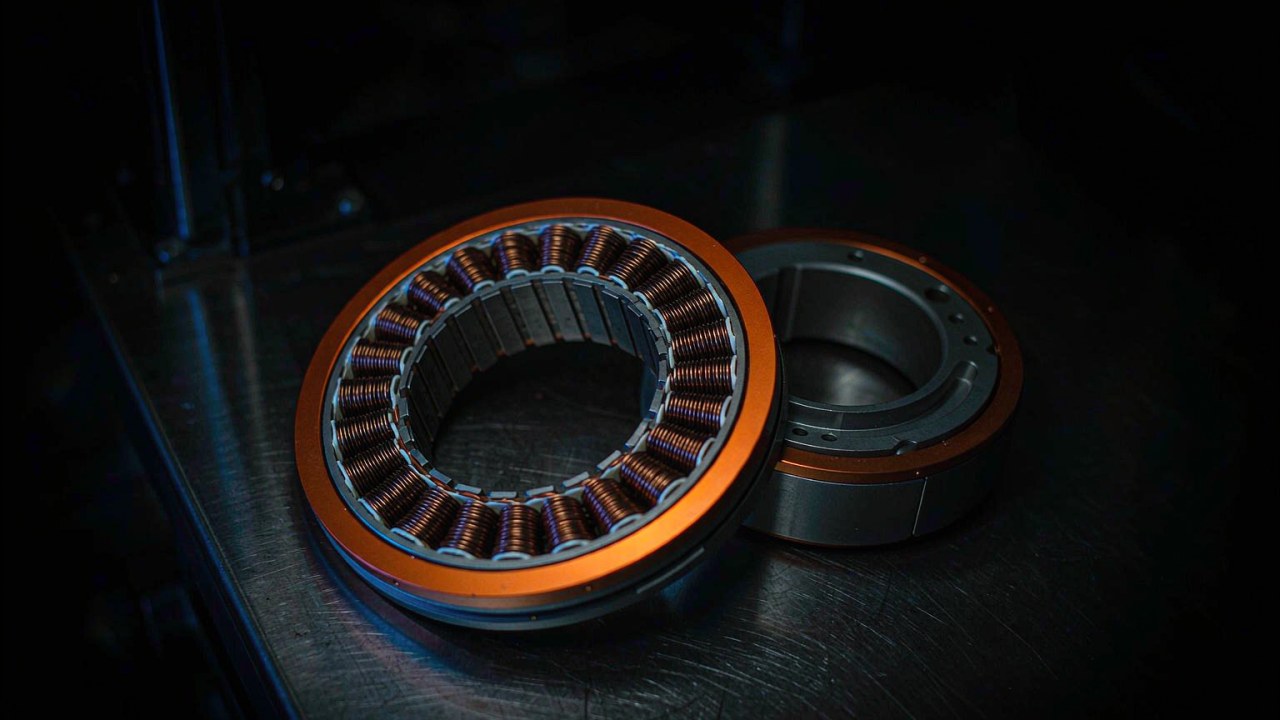
The stator is the part that decides how much torque a motor can make before it saturates, and its diameter and stack height are expressed in the manufacturer's own designation. The records here carry configurations of 9N12P and 12N14P, and body sizes from a 17.9 mm unit to a 33.4 mm unit. The class of propeller a frame can swing is what makes those differences relevant to FPV racing drone motors: a large stator turning a small propeller is wasted mass, and a small stator turning a large one cannot reach a useful speed without exceeding what it is built to shed.
KV against the pack that is actually flown
KV describes rotor speed per volt with no load. On its own it says nothing about capability; it says which combination of cell count and propeller lands the rotor at a usable speed. A 2150 KV winding on a modest cell count reaches roughly the same unloaded speed as a 1750 KV winding on a higher cell count, so the two values in this set cannot be read as though one were stronger than the other. A change of KV usually forces a change of pack or propeller, and it is those two components that decide whether the swap is an improvement.
Winding resistance and idle current, read together
Two recorded values stand in for response, and neither is a timing measurement. Winding resistance says how much of the applied voltage is lost across the copper as current rises; a lower figure means more torque per amp during acceleration and less of the pack ending up as heat. Idle current is the no-load current a motor draws to spin itself, and it is a proxy for the iron, bearing and switching losses paid continuously regardless of what the propeller is doing. Together they describe the part of the throttle range where a race is decided: coming off a low-throttle corner into full power.
The thrust figure, and the propeller behind it
Maximum thrust is the headline output of a racing motor, and it is also the value most easily misread. It is published for one propeller at one throttle point, on one test rig, so a thrust figure is comparable only when the test conditions are. Four of the six records here publish a maximum thrust figure above two kilograms, and the two smaller units publish 351 g and 1730 g. What the figure settles is whether the motor can lift its share of the aircraft with margin; what it does not settle is how a BLDC motor for an FPV racing drone behaves while the aircraft is already moving.
Power and current as a duty statement
A published maximum power figure is a statement about the electrical load a motor is expected to carry for a stated window, and the window is named by the manufacturer alongside the figure. It matters because the same motor can be quoted over different windows, and a figure carried over a shorter window is not directly comparable with one carried over a longer one. Where a record carries a power figure, it belongs in the same comparison as thrust; where it does not, that too is worth knowing, because it points to a datasheet rather than to a substitute.
Envelope, mounting pattern and lead length
A motor has to fit an arm, and the envelope is what decides that. The six records here run from a body of 17.9 mm by 17.4 mm to one of 33.4 mm by 34.7 mm. Beyond the body diameter and length, the mounting pattern and the lead length decide how the motor sits on a given frame and how the wiring is routed; where a record is silent on those, the manufacturer's drawing is the source to check.
Six T-Hobby Motors as One Specification Set
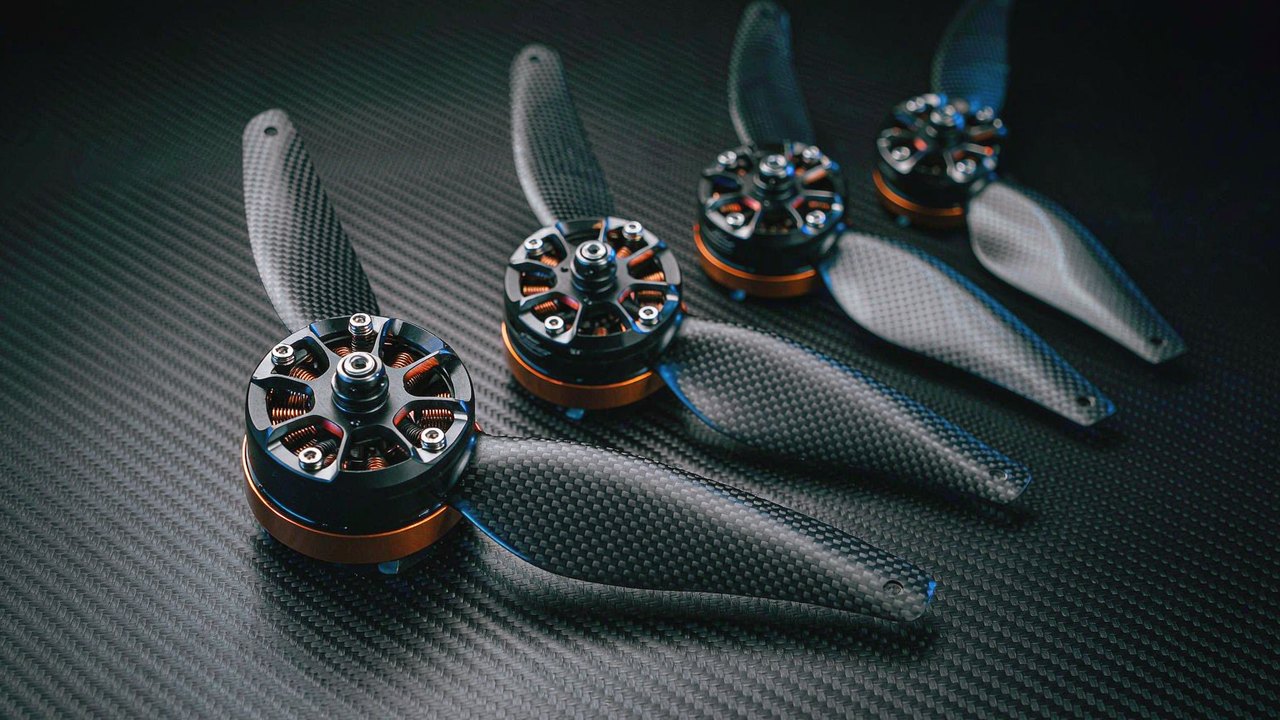
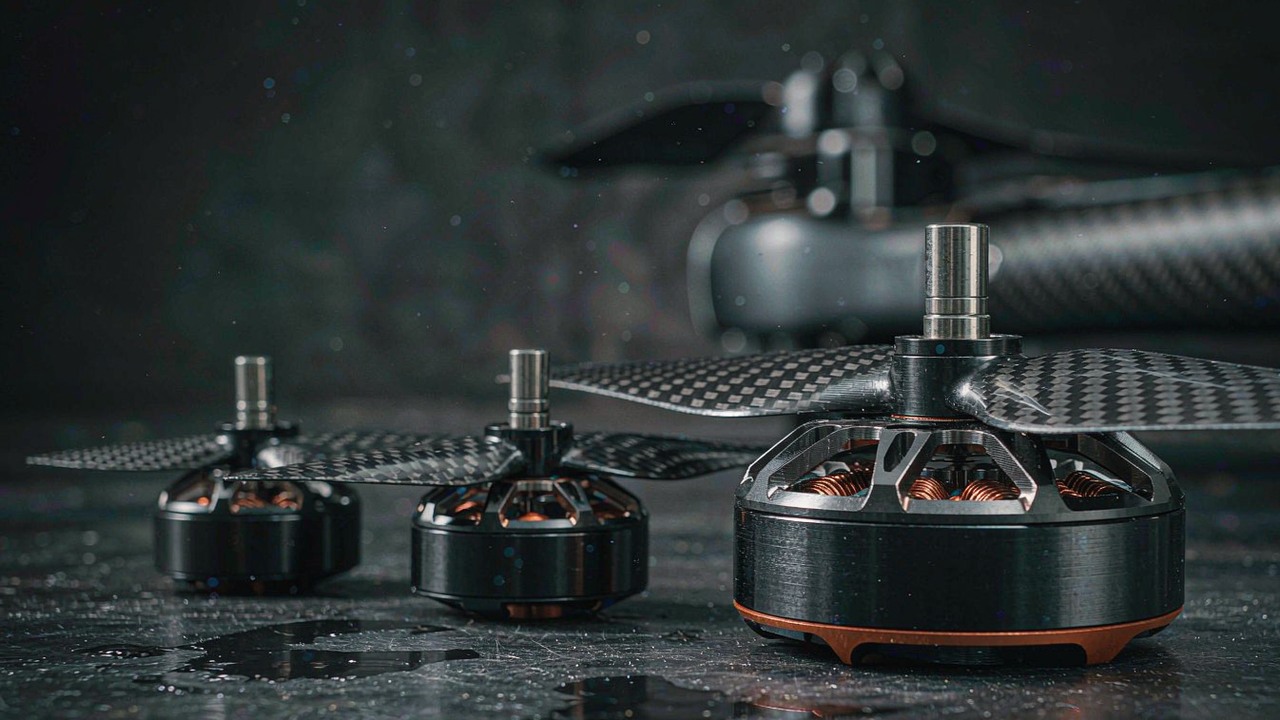
The six records below are the FPV Racing Drone motors that the platform's application set draws on. They are all published by T-Hobby, and they span the classes a racing pilot works across, from a 3-inch unit to a 7-8 inch long-range motor.
| Model | Class | Configuration | Maximum Thrust | Weight | No. of Cells (LiPo) | Envelope |
|---|---|---|---|---|---|---|
| T-Hobby F30 | 3-inch | 9N12P | 351 g | 9.8 g | 4S | Ø17.9 × 17.4 mm |
| T-Hobby F50 KV2150 | 5-inch | 12N14P | 2136 g | 28.56 g | Not listed | Ø27 × 29.5 mm |
| T-Hobby F60PRO IV V2 KV1750 | 5-inch | 12N14P | 1730 g | 33.5 g | 4-6S | Ø26.8 × 32.7 mm |
| T-Hobby F60PRO V KV1750 | 5-inch | 12N14P | 1883 g | 34.3 g | 4S | Ø26.8 × 31.7 mm |
| T-Hobby F80 PRO KV1900 | 5-6 inch | 12N14P | 2115 g | 39.7 g | 3-6S | Ø29 × 33.6 mm |
| T-Hobby F90 KV1300 | 7-8 inch | 12N14P | 2361 g | 46.6 g | 5-6S | Ø33.4 × 34.7 mm |
All six motors are listed by T-Hobby and recorded in the ToBMS Drone Motors category, and every value in the table is shown as recorded. One record gap is marked Not listed: the cell figure for the F50 KV2150. The winding resistance for the F60PRO V KV1750 is also absent from the record and is discussed in the text rather than carried in the table. Maximum thrust is published per propeller and throttle point, so a comparison holds only where the test conditions match. Class is taken from the manufacturer's own product designation; the F50 KV2150 weight is quoted by the manufacturer excluding cable, while the other weights include it. Where the record is silent, the manufacturer's datasheet is the source to confirm.
Three things stand out once the six are read as a set. First, the class spread is wide enough that a single shortlist across all six would be meaningless: a 3-inch unit and a 7-8 inch unit are not alternatives to one another. Second, the mass range runs from 9.8 g to 46.6 g, and every gram of it sits at the end of an arm. Third, the stator configuration is uniform at 12N14P across the five larger motors, with the smallest unit alone on a 9N12P stator, so configuration is a weak discriminator here and propeller class is a strong one.
The reading that follows from that is a narrowing sequence rather than a ranking. The class removes candidates; the pack decides which of the remaining motors will spin at a useful speed; and the transient values, resistance and thrust, decide between the survivors.
Reading the Six from 3-Inch to Long Range
The six motors do not compete with each other so much as they occupy different parts of the same class. Read from the lightest to the heaviest, they describe a progression from a small, fast 3-inch motor to a large, slower long-range one, and the same progression separates one FPV racing drone motor from another.
The 9.8 g end: the F30 and the 3-inch class
The T-Hobby F30 is the one motor in this set built for a 3-inch frame: 9.8 g on a 9N12P stator, a body of 17.9 mm by 17.4 mm, a 4S rating and a published maximum thrust of 351 g. Nothing else here is in its class. Placing a 33 g motor on a 3-inch airframe costs more in agility than it returns in thrust, because the mass sits where the frame can least tolerate it and the small disc cannot justify it.
The 28.56 g and 33.5 g pair: 5-inch racing
The T-Hobby F50 KV2150 is the outlier of the whole set at 2150 KV and 28.56 g, with a published maximum thrust of 2136 g; it is the lightest of the 5-inch motors and the highest KV. The T-Hobby F60PRO IV V2 KV1750 takes a different route: 33.5 g, a 4-6S cell range and 1730 g of published thrust, which makes it the motor to read when the same airframe may be flown on one pack one day and a higher cell count the next.
The 34.3 g F60PRO V: the 4S efficiency pick
The T-Hobby F60PRO V KV1750 carries the highest published thrust of the three 5-inch motors at 1883 g, on a 4S rating and a 12N14P stator at 34.3 g. Its winding resistance is not held in the record, so the comparison with its neighbours stops at thrust, mass and cell count; the resistance figure sits with the manufacturer's datasheet.
The 39.7 g and 46.6 g end: F80 PRO and F90 long range
The T-Hobby F80 PRO KV1900 extends the class outward: 39.7 g, a 3-6S window and 2115 g of published thrust, sized for larger 5-6 inch builds. The T-Hobby F90 KV1300 closes the set at 46.6 g, 1300 KV and 2361 g of published thrust, with a body of 33.4 mm by 34.7 mm and a 5-6S window. At that end the brief has changed: the motor is no longer chosen for the fastest possible transient but for turning a large propeller at a lower speed with more torque, which is what a 7-8 inch long-range or X8 airframe asks for.
Build Classes and the Motor Window Each One Sets
Each racing class sets a window rather than a single answer, and the six motors here map onto those windows directly.
The 3-inch and whoop-class window
A 3-inch frame is the smallest of the classes covered here, and its motor window is defined by mass and by rotor speed. The light motor with a small stator and a 4S rating is the fit; anything heavier moves the airframe's handling in the wrong direction. This class and the larger ones sit together under FPV racing drone applications, because the discovery question is the same even where the numbers are not.
5-inch racing and the pack decision
The 5-inch class is the largest group in this set, with four motors inside it, and that is where the pack decision does the most work. A low KV winding with a wider cell range suits an airframe that changes pack between sessions; a higher KV winding with a lower cell count suits an airframe that stays on one pack and wants maximum rotor speed. Thrust, mass and cell range separate the four; KV explains why.
6-8 inch long range and cinelifter
Beyond 5-inch, the brief changes from response to endurance and payload. The two largest motors here, at 39.7 g and 46.6 g, carry the cell ranges and stator volumes that a 6-8 inch propeller needs, and the values that matter shift accordingly: mass is gained deliberately, KV falls, and thrust is read against a heavier all-up weight rather than against a racing corner. A platform in this class is compared with the Long Endurance UAV class rather than with a 5-inch racer.
Choosing a BLDC Motor for an FPV Racing Drone: A Sizing Sequence
The order matters more than any single value, because each step removes candidates instead of ranking them.
Fix the propeller class and the airframe first
Frame size decides the propeller, and the propeller decides everything downstream. Starting from a motor and looking for a frame is the usual way to end up with a component that is the wrong size for the job.
Fix the pack, then the KV that goes with it
The cell count sets the voltage, and KV sets the unloaded speed at that voltage. Choosing a KV before a pack, or a pack before a KV, leaves the other half of the pair unconstrained, and the two only work as a pair.
Set the thrust-to-mass budget against the recorded thrust figure
Maximum thrust is compared with the all-up weight to establish margin for control authority. Because the figure is published per propeller and throttle point, the comparison only holds where the test conditions match the intended build.
Ask the manufacturer for the figures the record leaves open
Where a record carries no value for cell count, resistance or power, the honest step is to treat it as an open question and confirm it against the datasheet, not to assume a value from a neighbouring model. Three of the six records here leave at least one of those figures open.
Frequently asked questions
QWhat is the first specification to compare when choosing a BLDC motor for an FPV racing drone?
Propeller class, because the frame fixes the disc size and the disc size fixes the motor's operating range. Class removes candidates rather than ranking them: a 3-inch unit belongs on a 3-inch frame and a 7-inch unit on a 7-inch frame, and mixing them costs handling without returning thrust. Every later value, KV, mass and resistance, is read inside the class that the frame has already set.
QDoes a higher KV BLDC motor make an FPV racing drone faster?
Not on its own. KV describes rotor speed per volt with no load, so a higher KV winding reaches its speed on a lower cell count, and a lower KV winding reaches a comparable speed on a higher one. The useful question is which combination of pack and propeller lands the rotor at a workable speed for the frame, and a change of KV usually forces a change of pack or propeller to go with it.
QWhy is winding resistance reported for some of these motors but not all?
Winding resistance is recorded where the manufacturer publishes it, and left open where it is not. Five of the six records in this set carry a resistance figure and one does not. The value belongs in the transient comparison alongside thrust, so a missing figure is treated as a question for the manufacturer rather than filled in from a neighbouring model.
QIs maximum thrust a like-for-like figure across these six motors?
Only where the test conditions match. A thrust figure is published for one propeller at one throttle point on one rig, so two motors compared on different propellers are not being compared fairly. The recorded values span 351 g to 2361 g across this set, and the figure is most useful when read together with the class it was measured in and the all-up weight it has to lift.
QHow much does the mass of a BLDC motor matter on an FPV racing drone?
Mass at the arm end is paid for on every corner, because the moment of inertia a motor contributes grows with the square of the arm's length. The six motors here run from 9.8 g to 46.6 g, which is enough spread to change how an airframe feels even where the thrust figures are close. Weight and thrust belong in the same comparison rather than on separate shortlists.
QWhy is power quoted over a stated window rather than as a single number?
Because a maximum power figure is a statement about the electrical load a motor is expected to carry for a stated time. The manufacturer names the window alongside the figure, and a figure carried over a shorter window is not directly comparable with one carried over a longer one. Where a record carries no power figure, the datasheet is the place to confirm both the value and the window behind it.
Official resources
All six motors in this guide are published by T-Hobby, and the manufacturer's product pages carry the datasheets and test data that the platform records do not reproduce. The current pages are the F30, the F50 KV2150, the F60PRO IV V2 KV1750, the F60PRO V KV1750, the F80 PRO KV1900 and the F90 KV1300, with the wider range at the T-Hobby official site. Where a platform record is silent, the manufacturer remains the source of truth for the cell figure, the winding resistance, the power window and the mounting drawing. The figures used in this guide are the published values held in the platform's product records.
Where to go next
The sibling guide to this one is FPV Racing Drone Motors: Four T-Hobby Options from 9.8 g to 34.3 g, which compares four of the same motors head to head across the 3-inch and 5-inch classes. Where the choice is between racing and the wider drone-motor picture, Drone Motors: FPV, Fixed-Wing and VTOL Motor Selection reads FPV alongside fixed-wing and VTOL airframes and the different values each one asks for. This guide starts from the duty a race imposes instead, and works outward to the specification that the duty makes binding.
Two adjacent routes are worth following where the airframe changes. Where the brief becomes endurance rather than response, the Fixed Wing Model application and BLDC Motors for Fixed-Wing Model: Matching KV, Propeller and Cruise Power works through the cruise-power side of the same trade. Where it becomes payload, Heavy-Lift Drone Motors: Three T-Motor Options from 2.85 kg to 101 kg Thrust sets out how thrust and mass are read when the aircraft is sized around what it carries. Narrowing the choice of BLDC motors for FPV racing drones on a new build follows the same order in each case: class first, pack second, transient last.