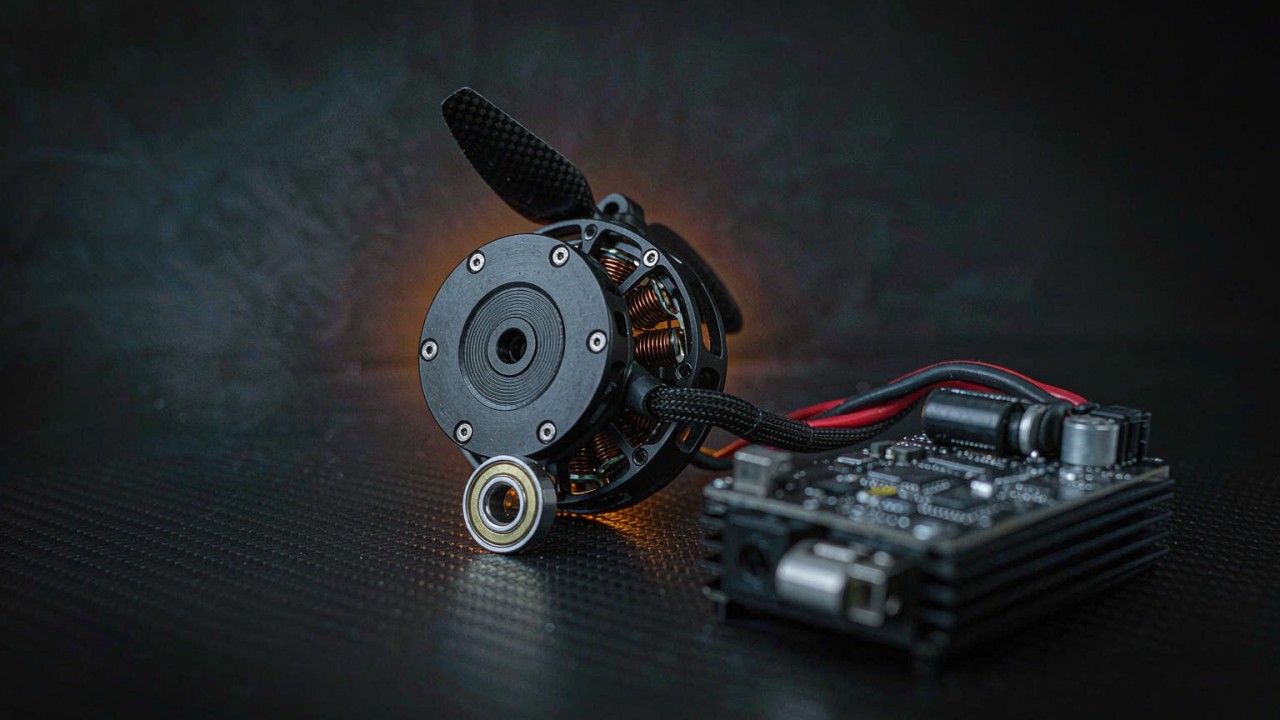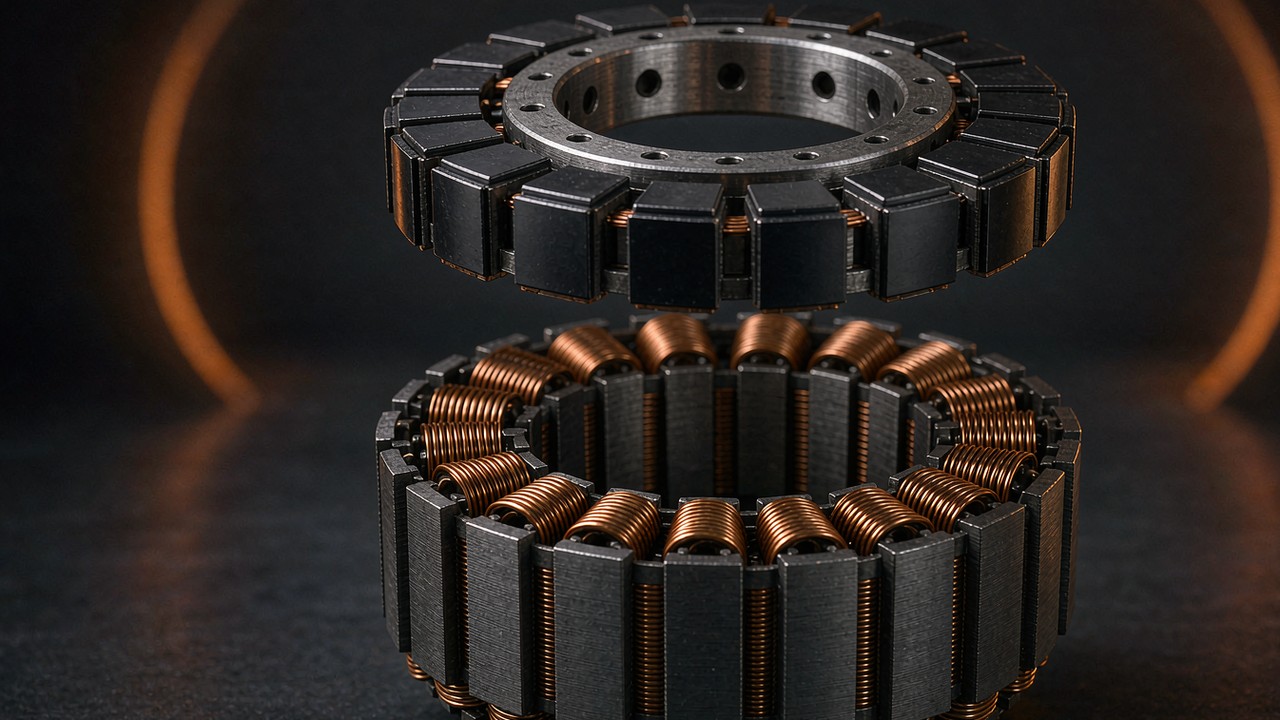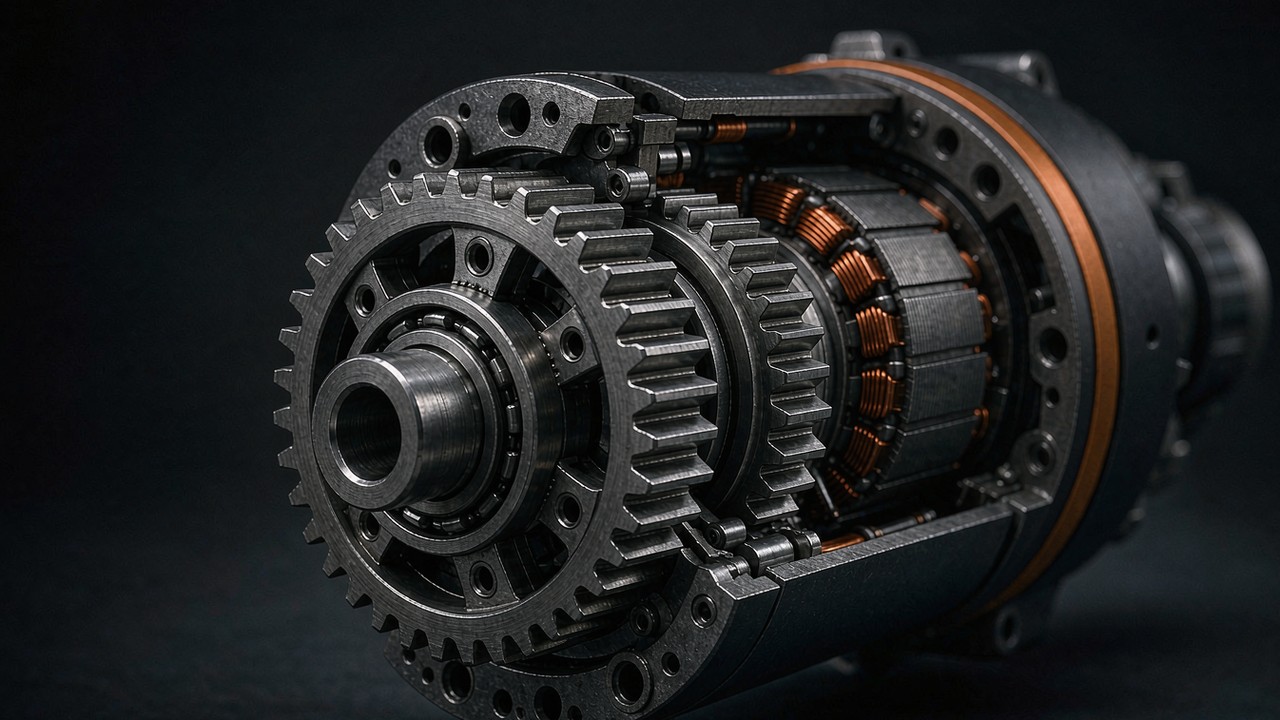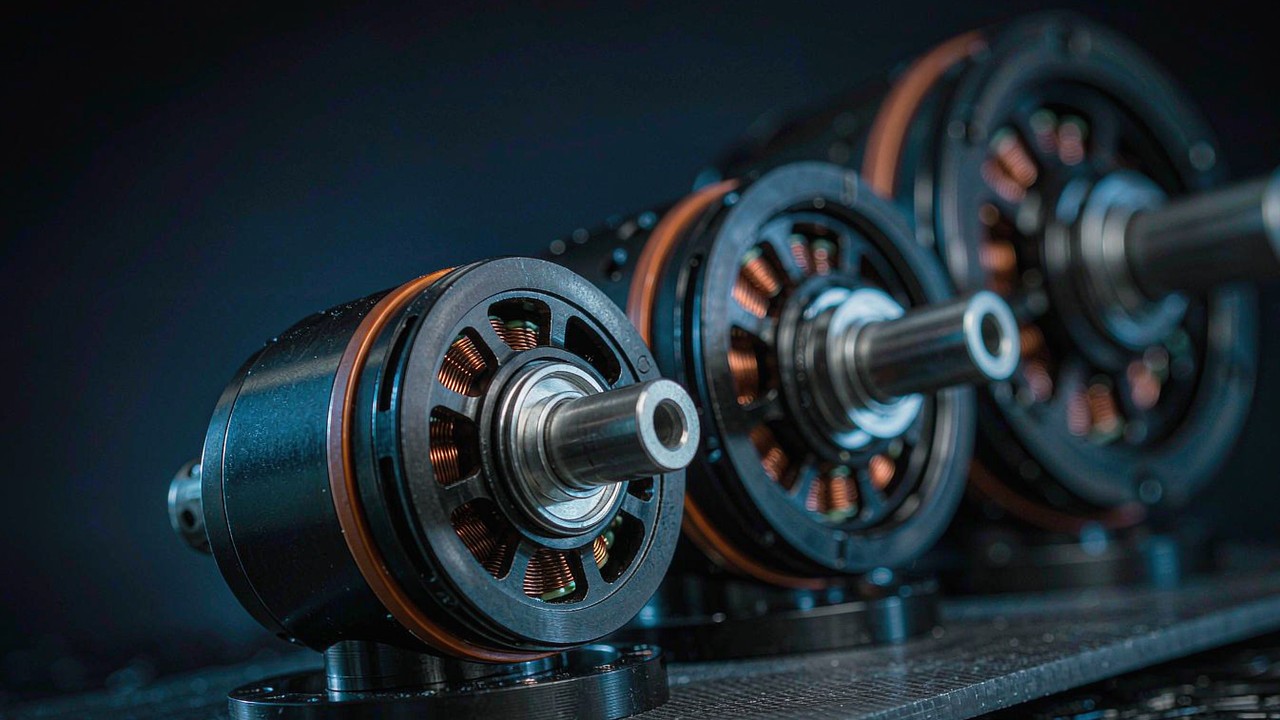
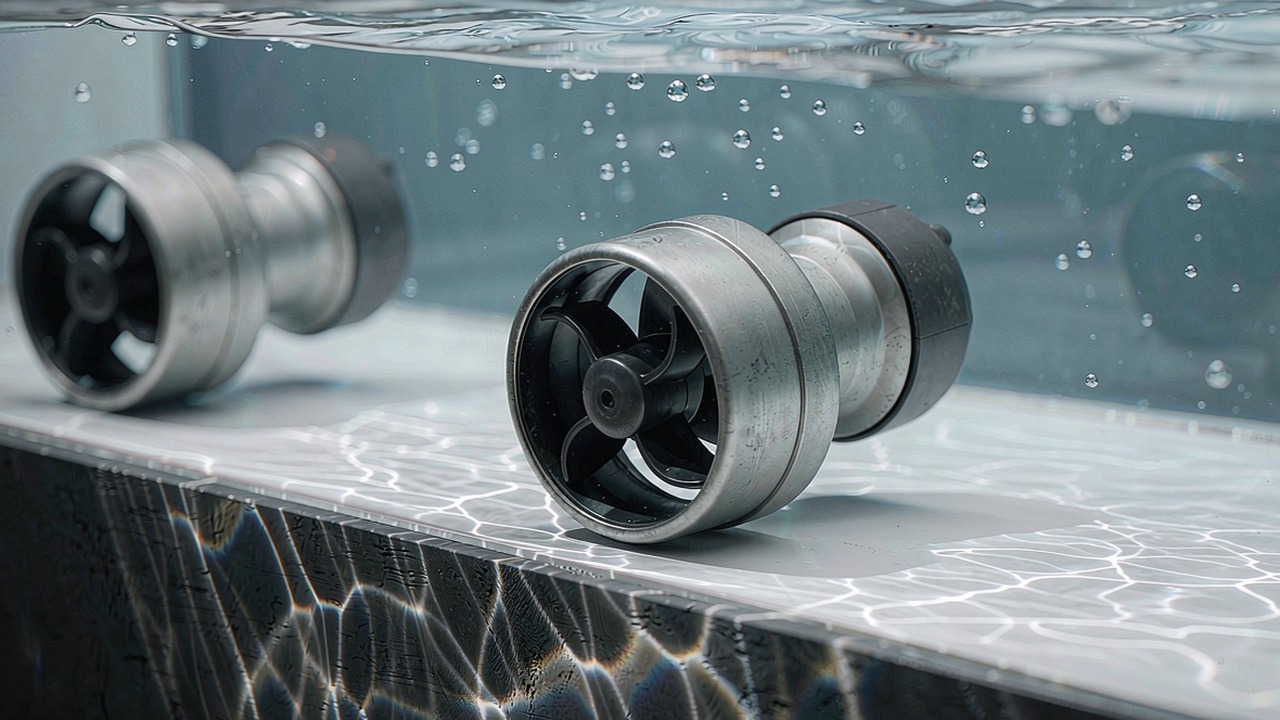
An underwater thruster is a propulsion unit that has to survive the environment it works in as well as produce the thrust it promises. Sealing, corrosion resistance and the depth rating are not secondary specifications here - they are the difference between a vehicle that completes a survey and one that floods a compartment at 200 metres - and they are the reason a subsea thruster is specified quite differently from an equivalent-power motor in air.
This guide covers how sealed thrusters with integrated drives are specified, which figures actually change a design decision, and how the seven models currently listed in the ToBMS Underwater Thrusters category compare. Every figure below is taken from ToBMS product data or the manufacturer's published specification - none of it is estimated.
Quick Answer
An underwater thruster is a sealed propulsion unit combining a brushless motor, a propeller and - in this category - an integrated ESC with bidirectional drive, so a single unit can push a vehicle in either direction without a separate reversing gearbox or valve. Selection starts from the thrust the vehicle needs to hold station or manoeuvre, then narrows on bus voltage, rated power and depth rating. Two families are involved here: the SW series rated to 30 m for shallow-water and inspection-class ROV work, and the DW series rated to 350 m for deeper missions. Within each family, thrust to power is consistent, so the choice is usually made on thrust, depth and mass together.
What decides an underwater thruster
Five figures do most of the work, and one of them is a definition rather than a number.
Maximum mooring thrust
Thrust in this category is published as maximum mooring thrust - the static thrust produced at zero forward speed. That is the condition that matters for holding station against a current, starting a manoeuvre from rest or fighting a tether, and it is the highest thrust the unit will produce: as soon as the vehicle moves, thrust falls away. Comparing thrust figures between thrusters is therefore only meaningful if all of them are quoted at the same zero-speed condition, and if the vehicle's drag at the mission speed is calculated separately. A thruster sized on the mooring figure alone will station-keep well and transit slowly.
Rated power and the thrust-to-power ratio
Rated power defines what the thruster consumes at its rated operating point, and together with thrust it defines the efficiency of thrust production. Across this category the ratio sits in a narrow band - roughly 18.5 to 23 kgf per kilowatt - which suggests a single design philosophy applied at seven different sizes rather than a range with weak and strong points. That matters for planning: if the vehicle's power budget is fixed, the thruster choice becomes a matter of how many units to fit and how they are vectored, not of hunting for a more efficient model.
Bus voltage and current
The two families split on voltage: the smaller units run on a 36 V bus, the larger ones on 48 V. As with any propulsion system, voltage sets the current needed for a given power, and at 1315 W on the largest unit the current draw is what decides cable gauge, connector rating and the battery or power-supply architecture on the surface. Vehicles that carry their own batteries have a further constraint - the pack has to be inside a pressure-rated housing, which usually pushes the design toward higher voltage and lower current for the same thrust.
Depth rating
This is the specification that separates the two families most sharply: the SW series is rated for 0 to 30 m and the DW series for 0 to 350 m. Depth rating is a property of the sealing system and the housing, not of the motor, and it is the one figure that cannot be improved after purchase. A 30 m unit can be used at 5 m, but a 350 m unit is not made stronger than necessary for shallow work - it is designed for a different pressure regime, which is generally visible in mass and in the sealing arrangement.
Integrated ESC and bidirectional drive
ToBMS describes this category as sealed thrusters with integrated ESC and bidirectional drive. Practically, that means the unit is commanded rather than wired - the vehicle's control system sends a thrust or speed setpoint, and the integrated electronics handle commutation and direction. Bidirectional drive removes the need for a separate reversing mechanism, which is what allows a multi-thruster ROV to be vectored and controlled by software alone. It also means the thruster's thermal and current limits are set by electronics that are inside the same sealed housing, so the rating is a system rating rather than a motor rating.
Seven underwater thrusters compared
The table covers the thrusters currently listed in the Underwater Thrusters category, ordered from lightest to heaviest. Thrust is the published maximum mooring thrust and power is the rated figure at the stated voltage.
| Model | Maximum Thrust | Rated Power | Rated Voltage | Applicable Water Depth | Envelope | Weight |
|---|---|---|---|---|---|---|
| SW7 | ≥7 kgf | 360 W | 36 V | 0-30 m | Ø100 × 125.5 mm | 700 g |
| DW10 | 10 kgf | 540 W | 36 V | 0-350 m | Ø100 × 148 mm | 840 g |
| SW12 | ≥12 kgf | 520 W | 48 V | 0-30 m | Ø130.6 × 151.5 mm | 1180 g |
| DW15 | 15 kgf | 750 W | 48 V | 0-350 m | Ø130.6 × 174.5 mm | 1260 g |
| SW17 | ≥17 kgf | 870 W | 48 V | 0-30 m | Ø130.6 × 163.5 mm | 1350 g |
| DW20 | 20 kgf | 910 W | 48 V | 0-350 m | Ø152 × 182 mm | 1630 g |
| DW25 | 25 kgf | 1315 W | 48 V | 0-350 m | Ø152 × 191 mm | 1790 g |
Maximum mooring thrust (measured at zero forward speed), rated power at the stated bus voltage, depth rating, envelope and mass as published by the manufacturer. The SW series thrust figures are published as minimums rather than exact values. Envelope gives the outer diameter and length as carried in the manufacturer’s datasheet.
Read as a set, the seven units form a continuous thrust range from 7 to 25 kgf with no obvious gap, and the efficiency is consistent across it. What separates the families is depth and mass for a given thrust: at 12 to 17 kgf the SW models weigh 1180 to 1350 g while the DW models at 15 to 20 kgf weigh 1260 to 1630 g. The DW units are heavier for comparable thrust because the pressure-rated sealing and housing add material that has nothing to do with producing thrust. If the mission never goes below 30 m, that extra mass is being carried for nothing - and on an ROV whose endurance and payload are already tight, that is a real cost.
Thrust per unit mass rises with size within the DW family, from about 11.9 kgf/kg on the DW10 to 14.0 kgf/kg on the DW25. The largest unit is also the most mass-efficient, and the two largest DW models share a 152 mm diameter while differing in length and mass - a useful detail when the frame has a fixed mounting envelope and the payload budget can absorb 160 g to gain 5 kgf of thrust.
SW series: SW7, SW12 and SW17
The SW family is rated to 30 m and is the lighter option at any given thrust. All three are described in ToBMS as sealed thrusters with integrated ESC and bidirectional drive.
SW7: 7 kgf in 700 g
The SW7 is the entry point: at least 7 kgf of thrust from 360 W of rated power at 36 V, in a 700 g unit. Its ToBMS overview cites an optimized propeller and sealing design for small ROVs and AUVs. At 360 W on a 36 V bus the current draw is modest, which keeps cable and connector requirements simple on a small vehicle - the practical constraint on a micro-ROV that may be tethered over anything from 10 to 100 m of cable.
SW12: 12 kgf on a 48 V bus
The SW12 moves to 48 V with at least 12 kgf of thrust from 520 W, at 1180 g. Its ToBMS overview points to inspection-class ROVs, and the voltage step is the notable change: at 520 W a 48 V bus needs roughly a quarter of the current of a 12 V equivalent, which is what makes longer tethers and lighter cable feasible. Inspection work is also the duty where thrust margin matters - a vehicle that has to hold position against current while an operator studies a structure is running thrusters continuously rather than in bursts.
SW17: the largest shallow-water unit
The SW17 reaches at least 17 kgf from 870 W of rated power at 48 V, in a 1350 g sealed unit. ToBMS describes it as providing strong, clean power for work-class ROVs and underwater robots - and at 17 kgf it is the point where a single thruster can move a substantial vehicle, so frame stiffness and mounting become as important as the thruster's own rating. Because the SW family stops at 30 m, this unit will most often be found on vehicles working in harbours, tanks, rivers and shallow coastal sites rather than offshore.
DW series: DW10, DW15, DW20 and DW25
The DW family is rated to 350 m and covers 10 to 25 kgf. The 350 m figure is the defining difference from the SW range.
DW10: 350 m rating at 840 g
The DW10 delivers 10 kgf of thrust from 540 W at 36 V in a Ø100 × 148 mm, 840 g housing. Its ToBMS overview describes it as efficient and low noise, suited to ROV manoeuvring and small underwater vehicles. For a vehicle that needs depth capability but not large thrust - a small survey or observation ROV - this is the model that buys 350 m of depth rating for roughly the mass of the SW7.
DW15 and DW20: the mid-range
The DW15 provides 15 kgf from 750 W at 48 V in a Ø130.6 × 174.5 mm, 1260 g body, and the DW20 provides 20 kgf from 910 W in a Ø152 × 182 mm, 1630 g body. Both are described in ToBMS as balancing thrust, efficiency and durability for demanding ROV missions. The step between them is the interesting one for a frame designer: the 152 mm diameter is shared with the DW25, so a vehicle designed around the DW20 envelope can be upgraded to the larger unit in the same mounting space, at the cost of 160 g per thruster and a modest increase in current draw.
DW25: the flagship
The DW25 is the largest unit in the category: 25 kgf of thrust from 1315 W of rated power at 48 V in a Ø152 × 191 mm, 1790 g housing. ToBMS describes it as delivering powerful, reliable propulsion for large ROVs and heavy underwater vehicles, and it carries the highest thrust-to-mass ratio in the set at about 14 kgf per kilogram. The manufacturer published a dedicated introduction video for it, embedded below.
The manufacturer's introduction to the DW25, showing the sealed unit running in water. Because thrust figures are published as static mooring values, footage of the thruster actually moving water is the most direct way to judge how a 25 kgf rating translates into vehicle motion.
ToBMS video pageWatch on YouTubeWhere underwater thrusters are used
On ToBMS every thruster in this category is associated with a single application, which reflects how specific the duty is.
ROV propulsion and station keeping
ROV thrusters cover inspection, survey, intervention and work-class vehicles. In each case the sizing logic is the same: enough thrust to hold station against the expected current, distributed across enough units that a single failure does not end the dive, and a depth rating that exceeds the deepest part of the operating envelope with margin. The 30 m and 350 m ratings in this category map cleanly onto shallow-water and offshore duties. The five-step sequence that turns those requirements into a specification - thrust and power sizing, sealing, the subsea BLDC choice, propeller ducting and drive integration - is worked through in How to Choose the Right ROV Thruster: A 2026 Engineering Guide.
Thrust distribution and vehicle layout
Because these units are bidirectional and commanded rather than switched, a vehicle's motion is a function of how the thrusters are placed as much as of how much thrust they produce. A layout with separate horizontal and vertical units moves in six axes; one with fewer units trades agility for mass and power. At 7 to 25 kgf per unit, the number of thrusters is usually decided by the failure case and the desired degrees of freedom, then the model is chosen to fit the frame and the power budget.
Selection checklist
Thrusters are sealed units with no field serviceable parts, so a specification error usually means a new vehicle design rather than a component swap. These checks are worth running before the frame is drawn.
Thrust, power and mission
- Calculate the thrust needed to hold station against the expected current plus tether drag, and add margin for the control system to have authority rather than merely balance the load.
- Remember that published thrust is a static mooring figure; calculate vehicle drag at the transit speed separately.
- Total the rated power of all planned thrusters and check it against the battery or surface supply, including the depth-rating requirement for any battery housing.
- Check the bus voltage against cable length and gauge: at 1315 W, a 48 V bus draws substantially less current than a 12 V one for the same thrust.
Mechanical, sealing and integration
- Confirm the depth rating exceeds the mission envelope with margin - it cannot be upgraded later.
- Check the envelope against the mounting frame, particularly the diameter, which is shared between the DW20 and DW25 and therefore offers an upgrade path in the same space.
- Add up the mass of all thrusters; on a small ROV, propulsion hardware is a large fraction of the total and every unit of it comes out of payload or battery capacity.
- Confirm the control interface suits the vehicle's flight controller, and plan for bidirectional commands rather than forward-only throttle.
- Decide the failure case before fixing the number of units; a vehicle that has to keep working after one thruster fails needs more units, not larger ones.
Frequently asked questions
QWhat is maximum mooring thrust and why is it the published figure?
It is the static thrust produced at zero forward speed - the condition that matters for station keeping, starting a manoeuvre or fighting a tether, and the highest thrust a unit will produce. As soon as the vehicle moves, thrust falls away. That makes it a consistent basis for comparing thrusters against each other, but it means the figure cannot be used directly as transit performance: vehicle drag at the mission speed has to be calculated separately, and a thruster sized on the mooring figure alone will station-keep well and transit slowly.
QWhat is the difference between the SW and DW series?
Depth rating and the mass that goes with it. The SW series (SW7, SW12 and SW17) is rated for 0 to 30 m and covers 7 to 17 kgf at 700 to 1350 g. The DW series (DW10 to DW25) is rated for 0 to 350 m and covers 10 to 25 kgf at 840 to 1790 g. For comparable thrust the DW units are heavier because pressure-rated sealing and housing add material that does not contribute to thrust. If the mission stays shallow, that mass is being carried for nothing.
QDo these thrusters need a separate ESC?
No. ToBMS describes this category as sealed thrusters with integrated ESC and bidirectional drive, which means the commutation electronics are inside the sealed housing and the vehicle's controller sends a thrust or speed setpoint instead of driving motor phases directly. Bidirectional drive removes the need for a separate reversing mechanism, so a multi-thruster ROV can be vectored in software. One consequence worth noting: because the electronics share the sealed housing, the current and thermal limits are a property of the complete unit rather than of the motor alone.
QHow many thrusters does an ROV need?
It follows from the degrees of freedom required and the failure case rather than from thrust alone. A vehicle that must keep working after losing one thruster needs more units than the thrust calculation alone suggests, because the remaining units have to take over its share. At 7 to 25 kgf per unit in this category, most designs end up selecting the model that fits the frame and the power budget after the unit count has been fixed by the control layout - and where the frame diameter is shared, as it is between the DW20 and DW25, there is room to trade 160 g per unit for 5 kgf later.
QIs a 36 V or 48 V thruster better?
Neither - the bus voltage is a system decision. A higher voltage draws less current for the same power, which allows longer tethers, lighter cable and lower-loss power distribution; a lower voltage suits small vehicles with short cable runs and simple power systems. In this category the 36 V units are the SW7 and DW10 (360 W and 540 W) and everything above them runs on 48 V up to the 1315 W DW25. The choice should follow the vehicle's power architecture rather than being decided at the thruster.
QWhat happens if a thruster is used deeper than its rating?
It is a sealing failure, not a performance loss: pressure exceeds what the shaft seal and housing were designed for, and water enters the unit. That is why the depth rating is the one specification in this category that cannot be improved after purchase or worked around in software, and why the DW series exists as a separate family at 350 m. Choosing between 30 m and 350 m is a mission decision made before the vehicle layout is fixed, not a cost decision made at the end of it.
Official resources
CubeMars publishes a full product catalogue covering the SW and DW thruster ranges, and each model has an official product page with its complete specification, performance curve and mounting drawing - for example the underwater thruster range. The manufacturer remains the source of truth for thrust curves, sealing specifications and depth qualification; ToBMS keeps the discovery layer searchable and comparable.
Where to go next
If the goal is to shortlist rather than to research, three tools on the platform do the work in sequence. Explore the full Underwater Thrusters category to see every model and specification side by side, filter candidates by thrust, voltage and mass in Select, then place them against each other in Compare Products. Where the same sealed-unit approach is needed for a rotating axis rather than propulsion, the Robotic Actuators category covers that range.
The short version: size the thrusters on the station-keeping case with margin, confirm the depth rating exceeds the mission envelope because it cannot be changed later, check total power against the supply at the chosen bus voltage, then let frame diameter and mass budget pick between the SW and DW families. Everything else - propeller ducting, control interface, mounting hardware - follows from those four.