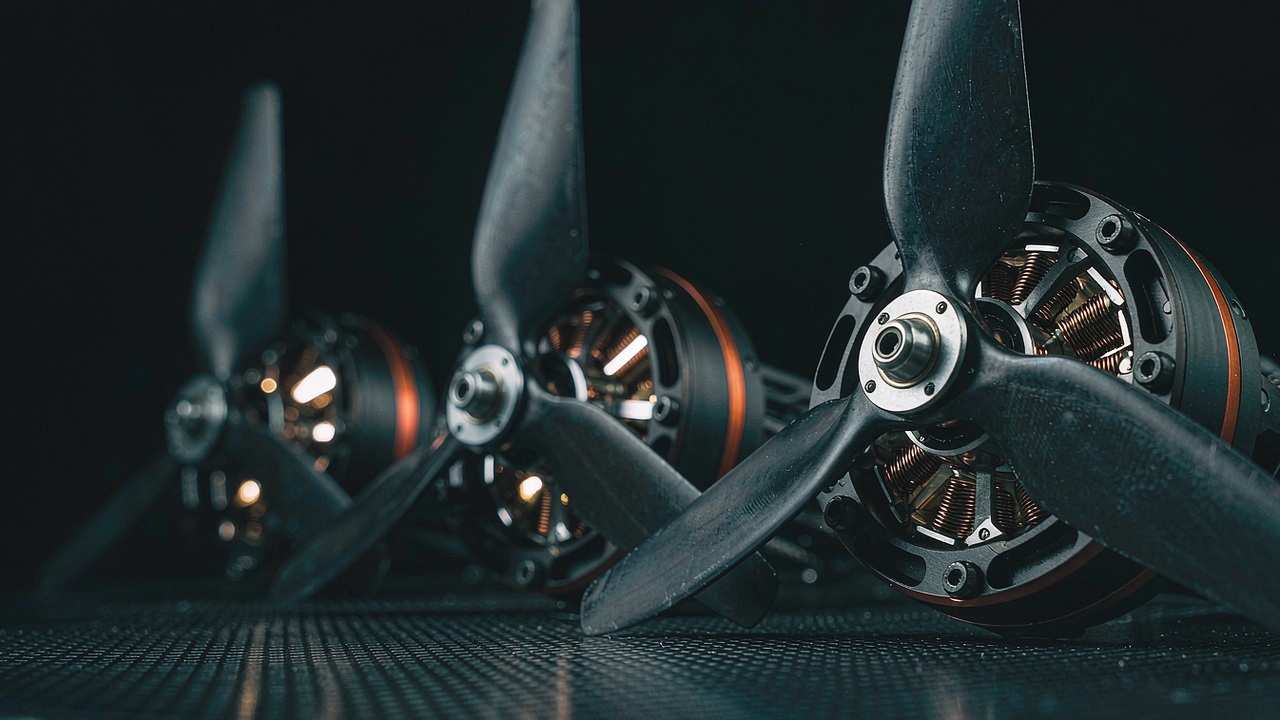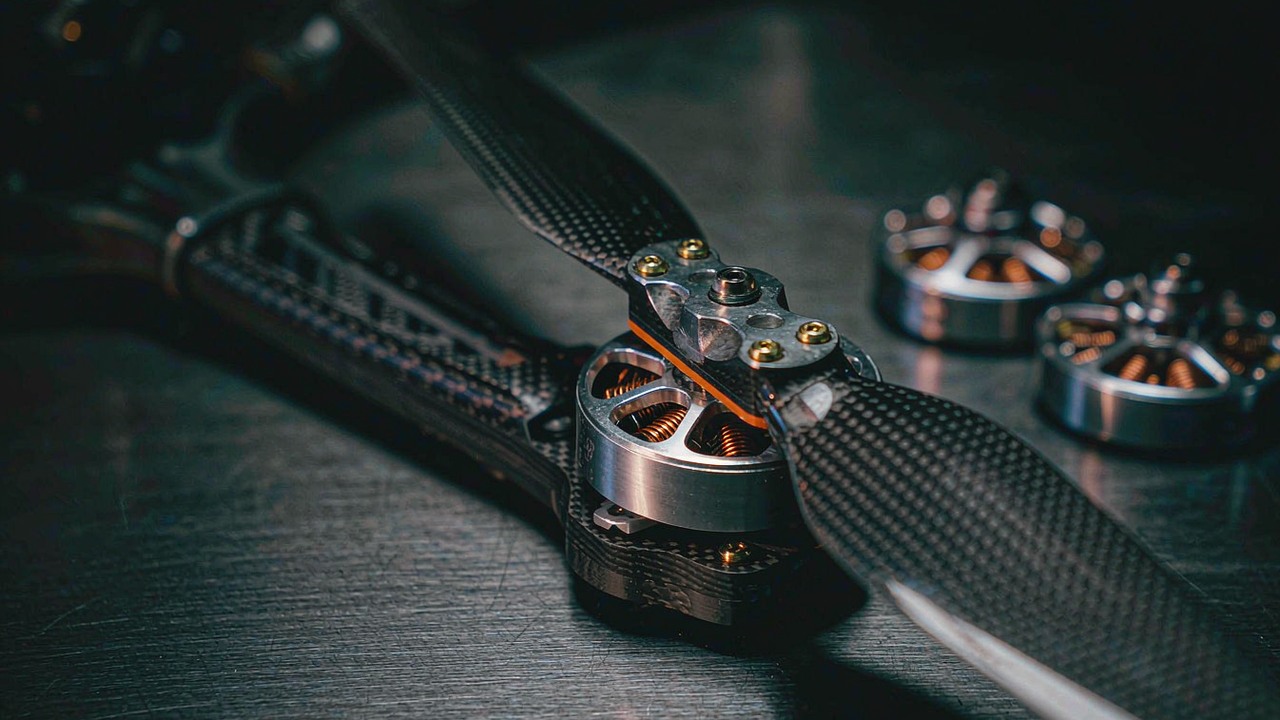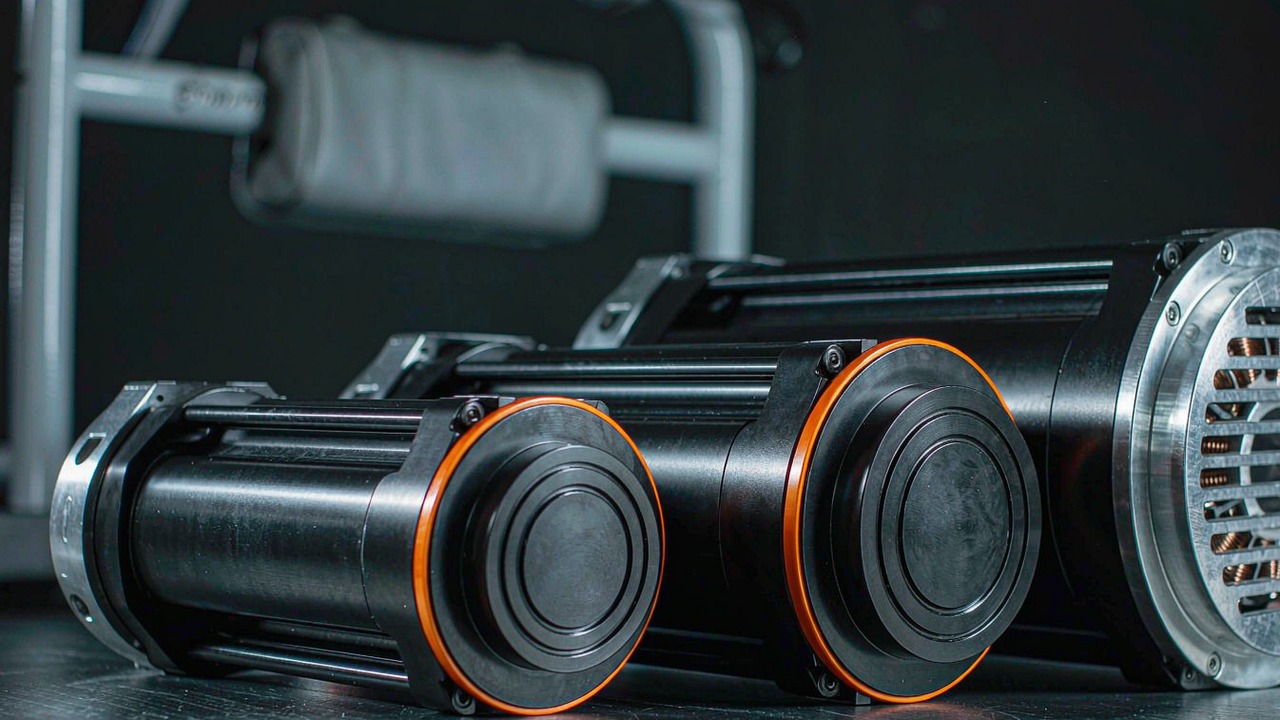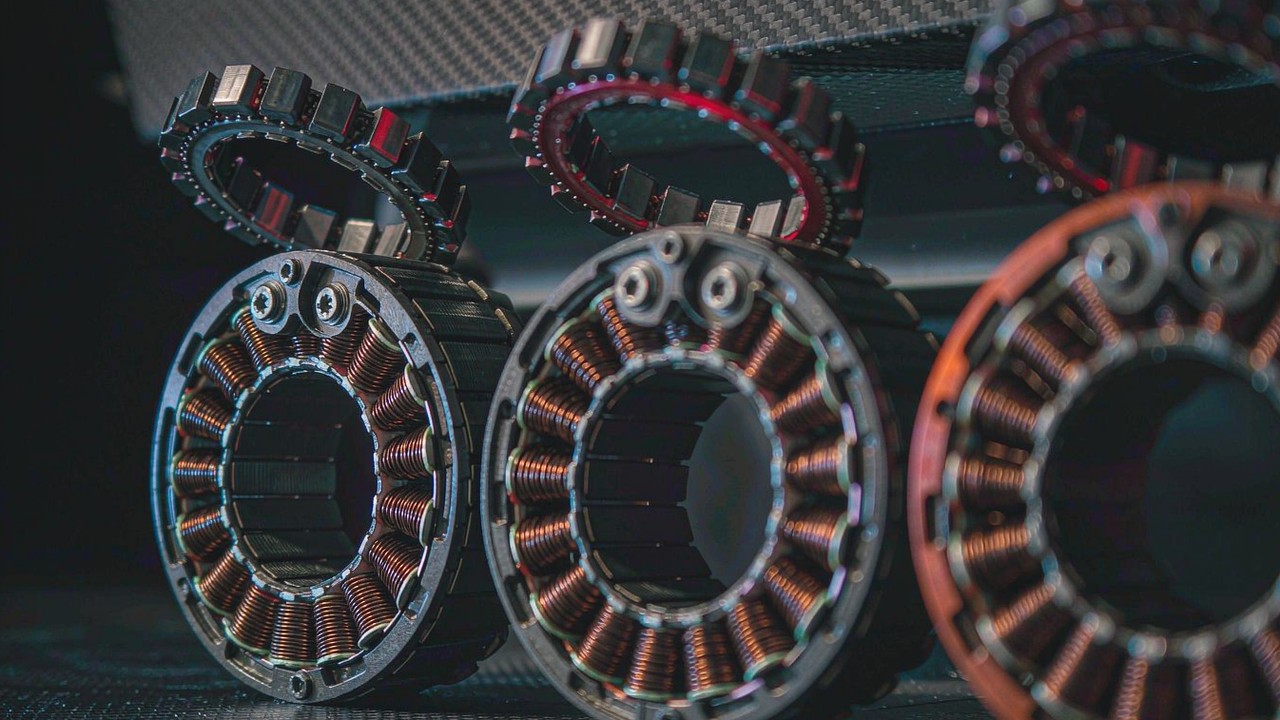
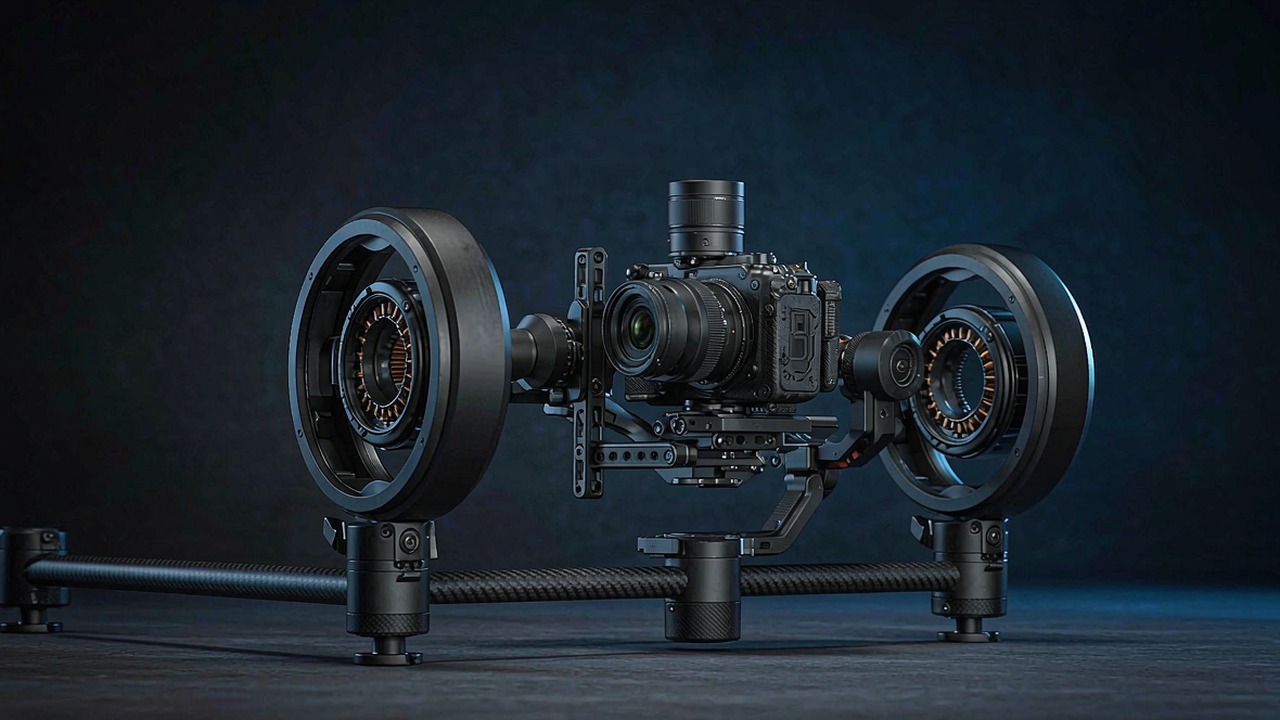
A gimbal motor has to do something a propulsion motor is not asked to do: hold a heavy object still, or move it at a few degrees per second, without any of the small irregularities that a propulsion motor is allowed to have. Judder that would be invisible on a propeller becomes visible on a camera axis, and the whole point of the class is that the torque is smooth, repeatable and free of the cogging steps that appear when a motor is designed for speed instead.
This guide covers how low-KV direct-drive gimbal motors are specified, which figures actually change a design decision, and how the eight models currently listed in the ToBMS Gimbal Motors category compare. Every figure below is taken from ToBMS product data or the manufacturer's published specification - none of it is estimated.
Quick Answer
A gimbal motor is a low-KV, high-pole-count direct-drive brushless motor designed for smooth torque at low speed rather than for power density. It is selected mainly on continuous torque and cogging behaviour, because a stabiliser axis spends its life holding a camera against gravity and correcting small disturbances, not accelerating. KV is low - 9.3 to 255 across this range - and rated output speeds are correspondingly low, from 130 to 1990 rpm. The absence of a gearbox removes backlash from the system entirely, which is the property that makes a direct-drive axis usable as a precision pointing stage.
What makes a gimbal motor different
Five properties separate this class from a propulsion or joint motor of similar mass.
Cogging and torque smoothness
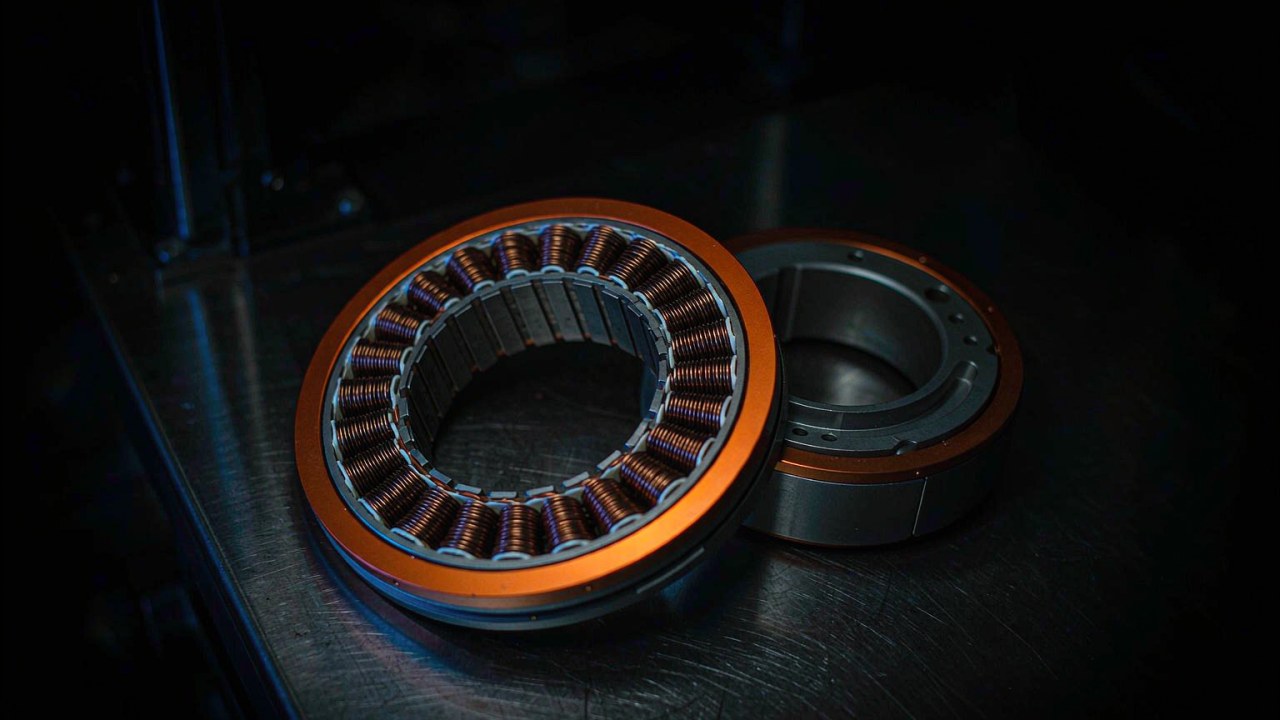
Cogging is the variation in torque as the rotor moves from one preferred magnetic position to the next. On a propeller motor it is largely irrelevant, because the motor runs fast enough that the variation averages out. On a gimbal axis it is not: a visible cogging step becomes a small oscillation in the image when the axis is commanded to move slowly, and it makes fine position control harder for the controller. Higher pole counts and distributed windings generally reduce the cogging step, which is why the larger motors in this category use 14, 20 and 21 pole pairs rather than the 7 seen on the smallest units.
Direct drive and the absence of backlash
Every model in this category is a direct-drive motor - there is no gearbox between the rotor and the camera platform. That is worth stating explicitly, because it removes an entire class of errors: no lost motion on reversal, no accumulated backlash across stages, and no gear friction between the controller's torque command and the load. The trade is that the motor has to produce the full axis torque at its own rotor, which is why these motors are large in diameter for their torque figures compared with a geared equivalent.
Low KV and low rated speed
KV in this range runs from 9.3 to 255, and rated output speeds from 130 to 1990 rpm. A low KV motor produces more torque per amp of current, which is exactly what a slow, fine movement needs: the controller can command small torques accurately at modest current. The consequence is a high pole count at a given speed and a correspondingly high electrical frequency, so the drive still has to be matched - this is not a class where an arbitrary ESC can be substituted.
Flat, large-diameter geometry
These motors are wide and shallow: Ø34.5 × 15.7 mm at the small end, Ø106.8 × 34.2 mm at the large end. The geometry follows the requirement - a large rotor radius develops torque efficiently at low current, and the flat envelope fits the space a gimbal actually has around a camera. It also means the mass is spread over a disc rather than concentrated, which matters for the inertia the axis has to control.
Continuous duty and thermal limits
A camera stabiliser axis may hold a heavy cinema camera against gravity through an entire take. That is continuous torque within thermal limits, not a transient, and it makes the rated torque and rated current figures the primary sizing numbers. Rated power in this category is modest - 12 to 48 W on the units that publish it - because the duty is about holding and correcting rather than about doing work at speed.
Specifications that actually decide the pick
Gimbal motors have short datasheets, and almost every line matters.
Rated and peak torque
Rated torque is what the axis can hold continuously within its thermal limits, and for a gimbal that is the figure which decides whether a camera payload is safe to fly. Peak torque is the maximum the manufacturer specifies under defined operating conditions - useful for checking the transient when a stabiliser has to arrest a movement or react to a gust - but it is limited by winding temperature and magnet margins rather than by mechanical strength, so it is not a load-holding rating and not a mechanical limit. On these models the ratio between the two ranges from about 2:1 on the larger units to 3.5:1 on the smallest.
Current draw at the operating point
Rated and peak current tell the controller what it has to supply and how much heat the winding will generate while holding a pose. Across this category rated current runs from 1.3 A to 2.9 A and peak from 3.3 A to 8.2 A, which is modest in absolute terms but continuous for the length of a take. Where a gimbal is battery powered, this is the figure that matters for endurance; where it is powered from a tether, it sets the cable and driver specification.
Voltage and the drive
These motors are specified at 12, 16 or 24 V. Unlike a propulsion motor, the voltage choice is not about thrust - it sets the available speed range and the current needed for a given torque. The small GL30 runs on 12 V, the mid-range GL40 family on 16 V, and the larger GL60, GL80 and GL100 on 24 V. Matching the drive to the motor's pole count and rated speed is part of the selection, not an afterthought.
Diameter, thickness and mass
The envelope decides what the axis can be built around, and the mass decides what the other axes have to carry. This is a category where mass compounds: the roll axis motor sits at the end of the tilt axis arm, which is moved by the pan axis motor, so grams added at the small end are carried downstream. The spread here is wide - 41 g to 698 g - and the choice between them is driven by payload torque first and envelope second.
Eight gimbal motors compared
The table covers the direct-drive motors currently listed in the Gimbal Motors category, ordered from lightest to heaviest.
| Model | Rated Torque | Peak Torque | Rated Voltage | Envelope | Weight |
|---|---|---|---|---|---|
| GL30 | 0.08 Nm | 0.28 Nm | 12 V | Ø34.5 × 15.7 mm | 41 g |
| GL35 | 0.15 Nm | 0.46 Nm | 16 V | Ø41.8 × 21 mm | 90 g |
| GL40 | 0.25 Nm | 0.5 Nm | 16 V | Ø46.5 × 21.5 mm | 107 g |
| GL40 II | 0.25 Nm | 0.68 Nm | 16 V | Ø46.1 × 33.5 mm | 125 g |
| GL60 | 0.6 Nm | 1.75 Nm | 24 V | Ø69 × 22.3 mm | 230 g |
| GL60 II | 0.6 Nm | 1.5 Nm | 24 V | Ø70.5 × 33.6 mm | 276 g |
| GL80 | 1 Nm | 2.9 Nm | 24 V | Ø87 × 22.3 mm | 312 g |
| GL100 | 3 Nm | 7.7 Nm | 24 V | Ø106.8 × 34.2 mm | 698 g |
Rated and peak torque, rated voltage, envelope and mass as published by the manufacturer. The KV held in the ToBMS record differs slightly from the figure in some product names; for a speed or current calculation the manufacturer's current datasheet is the authoritative source. Rated voltage is marked "Not listed" where no value is carried; it sits with the manufacturer’s datasheet.
The range is spread widely. Rated torque rises from 0.08 Nm to 3 Nm across the eight models - a factor of 37 - while mass rises from 41 g to 698 g, a factor of 17. In other words the largest motor is not simply a scaled-up small one: it carries more torque per gram as well as more absolute torque, which is the usual direction for direct-drive motors because torque scales with rotor radius and magnet volume rather than with mass alone.
The GL100 makes the point concretely. At 698 g it offers 3 Nm rated and 7.7 Nm peak, with 41 W rated power and a rated speed of 130 rpm - the slowest and strongest unit in the set. At the other end the GL30 holds 0.08 Nm at 1990 rpm rated in a 41 g package with 16 W of rated power. They are not substitutes at any payload; they belong to different cameras and different axis positions.
Small axes: GL30 and GL35
Two motors cover the light end of the range, where the payload is a small camera or a sensor head and the axis envelope is tight.
GL30: 41 g, 12 V
The GL30 is the smallest motor in the category: 41 g in a Ø34.5 × 15.7 mm body, with 0.08 Nm rated and 0.28 Nm peak torque, 2.13 A rated and 7.4 A peak current, and 16 W rated power on 12 V. It is a 7 pole-pair design running to 1990 rpm rated with a 3060 rpm no-load speed. Its ToBMS overview targets compact camera gimbals, which is the right frame for a motor of this size: at 0.08 Nm continuous it is a small-payload axis, and the low mass matters because it is the axis most likely to sit at the end of a two-motor chain.
GL35: 90 g with 0.46 Nm peak
The GL35 roughly doubles the diameter and mass to Ø41.8 × 21 mm and 90 g, and lifts rated torque to 0.15 Nm with 0.46 Nm peak at 16 V. Rated current is 1.3 A and peak 4 A, with 13 W rated power and an 815 rpm rated speed. Its recorded winding resistance is 3.6 Ω - and it is a reminder that on a gimbal the resistance figure is about heat while holding, not about efficiency at speed. ToBMS describes it as offering low cogging torque for smooth small gimbal and pointing applications.
Mid-range: GL40, GL40 II and GL60
This is where most camera stabilisers sit, and the three models show how a small change in KV and pole count changes the axis.
GL40 and GL40 II: 0.25 Nm rated, two windings
The GL40 and the GL40 II share a rated torque of 0.25 Nm but differ in speed constant and peak capability: the GL40 is a 63.5 KV, 14 pole-pair motor at 107 g with 0.5 Nm peak, 1.62 A rated and 3.3 A peak current at 16 V, while the GL40 II is an 82.5 KV unit at 125 g with a higher 0.68 Nm peak and 1.88 A rated / 5.22 A peak current. The higher-KV second generation reaches a 1388 rpm no-load speed against the GL40's 1015 rpm. For an axis that has to slew quickly between positions, the extra speed is useful; for one that mostly holds, the difference is smaller than the 18 g of mass.
GL60: 1.75 Nm peak at 230 g
The GL60 is the first motor in the range aimed at larger camera payloads: 230 g with 0.6 Nm rated and 1.75 Nm peak, 1.35 A rated and 4 A peak current at 24 V, in a Ø69 × 22.3 mm body. Rated speed drops to 310 rpm with a 516 rpm no-load figure, and the motor is a 14 pole-pair design. Its ToBMS overview points to professional gimbal systems carrying heavier payloads, and the combination of a low KV and a large diameter is what makes that possible without a gearbox.
Large axes: GL60 II, GL80 and GL100
Above 250 g the motors move into cinema-camera and sensor-head territory, where the axis has to hold real mass against gravity for long periods.
GL60 II: 24N28P for smoother torque
The GL60 II is the odd one out among the larger motors: a 24N28P stator in a Ø70.5 × 33.6 mm, 276 g body, with 0.6 Nm rated and 1.5 Nm peak torque and 1.54 A rated / 4.09 A peak current. Its rated speed of 319 rpm is the third lowest in the category. The 24N28P layout is the specification worth noting - more slots and poles generally mean smoother torque delivery and a smaller cogging step, which is precisely the requirement on a slowly moving camera axis. Its rated voltage of 24 V is carried in the ToBMS record and appears in the table above.
GL80: 1 Nm rated in a 312 g body
The GL80 crosses the 1 Nm continuous threshold at 312 g: 1 Nm rated and 2.9 Nm peak, 2.8 A rated and 8.2 A peak current, 48 W rated power on 24 V, in a Ø87 × 22.3 mm envelope with 21 pole pairs. That pole count, combined with a 450 rpm rated speed, is a deliberately smooth configuration for medium and large gimbal axes - and the 8.2 A peak current is the highest in the category, which matters when specifying the driver.
GL100: the cinema end of the range
The GL100 is the largest motor here: 698 g, 3 Nm rated and 7.7 Nm peak torque, 2.9 A rated and 7.8 A peak current, 41 W rated power at 24 V in a Ø106.8 × 34.2 mm body. Its rated speed of 130 rpm and no-load speed of 223 rpm are the lowest in the set, and its KV of 9.3 is the lowest too - which is simply what a 3 Nm direct-drive axis requires of a 24 V supply. It is a cinema-grade stabiliser motor, and at 698 g it is the one model in this category whose mass will shape the design of the whole gimbal rather than just its own axis.
Where gimbal motors are used
On ToBMS every motor in this category is associated with one application, which reflects how specialised the duty is.
Camera stabilisation on the ground and in the air
Gimbal systems cover handheld stabilisers, drone-mounted camera gimbals and precision pointing platforms. In each case the requirements are the same three: continuous torque to hold the payload against gravity, low cogging for smooth slow movement, and no backlash anywhere in the axis - which is why direct drive is the default rather than a preference.
Adjacent uses of the same motor class
A low-KV, high-pole-count direct-drive motor is also a natural fit for slow, precise motion outside camera work, and the wider range on ToBMS covers the related duties in the Robotic Actuators and Quasi Direct Drive Actuators categories, where the same principle of smooth torque at low speed is applied with a reduction stage and an integrated controller.
Selection checklist
Gimbal motors are usually the last components chosen and the hardest to change once the cage geometry is machined, so these checks are worth running before drawings are released.
Torque and duty
- Calculate the static torque the axis must hold with the camera at its worst-case orientation, including the lever arm from the axis centre, and compare it to rated torque.
- Check the transient case against peak torque - a stabiliser arresting a movement or reacting to a gust - remembering that peak is a thermal limit rather than a mechanical one.
- Confirm rated and peak current against the driver, and check the continuous current against battery endurance where the gimbal is battery powered.
Mechanics and control
- Check the envelope against the space available around the camera, remembering that these motors are wide and shallow by design.
- Add up mass along the chain from the camera outward; on a multi-axis gimbal the small motors are carried by the large ones.
- Confirm the pole count and maximum speed against the drive's commutation capability and update rate.
- Verify that the axis is genuinely direct drive. Any gearing introduced between the motor and the payload reintroduces the backlash this class was chosen to avoid.
- Plan the cable path before the cage design is frozen; a harness that flexes with every axis movement is a fatigue failure in waiting.
Frequently asked questions
QWhy are gimbal motors low KV?
Because they are direct drive and run slowly. A low KV winding produces more torque per amp, which is what a slowly moving or holding axis needs - the controller can command small torques accurately at modest current. All the motors in this category run between 9.3 and 255 KV with rated output speeds from 130 to 1990 rpm, against several hundred KV and tens of thousands of rpm for a propulsion motor. The cost is a high pole count at a given speed and a higher electrical frequency, so the drive still has to be matched to the motor.
QWhat is cogging and why does it matter on a camera axis?
Cogging is the variation in torque as the rotor moves between preferred magnetic positions. On a fast-turning propulsion motor it averages out; on a gimbal axis commanded to move a few degrees per second it becomes a small periodic disturbance that shows in the footage and makes fine position control harder. Higher pole counts and distributed windings generally reduce it, which is why the larger models here use 14, 20 and 21 pole pairs and the GL60 II uses a 24N28P stator.
QDo gimbal motors have backlash?
No - not on their own. Every model in this category is direct drive, with no gearbox between the rotor and the camera platform, so there is no lost motion on reversal and no accumulated backlash across stages. That is a large part of why direct drive is used for stabilisation: a geared axis would introduce position error that no controller can fully remove. Backlash only becomes a consideration if a reduction stage is added between the motor and the payload, at which point the axis is no longer behaving like a gimbal motor.
QCan I run a gimbal motor at its peak torque continuously?
No. Peak torque is the maximum output torque specified under defined operating conditions and is limited by winding temperature and magnet margins rather than by mechanical strength. A gimbal axis holding a camera against gravity is doing precisely the kind of continuous work that has to be sized against rated torque within thermal limits - which on these motors means 0.08 to 3 Nm rather than 0.28 to 7.7 Nm. Peak torque is for the transient case: arresting a movement, or reacting to a disturbance.
QWhich motor for a handheld gimbal and which for a drone-mounted one?
The payload decides, not the platform. A small handheld stabiliser carrying a compact camera sits in the 41 to 125 g range - the GL30, GL35 and GL40. A drone gimbal carrying a larger camera moves into the 230 to 312 g range, where the GL60 and GL80 deliver 0.6 to 1 Nm continuous. Cinema payloads need the GL100 and its 3 Nm rated torque. In every case the mass of the chosen motors is carried by the airframe or the operator, which is the second half of the decision.
QDo these motors need a special controller?
They need a drive that can commutate at the pole count and speed the motor runs at, and that supports the control loop a stabiliser requires - typically field-oriented control with high-resolution position feedback. The pole counts here run to 21, so the electrical frequency at speed is several times the mechanical frequency and the drive's update rate has to be adequate. Treating a gimbal motor as a drop-in replacement for a propulsion motor on an arbitrary ESC is a common source of unexplained vibration.
Official resources
CubeMars publishes a full product catalogue covering the GL gimbal range, and each model has an official product page with its complete specification, drawing and control documentation - for example the gimbal motor range. The manufacturer remains the source of truth for cogging figures, drive recommendations and current firmware; ToBMS keeps the discovery layer searchable and comparable.
Where to go next
If the goal is to shortlist rather than to research, three tools on the platform do the work in sequence. Explore the full Gimbal Motors category to see every model and specification side by side, filter candidates by torque, voltage and mass in Select, then place them against each other in Compare Products. Where a slow, precise axis needs a controller and a reduction stage built in, the Quasi Direct Drive Actuators category is the integrated counterpart to this range.
The short version: size the axis on continuous torque at the worst-case orientation, confirm the transient against peak torque, check that the pole count and speed suit the drive, then let payload and envelope decide between the 41 g and 698 g ends of the range. On a direct-drive axis there is no gearing to correct a mistake made in any of those four.
Where the open question is the bus voltage rather than the axis, 16V vs. 24V Gimbal Motors, How to choose works through what a 16 V or a 24 V label does and does not settle across the same GL range.