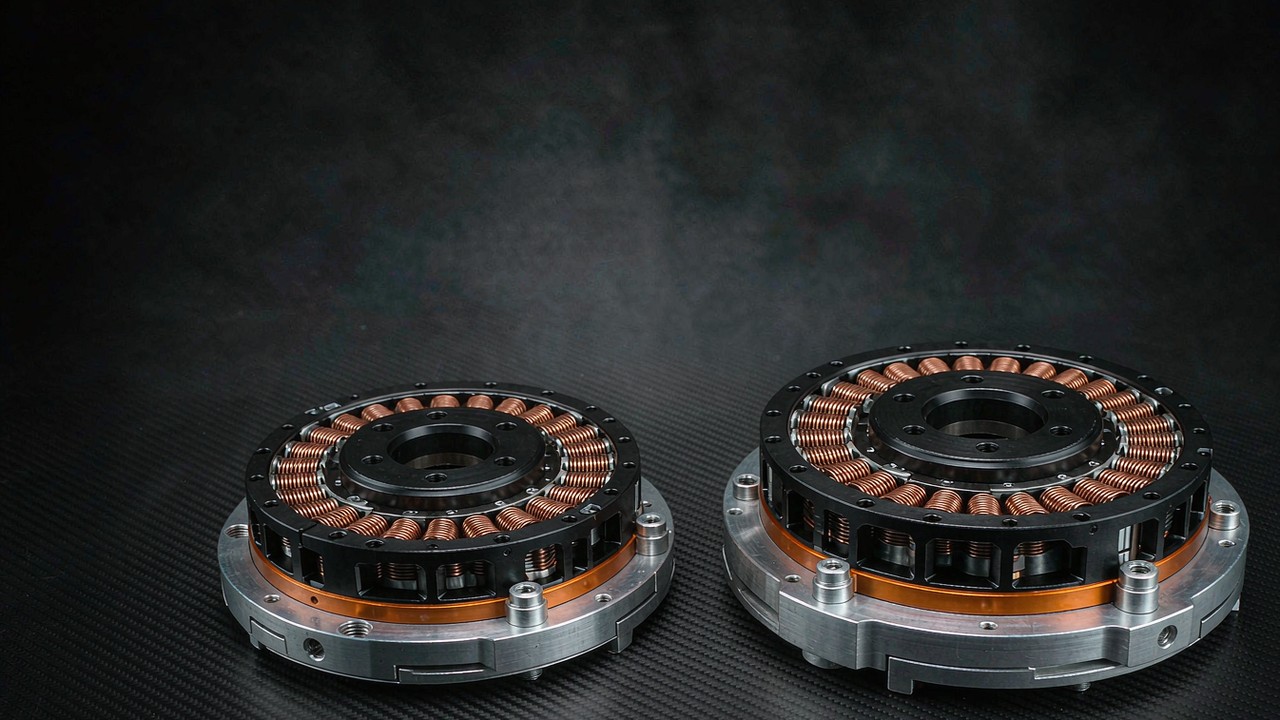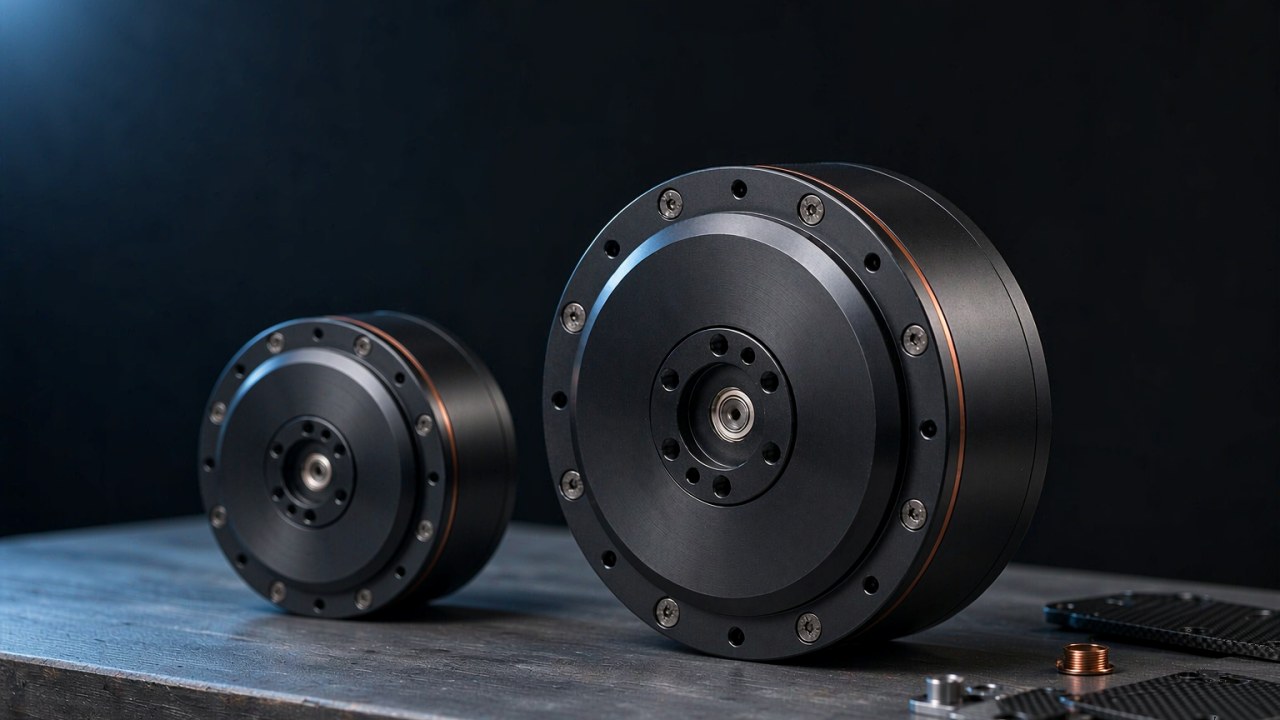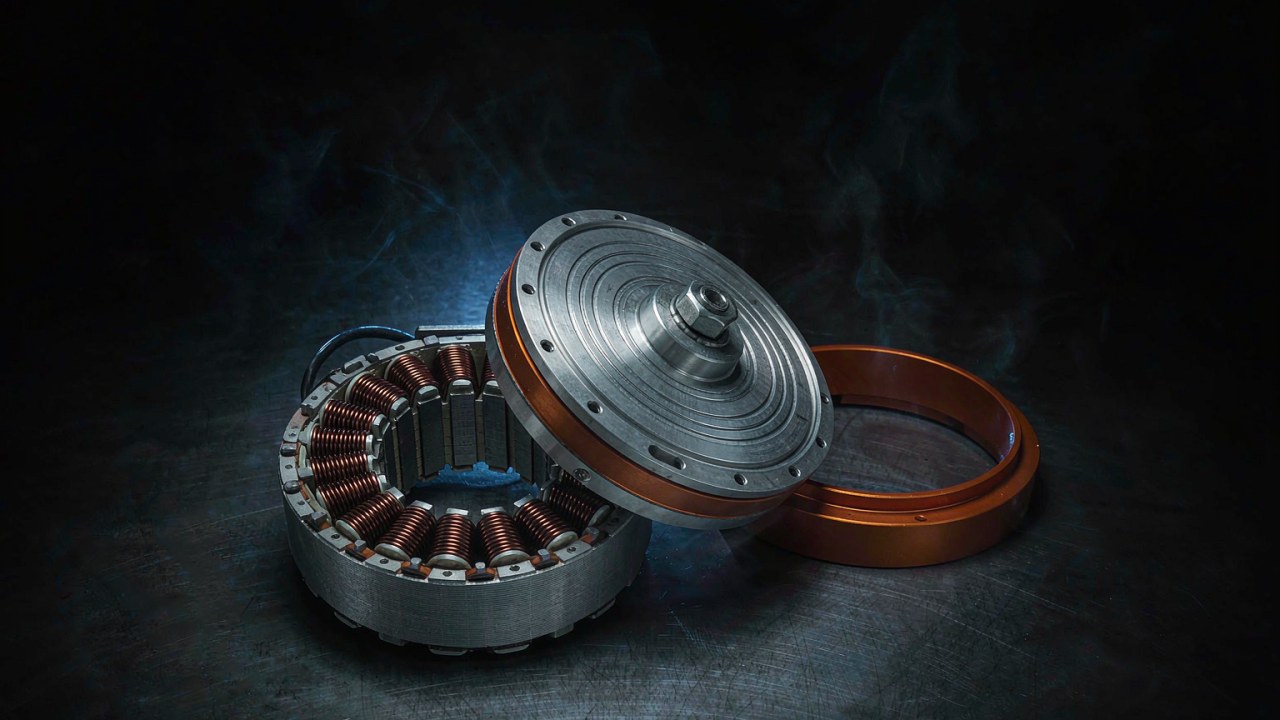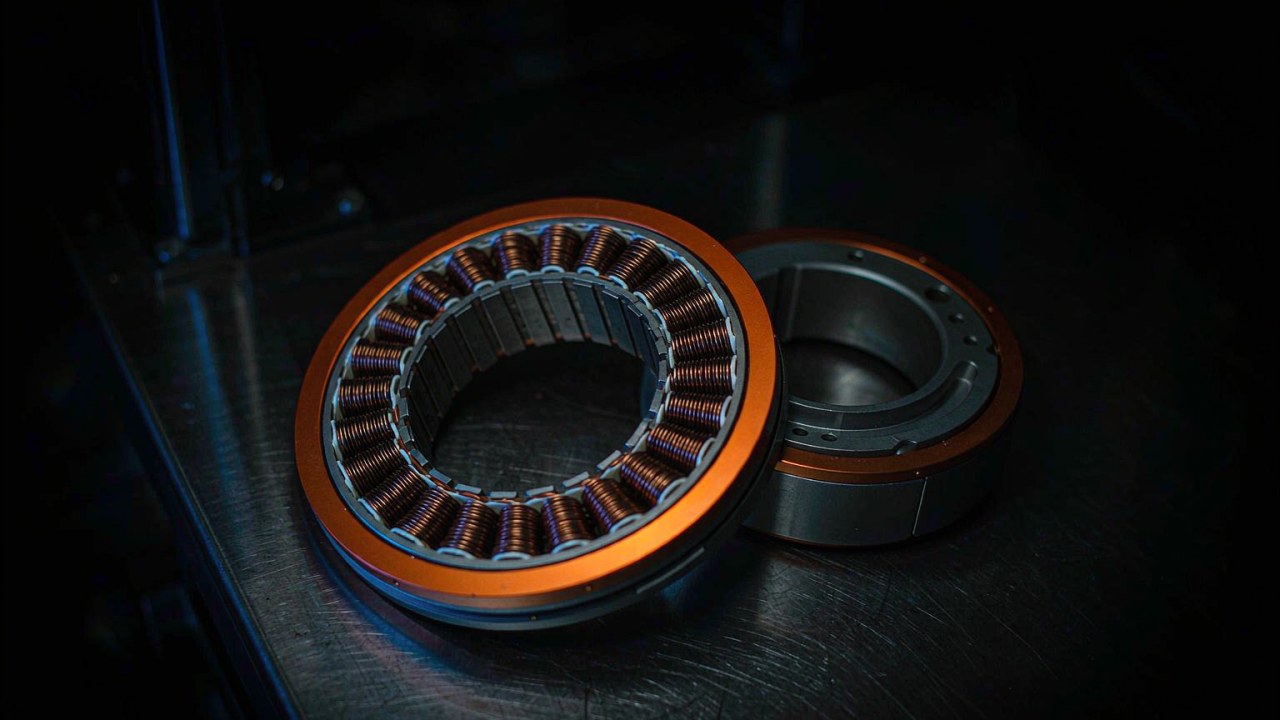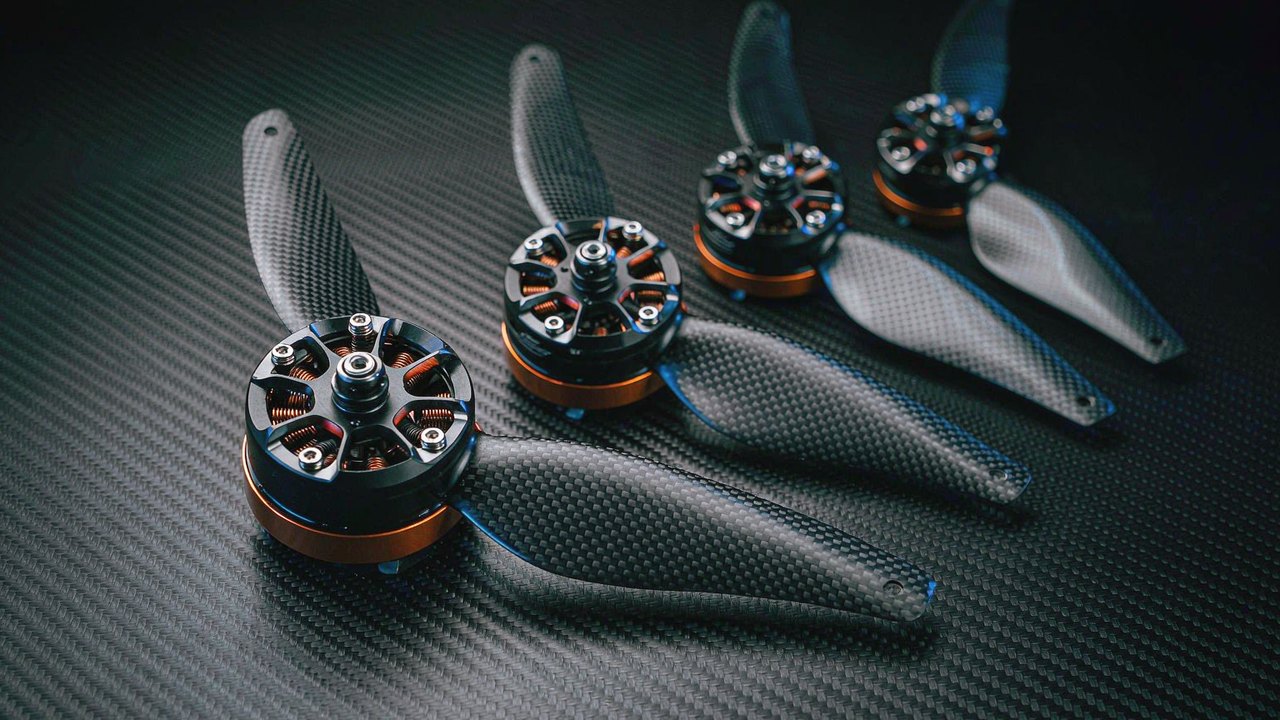
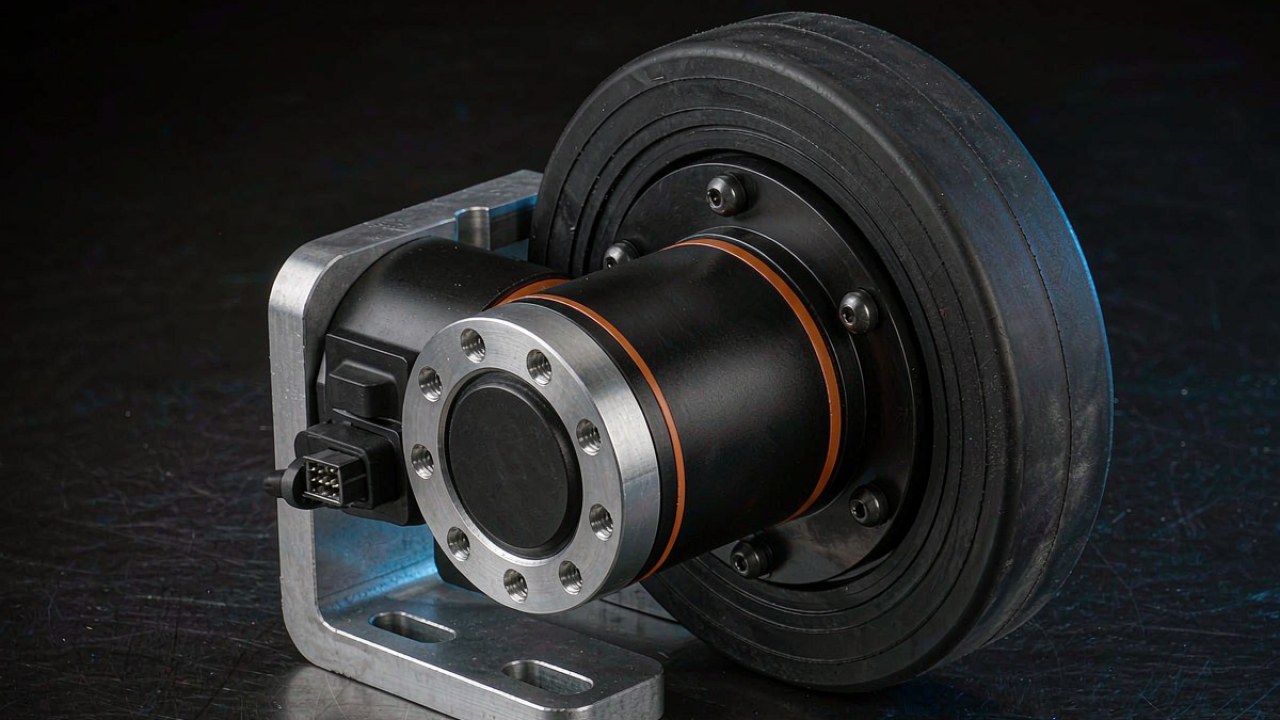
An AGV actuator that drives a wheel is asked for something a joint actuator never sees: the mass of the platform passes through the wheel, the hub and the bearing stack before any torque becomes useful motion. That load arrives whether the drive is powered or parked, which is why the rating that filters candidates on a wheeled platform is radial load rather than torque. This article works out the load a wheel carries, sets it against the two AKA records that publish a radial rating, and leaves the wider architecture question to BLDC Motors for Wheel Robot: Drive Layout, Duty and Gearing, which compares drive layouts rather than load figures.
Quick Answer
An AGV actuator is shortlisted on the radial load its wheel has to carry, then confirmed on speed, and sized on current last. Two geared records in the ToBMS range publish that rating: the CubeMars AKA60-6 KV80 at 18 kg and the CubeMars AKA10-9 KV60 at 50 kg. Divided by a 1.5 dynamic factor across four evenly loaded wheels, they give screening estimates of about 48 kg and about 133 kg of all-up mass, which places both in the light platform range rather than in the tonne-class vehicles where the wheel load has to be carried by an external bearing arrangement and the drive supplies torque alone.
Radial Load First: How an AGV Actuator Is Shortlisted
The published radial rating is the first number that removes candidates from consideration, because it describes a capability that neither a control change nor a different gear ratio raises. A drive chosen on torque alone can be matched to the traction requirement and still be the wrong part, since the load path through the wheel does not care how much torque the motor can produce. Reading the rating before the torque column reverses the usual order of a drive selection sheet, and on a wheeled platform that reversal is what keeps the AGV actuator shortlist honest.
What a published rating filters out before torque is read
A radial rating states how much load the unit accepts at the hub under the manufacturer’s own test basis. It is a qualification rather than a performance figure: it says which installations the unit is built to survive, not how fast the platform will move. Records that publish no such figure leave the load question open, and an open question at the shortlist stage becomes a design risk at the prototype stage. The two AKA records answer it in kilograms, which is a unit a chassis mass budget can be checked against directly, and that is the figure an AGV actuator is bought against in the first pass.
Why an AGV actuator and a joint actuator sort candidates differently
A joint actuator carries torque and a bending moment from the link it drives, and the bearing arrangement is designed around that moment by the robot builder. On a wheeled platform the drive sits inside the load path rather than beside it, with the wheel bolted to its output flange. The two duties produce different shortlists from the same product range: a robot joint selection usually starts from peak torque and gear ratio, while an AGV actuator selection starts from the load on one wheel and works back to the module that can accept it.
Working Out the AGV Wheel Radial Load
The load an AGV actuator sees on one wheel is not the platform mass divided by the number of wheels, although that division is where the calculation starts. Four inputs move the figure away from the average, and each one is a decision the chassis design has already made whether or not it was written down: where the centre of gravity sits on the wheelbase, how hard the platform brakes, what gradient it has to hold, and what happens when one wheel leaves the ground. Every figure produced this way is a ToBMS estimate rather than a manufacturer value, because the rating published for an AGV actuator and the demand calculated for a chassis are different kinds of number and do not belong in one column.
Static share per wheel, then the centre of gravity offset
The static share is the platform mass plus the payload, divided between the wheels that touch the ground. A four-wheel chassis with the centre of gravity at the geometric centre carries a quarter of the mass on each corner. Moving the centre of gravity towards one axle transfers load to that axle in proportion to how far it moves. Measured from the non-drive axle, a centre of gravity at 60 percent of the wheelbase leaves 40 percent of the mass on that axle, so the drive wheels each carry 30 percent of the total rather than 25 percent. A lift platform adds a second case: a raised load moves the centre of gravity upward, and how far it also shifts it along the wheelbase depends on the lift mechanism and on where the load sits relative to it. This first figure is the one an AGV actuator is checked against before any dynamic case is added.
Braking, gradient and the kerb factor
Dynamic cases multiply the static figure. Braking transfers load to the front axle in proportion to the deceleration and the height of the centre of gravity, and a gradient does the same on a slope. A kerb impact is a short event with a larger multiplier, and whether a given multiplier is already inside the rating or has to be applied on top of it depends on the test basis behind the rating. Applying one combined dynamic factor to the static share is a convention rather than a published standard, and the values used here are illustrative assumptions, not design factors for a particular vehicle. A factor of 1.5 is a common starting point for ordinary acceleration, braking and floor transitions, and 2.0 for a route with kerbs, ramps or outdoor surfaces, but no single factor represents a shock level: speed, deceleration, centre of gravity height, wheel diameter and the duration of the event all enter the real figure. Which factor applies is a platform decision, and no AGV actuator rating substitutes for it.
One wheel off the ground: the case an average hides
A four-wheel chassis on a rigid frame is statically indeterminate on a flat floor, so in practice it rests on three points. The wheel that loses contact carries nothing, but how the remaining three share its load depends on support geometry, centre of gravity position, frame stiffness and any suspension, so the load on a single corner is not a fixed multiple of the average. On a short wheelbase it can approach half the platform mass, which is the case an average over four wheels hides and the reason a radial rating is read against the worst single wheel. Treat that as a load case to be calculated, simulated or measured, not as something that follows from the wheel count. A suspension or a three-point mounting changes the distribution, but the resulting maximum wheel load still belongs in the AGV actuator selection rather than in a later design review.
Putting a Number Against the 18 kg Rating
The 18 kg figure on the AKA60-6 KV80 is a per-wheel rating for an AGV actuator, so it converts into a platform estimate once the dynamic factor is chosen. At a factor of 1.5 the permitted static load on one wheel is 12 kg, which across four evenly loaded wheels gives a chassis of about 48 kg including payload. That is a screening figure, not a limit the manufacturer guarantees: what the 18 kg is measured against, how the rating is tested and where the load is assumed to act belong on the checklist before the number enters a design. As a size of platform it is a light tugger, a compact service unit or a laboratory carrier, and the 460 g module with a 6:1 stage fits that scale.
A 48 kg four-wheel chassis at a 1.5 factor
Forty-eight kilograms is an all-up figure, not a payload figure. The frame, the battery, the controller and the sensors come out of it first, and what remains is the payload. A mass budget makes that concrete: with 30 kg of structure, energy and electronics, 18 kg of payload remains, which is the class of duty a small AGV actuator is bought for. Moving to a factor of 2.0 for a route with floor joints drops the figure to about 36 kg for the same rating, and that reduction is the cost of a rougher environment rather than a change in the module.
24 V and 48 V on the same winding, and what it does to speed
The AKA60-6 KV80 is published at 24 V and 48 V on the same winding, and the two buses produce rated speeds of 200 RPM and 400 RPM at the output. On a 150 mm diameter wheel that is 1.571 m/s and 3.142 m/s of ground speed at the rated point, with the higher figure reached exclusively on the 48 V bus. The rated torque of 3 Nm is the same on both, so the choice of bus changes speed and power rather than traction: 3 Nm at the rim of a 150 mm wheel is 40.0 N of theoretical rim force, before tyre grip and drivetrain losses enter, and the rated power works out at 62.83 W at 200 RPM against the 62 W published for the record, which is the arithmetic check that confirms the rated point is stated consistently.
Putting a Number Against the 50 kg Rating
The 50 kg rating on the AKA10-9 KV60 roughly triples that estimate on the same four-wheel assumption. At a factor of 1.5 the permitted static load is 33.3 kg per wheel, which gives a chassis of about 133 kg all-up; at a factor of 2.0 it falls to 100 kg. That is a mid-size light platform: a tote carrier, a mobile picking unit or a small tug. The module is 1060 g in a 100 mm frame with a 9:1 stage, and the published rated torque is 18 Nm with a peak of 53 Nm, which makes it the larger of the two AGV actuator records for duties that need both a load rating and real traction.
109 RPM at the output, and the ground speed that follows
The rated speed of the AKA10-9 KV60 is 109 RPM at the output, which on a 150 mm diameter wheel is 0.856 m/s or 3.08 km/h. Theoretical rim force is 240.0 N at the rated point and 706.7 N at peak, both before tyre grip and drivetrain losses, and peak torque is a short-duration condition rather than a working point, so the headroom is in torque rather than in verified traction. The rated point is also internally consistent: 18 Nm at 109 RPM works out at 205.46 W against the 205 W published for the record. The same check applied to the smaller module, 3 Nm at 200 RPM giving 62.83 W against 62 W, suggests a habit worth keeping when reading any AGV actuator record, since a rated point that does not close on power is a rated point stated under a different basis.
Where the two no-load figures on the official page disagree
The official page for the AKA10-9 KV60 states one no-load speed in its detailed specification table and a different, higher one in the comparison table on the same page. The higher figure is the one that follows from the published constants: a KV of 60 on a 48 V bus gives 2880 RPM at the motor, and a 9:1 stage brings that to an estimated 320 RPM at the output, the same method that reproduces the 320 RPM and 640 RPM no-load figures of the AKA60-6 KV80 exactly. That estimate is arithmetic from published constants rather than a measured value, the lower figure on the page cannot be reproduced from any published constant, and until the manufacturer says which of the two applies the specification table has to be treated as inconsistent. Output no-load speed is not a selection quantity, so this article sizes on the rated 109 RPM and reads 320 RPM as an upper bound rather than a working point.
What Changed Mechanically Between the AK and AKA Records
The AKA records are not a new motor with a new gearbox. Set against the AK records they are derived from, the winding and the reduction ratio are carried over: the AKA60-6 KV80 shares its 6:1 stage and its KV of 80 with the AK60-6 KV80, and the AKA10-9 KV60 shares its 9:1 stage and its KV of 60 with the AK10-9 KV60. What the records state is a reinforced radial load capacity and a different connection to the platform, and the published ratings show a second difference that matters when an AGV actuator is being sized: the rated speed of the AKA records is lower at the same rated torque, with rated power following it down.
The winding and the ratio stay the same
Peak torque of 9 Nm on the AKA60-6 KV80 and 53 Nm on the AKA10-9 KV60 matches the AK records they derive from, and the reduction ratios match as well. The rated points do not. The AKA60-6 KV80 is rated at 200 RPM at 24 V against 233 RPM on the AK60-6 V3.0 KV80, and the AKA10-9 KV60 is rated at 109 RPM against 235 RPM on the AK10-9 V3.0 KV60. Both AKA records therefore hold their rated torque over a narrower speed band. The published figures establish that difference but not its cause, since a rated point can also follow from thermal design, control configuration or the conditions the rating was taken under, and neither page cited here connects the two. Buying an AGV actuator for its rating means accepting that envelope as published rather than extrapolating from the AK record it shares a winding with.
The 2+5 PIN connector and the identification routine
The connector is the second structural change. Power, CAN and UART are combined into a single 2+5 PIN plug fixed with M2 screws, in place of the separate plugs on the AK records. On a moving platform this is a service decision more than an electrical one: one plug to seat instead of several, a screw fixing that holds it against the vibration a wheel drive sees, and a keyed body that makes a swapped pair harder to assemble. How much that adds in reliability is a question for the manufacturer’s test data rather than for the connector drawing. The driver firmware adds a parameter identification routine that runs from one command, which shortens commissioning on a platform that carries several identical modules.
| Parameter | AKA60-6 KV80 | AKA10-9 KV60 |
|---|---|---|
| Radial load rating | 18 kg | 50 kg |
| Rated voltage | 24 V / 48 V | 48 V |
| Rated power | 62 W | 205 W |
| Rated torque | 3 Nm | 18 Nm |
| Peak torque | 9 Nm | 53 Nm |
| Rated speed | 200 RPM / 400 RPM | 109 RPM |
| No-load speed | 320 RPM / 640 RPM | 320 RPM |
| Reduction ratio | 6:1 | 9:1 |
| Output encoder | 14-bit magnetic, single | 16-bit magnetic, single |
| Connector | 2+5 PIN | 2+5 PIN |
| Weight | 460 g | 1060 g |
| Frame | 80 mm x 51.2 mm | 100 mm x 70 mm |
Ratings as published by the manufacturer. Both AKA records list a radial load rating; the AK records they derive from do not. No-load speed is shown as an upper bound and is not used for sizing in this article.
Sizing an AGV Actuator: Load, Then Speed, Then Current
The sequence that follows from the ratings runs in one direction and does not loop back. Load removes candidates, speed confirms or rejects the remaining one, and current sizes the electrical side of the platform. Running the sequence in the other order produces a shortlist that has to be rebuilt, because a module chosen for its speed and then found short on radial load has no remedy at the electrical level. The order is also what separates this selection from a drive-layout comparison, where the layout decision comes first and the load is checked afterwards. It is a screening order for integrated wheel drives whose output structure carries the wheel load, not a complete drive selection: required tractive effort, braking, duty cycle, thermal margin and gearbox life are checked alongside it.
Load decides which AGV actuator fits
The calculated worst-case load on one wheel is set against the published rating, and the smaller module is chosen when the figure fits inside it. On the assumptions behind those examples, a 48 kg chassis lands on the 18 kg record and a 133 kg chassis on the 50 kg record. A chassis between the two envelopes is the interesting case: it fits the larger record with margin, and the margin is what an estimate of centre of gravity offsets and floor conditions is spent against.
Speed rejects it or confirms it
The rated speed at the output of an AGV actuator sets the continuous ground speed, and the platform requirement decides whether that is enough. A 150 mm diameter wheel on the 50 kg record gives 0.856 m/s continuously at the rated point, which is a calculated figure rather than a measured road speed. A requirement above it moves the selection to a faster module or to a larger wheel. Bus voltage is a separate question: the AKA60-6 KV80 publishes 200 RPM at 24 V and 400 RPM at 48 V on the same winding, so a rated speed belongs to the voltage it is published at, and a move to the higher bus has to stay inside the drive rating and its thermal limit. Peak speed is available above the rated point, and a duty that spends the larger part of its time there is a duty that has left the continuous envelope.
Four wheels on one bus
Sizing the current is the last step in an AGV actuator selection, and the first one that touches the rest of the platform. Four AKA60-6 KV80 modules at the published rated current of 4 A each total 16 A, and at the published peak current of 11.2 A each they total 44.8 A; four AKA10-9 KV60 modules total 42.4 A at 10.6 A each and 128 A at 32 A each. Those are module current totals, not a battery-side requirement. The rated current does not close on rated power divided by bus voltage, so the two fields measure different things, and the pack, the contactor and the harness are sized from the bus side, where voltage, drive efficiency, the number of wheels pulling together and the time a peak is allowed to last all enter the calculation. Four modules do not reach their peak at the same instant for the same duration either. An AGV actuator chosen on load and confirmed on speed still has to be checked against what the pack can deliver when all four wheels pull at once.
Where a Radial Load Rating Is the Wrong Tool
The rating answers one question and there are three situations in which it does not settle the selection. A chassis above the envelope, a load applied away from the hub centre and a wheel axis that has to be hollow all move the problem outside what the published figure describes. Recognising them is part of reading an AGV actuator record correctly, and each one points to a different remedy rather than to a larger module.
A chassis heavier than the rating allows
Above the envelope an AGV actuator still produces its rated torque, and the traction arithmetic still closes, which is what makes the mistake easy to make. What does not close is the load path: the output bearing is asked for more radial load than its rating states, and the risk that follows is overload and shortened life in that bearing or in the structure around it, with the failure mode set by the installation rather than resolving neatly into a torque limit. Where the wheel load exceeds the rating, the load path has to be redesigned: an external bearing housing with the drive supplying torque through a coupling is one arrangement that does it, and it is common at tonne-class wheel loads.
Load applied away from the hub centre
The rating assumes the load acts at the hub. A wheel mounted on an offset bracket, a drive on a steering axis or a chain or belt take-off moves the line of action away from the bearing centre and adds a moment to the radial load. The published figure does not cover that case, because the moment arm is a property of the installation rather than of the module. The remedy is mechanical: bring the load back over the hub, or carry the offset load in a separate bearing and let the drive supply torque alone.
When the wheel axis has to be hollow
A hollow wheel axis is a routing requirement rather than a load requirement, and it points at a different family of modules. The range includes hollow shaft planetary modules for that case, and the records cited here publish no radial load rating for them, so until the manufacturer states one the wheel load has to be carried outside the module while it supplies torque through its hollow output. Choosing one of them to solve a load problem reverses the reason they exist; choosing one to solve a cable routing problem leaves the load question exactly where it was, and the AGV actuator shortlist returns to the two records that state a rating.
Frequently asked questions
QWhat is an AGV actuator used for on a wheeled platform?
It drives one wheel and carries that wheel’s share of the platform mass at the same time. The output flange takes the wheel, the output bearing takes the radial load and the housing carries that reaction, and the motor and stage inside convert electrical power into torque at the rim. That combination of traction and load carrying is what separates an AGV actuator from a joint actuator of similar torque.
QWhat radial load can the AKA60-6 and AKA10-9 carry?
The two AGV actuator records are rated at 18 kg on the AKA60-6 KV80 and 50 kg on the AKA10-9 KV60, both stated per unit at the hub. Divided by a 1.5 dynamic factor across four evenly loaded wheels they correspond to all-up masses of about 48 kg and about 133 kg, which are screening estimates under those assumptions rather than limits the manufacturer guarantees.
QHow is the load on one wheel calculated?
Start with the platform mass plus payload divided between the wheels on the ground, adjust for the centre of gravity offset between the axles, apply a combined factor for acceleration, braking, gradient and floor transitions, and then check the single-wheel case where one corner loses contact. The worst of those results is the figure to compare against the rating.
QWhat happens when the wheel load exceeds the rating?
The AGV actuator keeps producing torque, so the platform may appear to work while the output bearing is being asked for more than its rating states. What follows is overload in that bearing or in the structure around it, with shortened life or damage depending on the installation, rather than a torque limit being reached. The remedy is to carry the wheel load outside the module, with the drive supplying torque alone.
QDoes a geared AGV actuator carry the wheel load by itself?
It carries it up to its published rating. Above that figure the load has to be taken by the structure around the drive rather than by the drive, and that is a chassis-level decision. Reading the rating as a load path statement rather than as a performance figure keeps the decision explicit, and it is the first thing to check when an AGV actuator is matched to a platform that has already been built.
Official resources
The two product records carry the full specification for each module, and the manufacturer publishes the ratings, the dimension drawings and the connector assignment on the pages linked below. Both are CubeMars records, and the ratings quoted in this article are taken from those pages. Rated speeds for the AK records used in the comparison come from the manufacturer’s pages for the AK60-6 V3.0 KV80 at 24 V and the AK10-9 V3.0 KV60 at 48 V.
CubeMars AKA60-6 KV80 publishes the 18 kg radial rating, the 6:1 stage and the 24 V and 48 V rated points. CubeMars AKA10-9 KV60 publishes the 50 kg radial rating, the 9:1 stage and the single 16-bit output encoder.
Where to go next
The load calculation settles which module fits, and the AGV category collects the platform duties this selection serves. Robotic Actuators holds the records discussed above, and the Select and Compare Products tools carry the specification fields side by side.
The two records behind this article are the CubeMars AKA60-6 KV80 Robotic Actuator and the CubeMars AKA10-9 KV60 Robotic Actuator. For the case where the wheel axis has to be hollow, the CubeMars AKH70-48 V1.0 KV41 Hollow Shaft Planetary Actuator is the record to read alongside that requirement, with the load path handled outside the module.