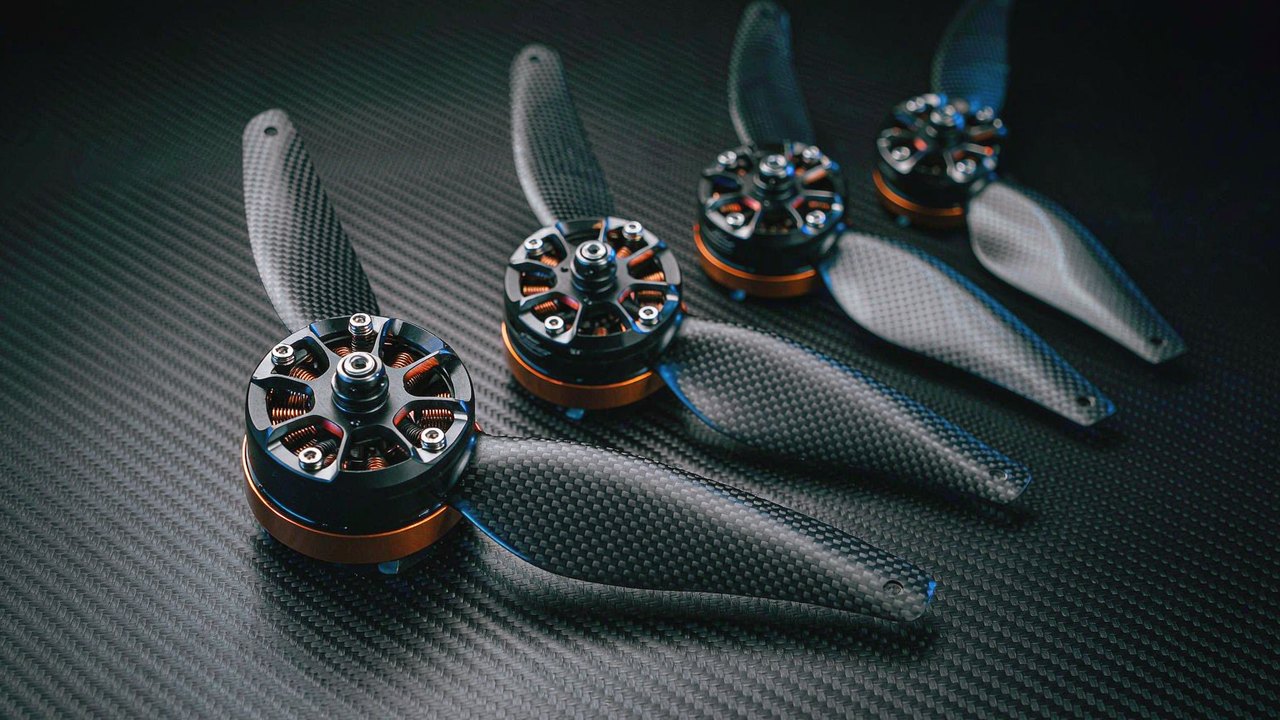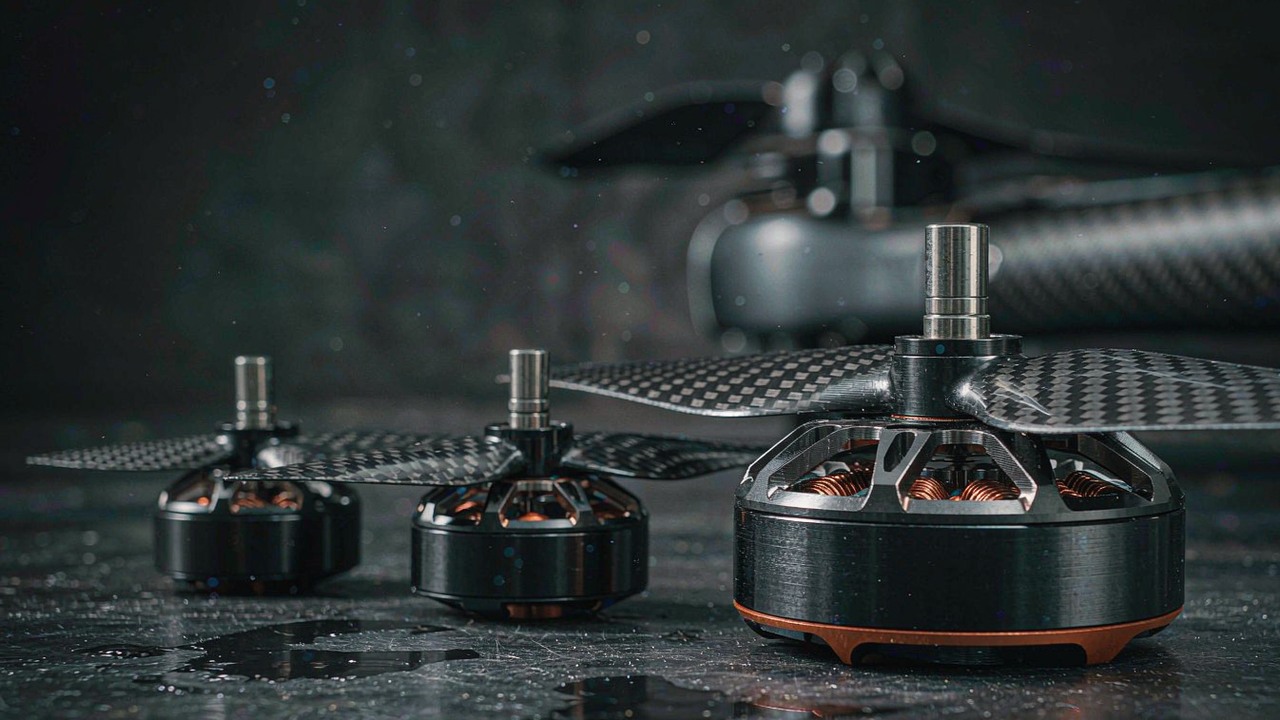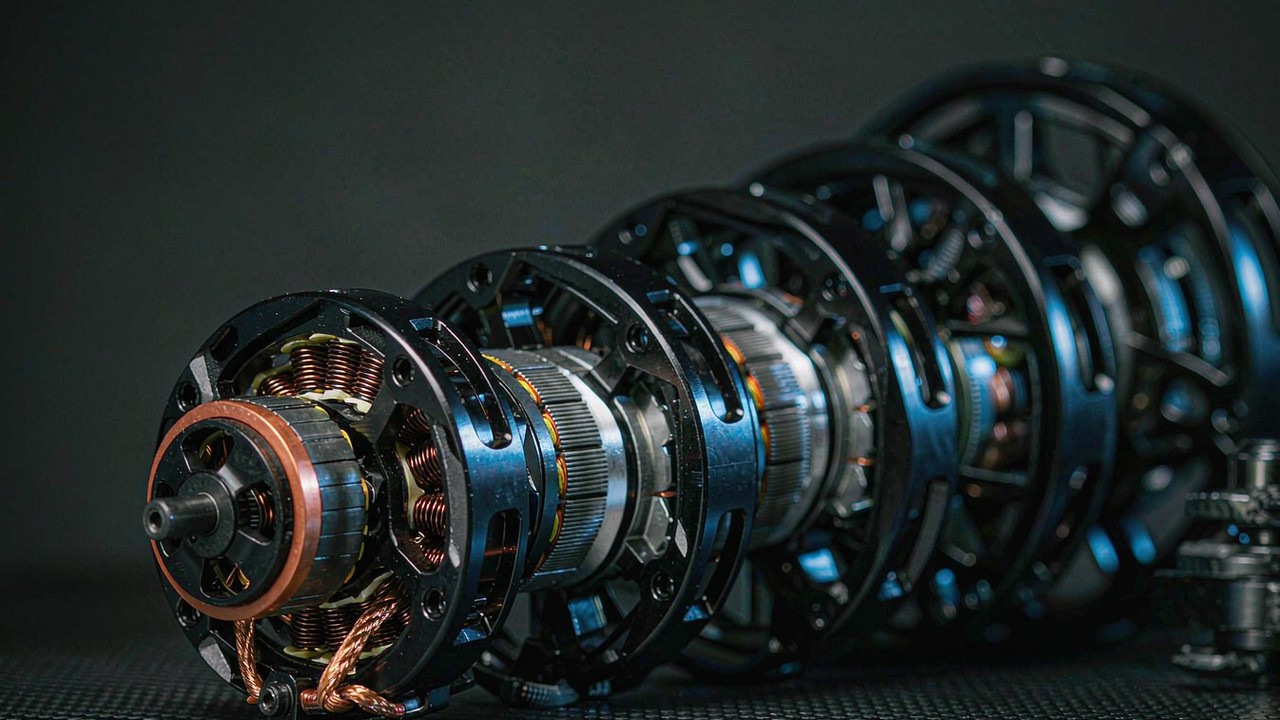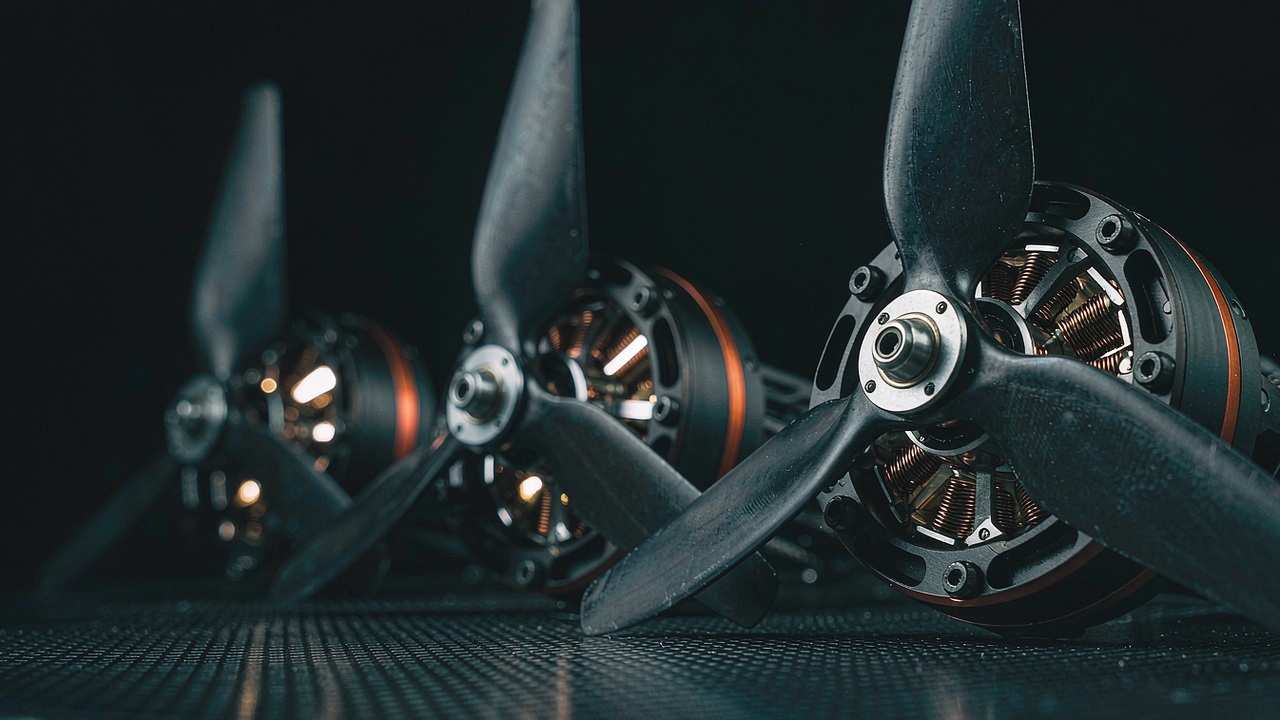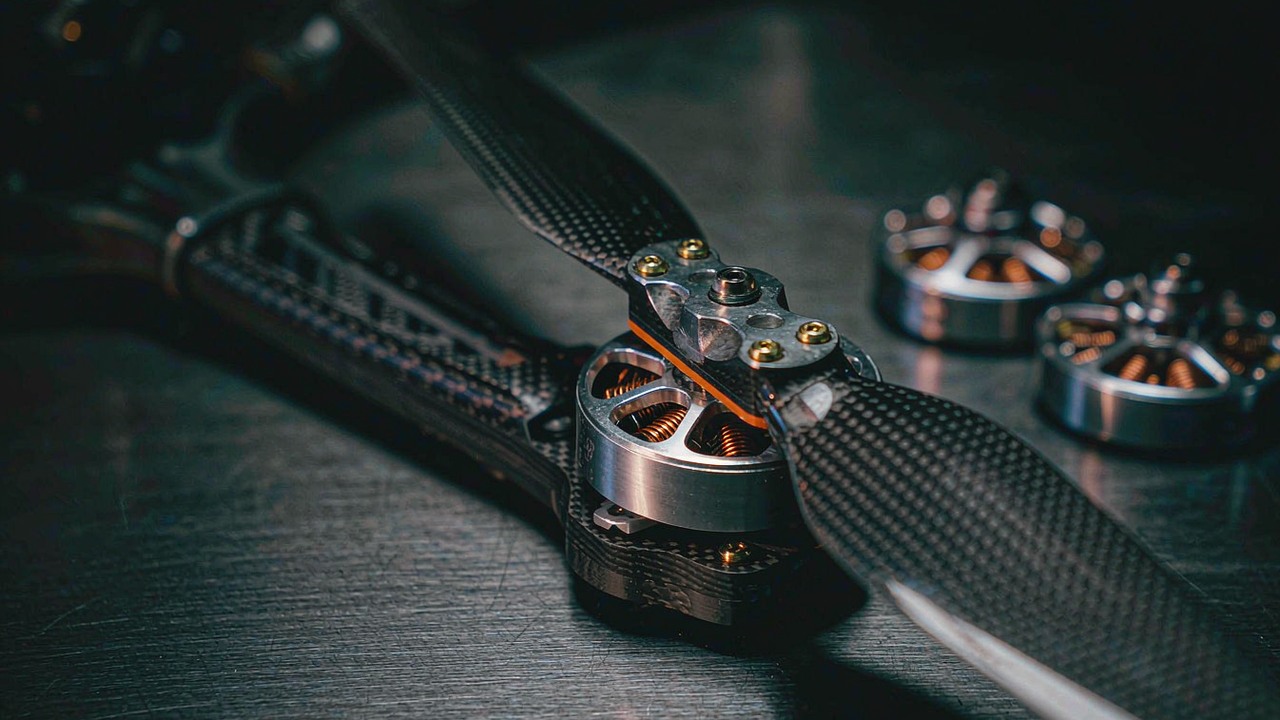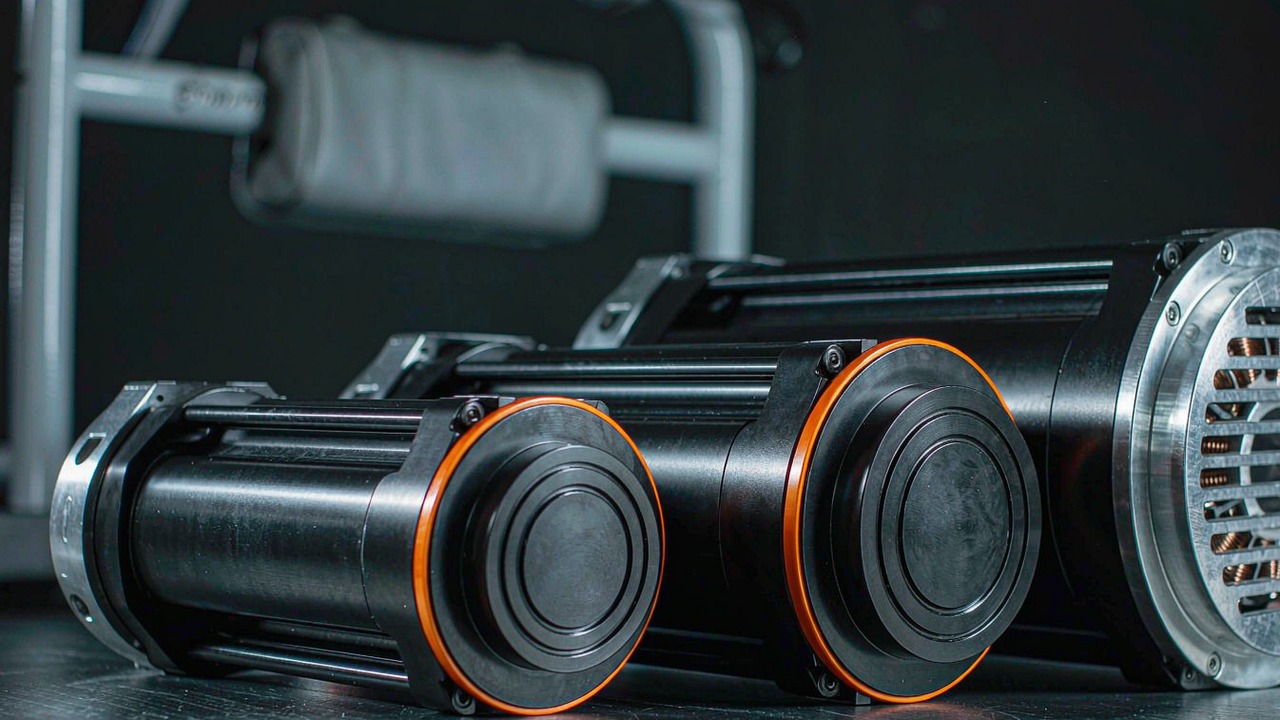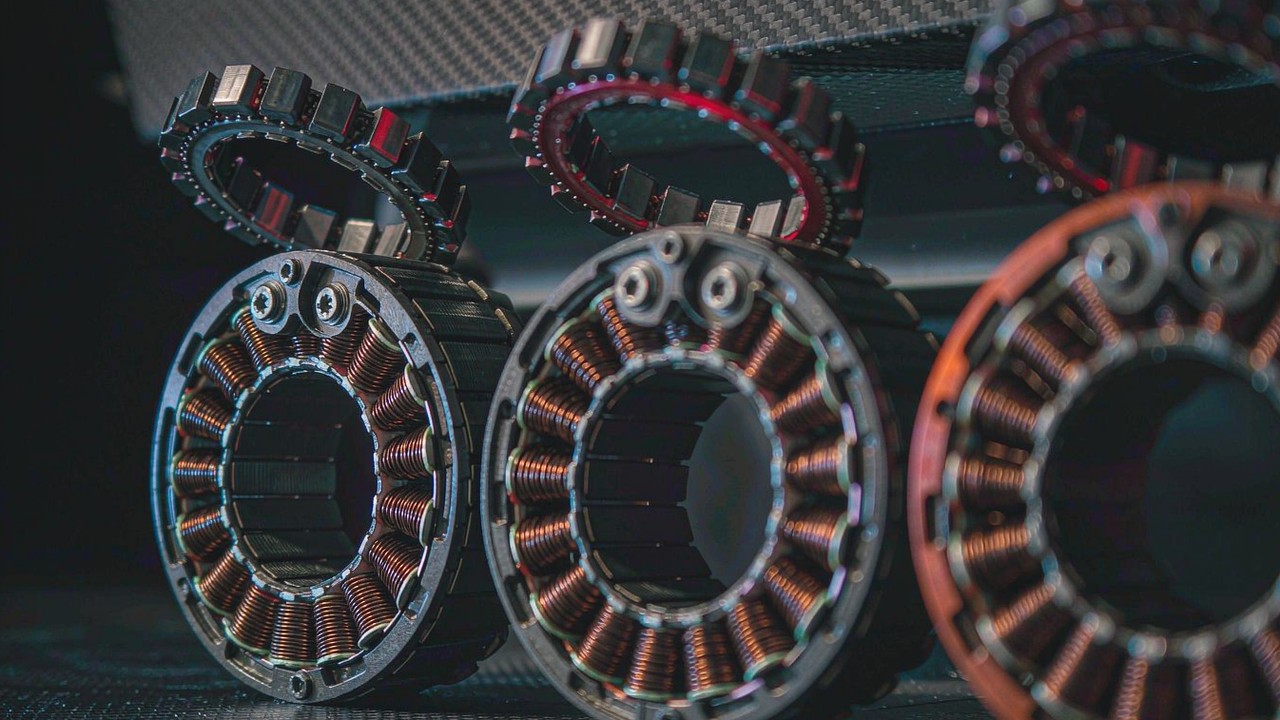
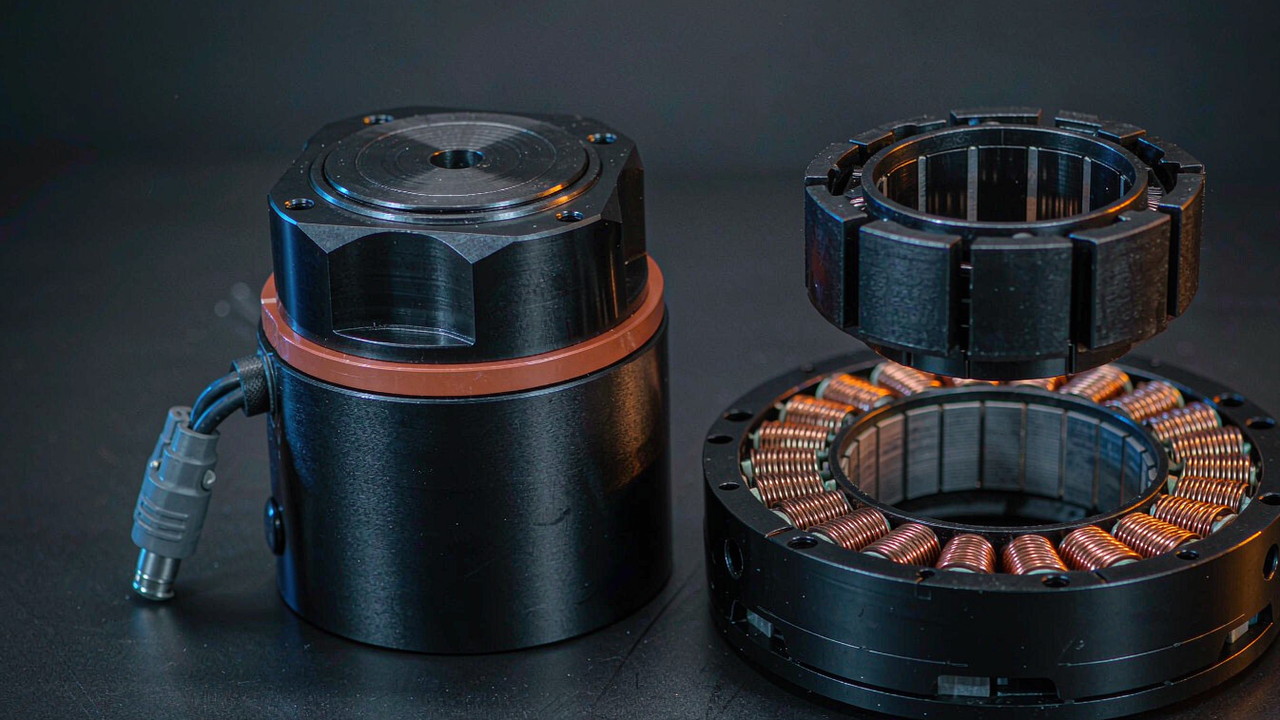
BLDC motors for exoskeleton design land in one of two places, and the fork comes early. Either the joint is assembled around a frameless torque motor - a stator and a rotor supplied as separate parts, with no housing, no bearings and no feedback - or it is built around an integrated actuator that arrives sealed, geared and ready to bolt on. The two routes use very similar brushless machines inside, and they are not interchangeable in a design review. One puts the joint structure, the bearing selection, the encoder and the driver on the engineering team's side of the table; the other places them inside a finished module designed by the manufacturer. This guide sets the two architectures against each other on the requirements that actually move a wearable joint decision - mass at the limb, stiffness, thermal path, envelope and integration effort - using seven recorded units that span 105 g to 710 g on the frameless side and 260 g to 570 g on the integrated side.
The comparison below deliberately mixes products that are not measured on the same side of a gearbox, because that mismatch is the decision itself. Every figure in this article is taken from the manufacturer's published specification as held in the ToBMS product record for that unit, apart from the unit conversions and the density arithmetic, which are labelled as derived where they appear. Nothing here is estimated, and where a value is not recorded it is named as missing rather than filled in.
Quick answer
For a first wearable prototype, an integrated actuator is usually the faster and often the lighter total system. The AKE60-8 KV80 weighs 260 g and delivers 5 Nm rated and 12.5 Nm peak through an 8:1 stage, which is more rated torque than a 710 g frameless motor produces on its own. Nothing has to be designed around it: the reducer, the bearing set and the driver are inside the can.
A frameless kit wins when the constraint is geometry rather than torque. If the output of the joint must be the joint itself - a direct drive at the hip with no reducer and therefore no backlash - then a RO100 KV55 at 4 Nm rated needs no gearbox at all. If a cable loom has to pass through the axis, or the stator has to be bolted into a link that doubles as a heatsink, or the housing and the limb are one machined part, then a frameless kit is the only route that permits it. The trade is engineering effort and a bearing-and-encoder design that the team now owns.
What each route actually delivers
The dividing line is not the motor. Both routes use three-phase brushless machines under field-oriented control, and both draw on the same pool of hand-wound stators. What differs is which parts of a complete joint mechanism arrive in the box.
A frameless kit is a stator, a rotor and nothing between them
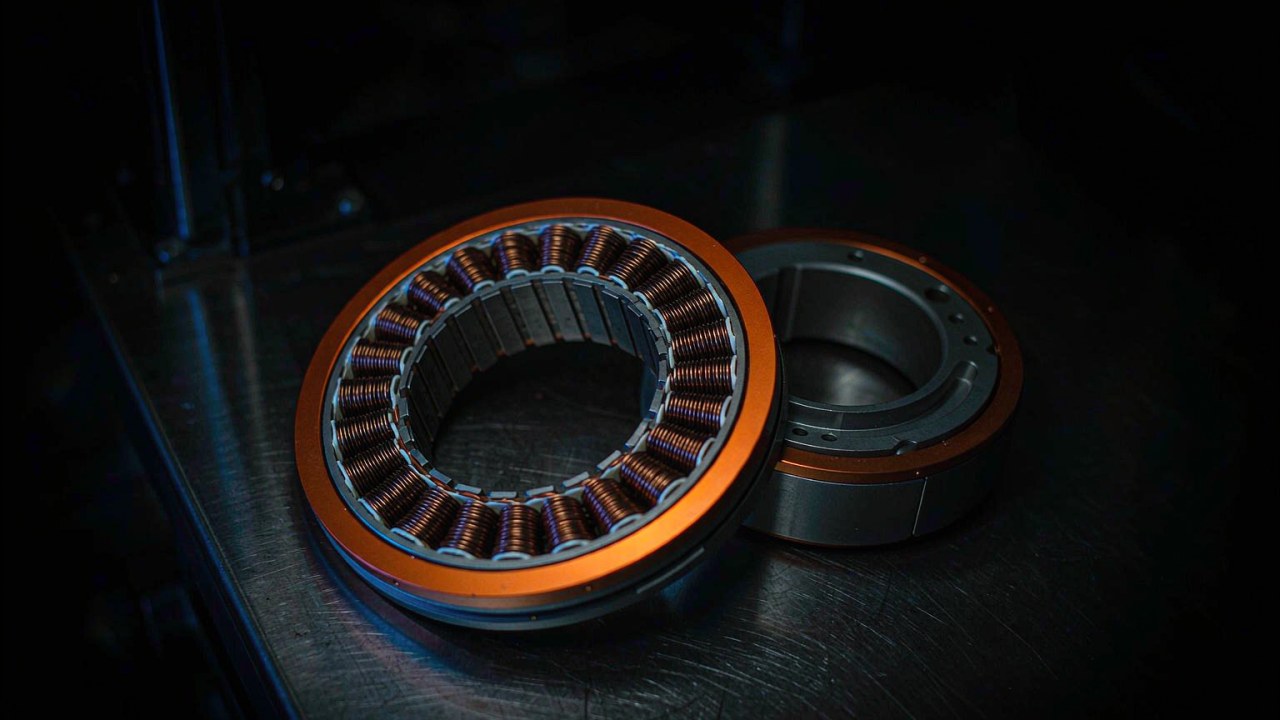
A frameless torque motor ships as two loose assemblies. The stator carries the windings and the laminations and mounts into whatever structure the designer provides; the rotor carries the magnets and mounts onto a shaft that the designer also provides. There is no housing, no output flange, no bearing set, no encoder and no drive electronics. In exchange for that, the kit removes every interface the manufacturer would otherwise have had to compromise on. A large hollow shaft is available for cable routing - the RI30 KV260 carries a 17 mm bore in a 38 mm body - and the mounting face, the heat path and the axial length all become design variables rather than givens.
An integrated actuator arrives assembled and sealed
An integrated actuator is the opposite arrangement. A motor, a planetary reduction stage, a feedback device and a driver board are assembled into a single housing with a defined output interface and a defined electrical connector. The AK80-6 KV100 is a clear example: 6:1 reduction, 6 Nm rated and 12 Nm peak, 340 W rated power at 48 V, all inside a 98 mm by 38.5 mm body of 485 g, with a recorded backlash figure of 0.22. The value is not any single number in that list; it is that the whole assembly is one part number with one mounting pattern and one set of test data.
The parts neither box contains
Neither route is complete on its own, and the gaps are systematic. The frameless route leaves the engineering team to design the bearings, the encoder mounting, the rotor-to-shaft fit, the housing, the cooling path and the entire drive train - that is the work a gearmotor manufacturer normally absorbs. The integrated route leaves the team to accept the manufacturer's backlash, the manufacturer's bearing life, the manufacturer's thermal derating and the manufacturer's envelope, and to design the limb around them instead of the other way round. Where a design has tight radial space alongside a joint, or needs a torque transparency that a planetary stage cannot offer, the second gap becomes the binding one.
Five requirements that decide the route
Specification sheets for the two families look similar and answer different questions. In wearable work, five requirements consistently separate them.
Mass where the wearer actually feels it
Mass does not cost the same at every joint. On an exoskeleton applications page the same nominal torque figure appears against units of very different weight, and the difference is not distributed evenly: a gram carried at the hip rides on the trunk, while the same gram distal to the knee is accelerated and decelerated with every step. This is the reason the light end of the frameless range matters more than its torque figures suggest. The RO50 KV108 Lite weighs 105 g and the RI30 KV260 weighs 40 g, and neither carries a reducer, a bearing set or a driver into the joint.
Stiffness, backlash and how the joint feels
A direct-drive frameless joint has no gear mesh, so it introduces no backlash of its own. An integrated actuator carries the backlash of its planetary stage, and the recorded figures across this range run from 0.15 to 0.22. Backlash in a worn joint appears as hysteresis between the commanded assist profile and what the wearer perceives, and it complicates any control law that estimates output torque from position error. It also sits underneath a subtler effect: a reduction stage multiplies rotor inertia by roughly the square of the ratio at the output, so a geared module reflects more inertia than a direct-drive joint of the same output torque, and reflected inertia is one of the terms that decides how transparent the joint feels.
Where the winding heat goes
Continuous torque is a thermal statement, and the thermal path differs sharply between the routes. A frameless stator is normally bolted directly into a metal link, so the limb structure becomes part of the heatsink; the manufacturer's rated torque assumes conditions that the designer has to reproduce. A sealed actuator dissipates through its own housing into whatever it is mounted against, which is convenient but fixed. In a wearable device the thermal case is complicated further because the joint is often covered by a garment or a cuff. A peak figure describes a transient and not a holding case, and a posture-support duty can ask for rated torque for minutes at a time.
Radial room against axial room
The two routes fail in different directions geometrically. The inrunner units in this range - the RI50 KV100 and the RI80 V2.0 KV75 among them - carry the rotor inside the stator, so the axial length is set by the stack and the radial size by the frame diameter; the mechanism, not the motor, decides how deep the assembly becomes. The sealed modules are almost uniformly pancake-shaped, with the reduction stage stacked on the motor axis, and the AKE series runs from 25 mm to 43.5 mm of axial length against 69 mm to 107.5 mm of diameter. A joint that is mounted laterally alongside the anatomical axis - which is the usual arrangement at the knee and the hip - is served well by that shape, while a narrow deep housing is not.
What moves in-house
The last requirement is rarely written down and often decides the outcome. An integrated actuator moves a mechanical design, a bearing selection, an encoder installation and a drive electronics package out of the project and into a manufacturer. A frameless kit moves all four in, and with them the rotor balance, the shaft fit, the encoder alignment and the responsibility for whatever the assembly does at temperature. For a single prototype the second column is expensive; at volume, or where the joint geometry is the product, it can be the only way to reach the target.
Frameless kits and integrated actuators side by side
The table collects seven recorded units from the two architectures, ordered by mass. Torque and mass values are as published in each ToBMS product record.
| Model | Architecture | Reduction Ratio | Supply Voltage | Rated Torque | Peak Torque | Weight |
|---|---|---|---|---|---|---|
| RO50 KV108 Lite | Frameless kit | - | 24 V | 0.3 Nm | 0.9 Nm | 105 g |
| RI50 KV100 | Frameless kit | - | 24/36/48 V | 0.58 Nm | 1.67 Nm | 180.8 g |
| AKE60-8 KV80 | Integrated actuator | 8:1 | 24 V | 5 Nm | 12.5 Nm | 260 g |
| RI80 V2.0 KV75 | Frameless kit | - | 24/36/48 V | 1.45 Nm | 4.1 Nm | 411 g |
| AK80-6 KV100 | Integrated actuator | 6:1 | 48 V | 6 Nm | 12 Nm | 485 g |
| AKE80-8 KV30 | Integrated actuator | 8:1 | 48 V | 12 Nm | 30 Nm | 570 g |
| RO100 KV55 | Frameless kit | - | 48 V | 4 Nm | 12 Nm | 710 g |
The four frameless kits are listed in the ToBMS Frameless Torque Motors category; the three sealed units sit in Robotic Actuators and Quasi Direct Drive Actuators. The Reduction column is left blank for the frameless kits because the reduction is not a property of the motor - it is whatever stage the designer bolts on. No rated power figure is recorded for the AKE units in the ToBMS records, so none is quoted here. Envelope dimensions are given in the text rather than the table to keep the column count readable.
The first pattern is the one this article exists to make explicit. Reading down the table by mass, the 260 g sealed module produces more rated torque than the 411 g and 710 g bare motors above and below it. That is not a claim about motor quality; it is what a reduction stage does. A frameless motor's rated torque is a motor-shaft figure, and a sealed module's rated torque is an output-shaft figure measured after the gearbox. The two numbers are on different sides of a ratio and are not comparable without stating which side is being quoted.
The second pattern is the voltage split. The three lightest units record a single voltage - 24 V for the RO50 KV108 Lite, the RI50 KV100 at its base rating and the AKE60-8 KV80 - and only the RI50 KV100 also accepts 36 V and 48 V. From 485 g upwards every unit in the table records 48 V, which is the number that decides the battery pack rather than the motor. For a wearable device this usually settles early, because it follows the battery chemistry and the connector set already chosen for the garment rather than the motor.
The third pattern is how little the bare motors differ from each other in output speed. The frameless units here record rated speeds between 1090 rpm and 2100 rpm before any reduction, whereas the sealed units record 150 rpm to 603 rpm after theirs. Speed at a joint, not at a motor shaft, is the number that matches the biomechanics literature, and it is only available on the frameless side once the reduction has been chosen.
Reading the comparison fairly
Three quantities are routinely quoted across both architectures as if they meant the same thing. They do not, and each one flips a ranking when the definitions are separated.
Torque per kilogram is two different quantities
Dividing rated torque by mass gives a figure that looks comparable across the table and is not. On the motor side of the ratio, the recorded figures are about 2.9 Nm/kg for the RO50 KV108 Lite, 3.2 Nm/kg for the RI50 KV100, 3.5 Nm/kg for the RI80 V2.0 KV75 and 5.6 Nm/kg for the RO100 KV55. On the output side, the same arithmetic gives about 19 Nm/kg rated for the AKE60-8 KV80, 21 Nm/kg for the AKE80-8 KV30 and 12 Nm/kg for the AK80-6 KV100, rising to 48, 53 and 25 Nm/kg respectively on peak torque. All of these are derived here by dividing the recorded torque by the recorded mass. The two groups differ by roughly a factor of four to six, and none of that difference is available as a design margin - it is the reduction ratio expressed as a density.
Speed is measured on opposite sides of the reducer
The recorded speed figures confirm the same asymmetry. The AKE60-8 KV80 turns at 180 rpm rated and 240 rpm no-load at the output, which is about 1080 and 1440 degrees per second; the AKE80-8 KV30 records 150 and 195 rpm, about 900 and 1170 degrees per second. The AK80-6 KV100, with its faster 6:1 stage, records 603 rpm rated and 800 rpm no-load, roughly 3620 and 4800 degrees per second at the output. The frameless units record motor speeds an order of magnitude higher - the RO100 KV55 turns at 2000 rpm rated, about 12000 degrees per second - but that speed is available at the joint only if the design uses a direct drive or a very shallow reduction. All conversions here multiply recorded rpm by six and are derived rather than published.
Current belongs to the power stage
Rated and peak current are recorded for every unit in this comparison, and they do not describe the motor alone. The AKE60-8 KV80 and the AKE80-8 KV30 both record 4.8 A rated and 12 A peak while delivering 5 Nm and 12 Nm rated respectively, which is the effect of the different bus voltage rather than of the winding. The RO100 KV55 records 20 A rated and 62 A peak. A frameless kit's current figures are quoted for the winding, and the harness, the driver and the thermal design are all supplied by the engineering team, so the current budget has to be built rather than read. Where a driver board is included, as in the sealed units, the recorded current is also a statement about that board's capability.
Four frameless kits for a wearable joint
The frameless range spans 20 g to 710 g, and four units inside it cover the wearable case from the distal joints to the proximal ones.
RI50 KV100 and RO50 KV108 Lite - the light, high-speed end
The RI50 KV100 is an inrunner supplied for 24 V to 48 V systems: 0.58 Nm rated and 1.67 Nm peak, 66 W rated power, 180.8 g and a 54 mm body 27 mm deep, with a recorded rated speed of 1090 rpm at 24 V. Its overview names exoskeletons directly alongside quadrupeds and robotic arm joints. The arithmetic that makes it interesting for a joint is the one the table hides: fit an 8:1 stage and the rated torque becomes about 4.6 Nm at roughly 136 rpm, before reducer losses, which is close to the output of the 260 g sealed module at the same reduction. The bare motor is lighter than the module; the reducer, the bearings, the encoder and the driver are the difference, and they all move into the project.
The manufacturer's introduction to the RO50 Lite, a frameless motor pitched at collaborative robots, exoskeletons and precision automation - the case where a joint cannot afford a sealed can around it.
ToBMS video pageWatch on YouTubeThe RO50 KV108 Lite sits at the very light end of the same route at 105 g in a 61.7 mm by 14.5 mm body, with 0.3 Nm rated and 0.9 Nm peak on a 24 V bus and 66 W rated power. Two details matter in wearable work: its 61.7 mm body is only 14.5 mm deep, and the reference to a large hollow shaft in its own description points at cable routing through the joint axis. Neither unit carries its own feedback - the RO40 KV140 and RO50 KV108 Lite variants are explicitly supplied without Hall sensors, and the ToBMS records carry no encoder specification field at all - so the feedback device is a design decision on the frameless side in exactly the way it is a fixed property on the sealed side.
RI80 V2.0 KV75 - the middle of the inrunner range
The RI80 V2.0 KV75 steps up to 1.45 Nm rated and 4.1 Nm peak from a 85 mm body of 411 g, with 172 W rated power on a selectable 24/36/48 V bus and rated speeds of 1135 rpm at 24 V. Its overview lists humanoid robots, exoskeletons, quadrupeds and heavy joint modules. The record gives a peak current of 27.6 A and a rated current of 9.4 A, and a rated power of 172 W - unlike the sealed units, no rated power figure is missing here, so a continuous budget can at least be started from the record.
RO100 KV55 - when the joint itself becomes the housing
The RO100 KV55 is the largest unit in this comparison: 4 Nm rated and 12 Nm peak, 838 W rated power at 48 V, 710 g in a 113.5 mm by 36.2 mm body, 21 pole pairs, with rated and peak currents of 20 A and 62 A. It is the clearest illustration of the central trade in this article. As a direct-drive joint it delivers 4 Nm continuously with no gear mesh and therefore no backlash introduced by a reduction, and it turns at 2000 rpm rated - about 12000 degrees per second - which is far more output speed than any geared unit in the table. Against that, it weighs 710 g to produce slightly less rated torque than a 260 g sealed module, and it needs a bearing set, an encoder and a driver that the sealed module already contains. It is the right answer when the joint must be stiff, fast and silent, and the wrong answer when mass at the limb dominates.
Three integrated actuators, one with a documented deployment
The sealed side of the comparison covers the same joint positions with a fraction of the integration work, at the cost of the manufacturer's envelope, backlash and thermal derating.
AKE60-8 KV80 - the smallest sealed module in the comparison
The AKE60-8 KV80 is 260 g in a 69 mm by 25 mm body, delivering 5 Nm rated and 12.5 Nm peak through an 8:1 stage on a 24 V bus, at 180 rpm rated and 240 rpm no-load, with 4.8 A rated and 12 A peak and a recorded backlash of 0.15. Its overview places it at compact humanoid and exoskeleton joints. Two properties separate it from the frameless kits it displaces at a distal joint: it is the only unit in this comparison on a single 24 V rating, and its 14 pole pairs differ from the 21 recorded on the larger modules, which changes commutation requirements. Mixing it with a 48 V proximal unit means two distributions.
AK80-6 KV100 - the module in a documented exoskeleton build
The AK80-6 KV100 is the one unit here with a recorded deployment on a wearable platform. It uses a 6:1 reduction to reach 6 Nm rated and 12 Nm peak with 340 W rated power at 48 V, at 603 rpm rated and 800 rpm no-load, with 9.7 A rated and 20 A peak, weighing 485 g in a 98 mm by 38.5 mm body and recording a backlash of 0.22. Its overview names exoskeletons and quadruped robots, and the manufacturer has published a demonstration of the unit driving a bilateral lower-limb exoskeleton developed at the Georgia Institute of Technology. For a team weighing the integrated route, that is a data point the frameless kits in this comparison cannot match: the module has been run in the application.
A two-minute demonstration of the AK80-6 KV100 driving a bilateral lower-limb exoskeleton built at Georgia Tech - the closest thing in this comparison to a reference build for the integrated route.
ToBMS video pageWatch on YouTubeAKE80-8 KV30 - when 30 Nm peak is the requirement
The AKE80-8 KV30 raises the sealed side to 12 Nm rated and 30 Nm peak from 570 g in an 87 mm by 32 mm body, on a 48 V bus, at 150 rpm rated and 195 rpm no-load with 4.8 A rated and 12 A peak and the same recorded backlash of 0.15. Its overview puts it at exoskeletons, rehabilitation robots and legged joints, and its own specification cites a torque density figure directly. It is the point at which the integrated route stops being the compact option and starts being the powerful one: nothing in the frameless half of the table reaches 30 Nm peak without a reducer, and the largest bare motor there produces 12 Nm peak from 710 g.
Where each route ends up being used
The same seven units appear across wearable categories, and the split between the routes follows the joint rather than the platform.
Powered gait and load carriage
Hip-knee-ankle assistive devices are the dominant use case for the sealed modules, and the pattern is proximal-to-distal: the densest unit at the hip, a middle unit at the knee, the lightest at the ankle. The reasoning is the cumulative metabolic cost of distal mass rather than each joint's torque demand in isolation. Exoskeleton actuators are usually selected from the distal end backwards for exactly this reason, and the frameless kits enter the picture at the ankle and the knee, where the limb can be machined to carry the stator and the joint geometry is worth owning.
Clinic-based rehabilitation rigs
A stationary rig removes the battery from the wearer, which relaxes the mass argument and the bus-voltage decision at once. What remains is smoothness, force fidelity and how the joint behaves against a patient who may be unable to assist it. The frameless route suits this case well because the stator can be bolted into a large grounded frame that doubles as a heatsink, and because a direct drive avoids the backlash hysteresis that complicates torque estimation. The sealed modules appear here too; their overviews name rehabilitation alongside exoskeletons, and the wider rehabilitation robot field covers the closely related devices.
Upper-limb and hand interfaces
Shoulder and elbow support concentrates the hardest packaging problem in wearable work: the joint that needs assistance is close to the body, and anything mounted on it is immediately resented. The sub-100 g frameless units are the natural fit, and the RI30 KV260 with its 17 mm bore addresses cable routing through the shoulder axis directly. Where a device needs assistance across several upper-body degrees of freedom, the wider humanoid robot field covers the same joint classes in other form factors, and the joint module selection extends the sealed route further.
Selection checklist
The route is normally fixed long before the motor is, because the geometry of an exoskeleton joint and the harness route around it are designed around the answer. These checks belong before that freezing point.
Fix the joint before the motor
- Write down whether the reduction ratio is a design variable or a given. If it is a given, the integrated route already owns the decision; if it is a variable, no frameless torque figure means anything until a ratio is attached to it.
- Establish the backlash budget and what it buys. A direct drive introduces none from a gear mesh, a planetary stage in this range records 0.15 to 0.22; confirm the manufacturer's datasheet, at what torque, before relying on those figures.
- Fix the continuous torque requirement against the holding case, not the transient, and put it against rated torque for the whole holding period.
What moves in-house
- List every part the frameless kit does not include - bearing set, encoder, shaft fit, housing, thermal path, driver - and price the engineering time, not just the parts.
- Check the stator mounting surface against the thermal rating. A rated figure on a datasheet assumes a heat path that the design has to actually provide.
- Decide who owns rotor balance, encoder alignment and the behaviour of the assembly at temperature, then write it into the interface definition.
Close the record gaps with the manufacturer
- The AKE60-8 KV80 and the AKE80-8 KV30 record no rated power figure at all, so a continuous power budget for the sealed modules has to come from the datasheet; the AK80-6 KV100 does carry one, at 340 W.
- No shaft, bore or thread dimension is recorded for the sealed series in this comparison, so bolt patterns and lever arms cannot be settled from the record alone.
- The RI80 V2.0 KV75 records a peak current of 27.6 A and a rated current of 9.4 A; the duty window behind the peak current figure should be confirmed against the manufacturer specification before a power stage is sized from it.
Frequently asked questions
QWhy does a 260 g integrated actuator out-torque a 710 g frameless motor?
Because the two figures are measured on opposite sides of a gearbox. The frameless motor's 4 Nm is a motor-shaft rating; the sealed module's 5 Nm is an output-shaft rating measured after an 8:1 stage. Putting the same 8:1 stage on the frameless motor would raise its output to roughly 32 Nm before reducer losses, above the module’s 5 Nm - but it would also add the reducer, the bearing set, the encoder and the driver that the sealed module already contains. The density gap between roughly 5.6 Nm/kg and roughly 19 Nm/kg is the reduction ratio expressed as a comparison, not a margin.
QWhen is a frameless kit the better route for an exoskeleton joint?
When geometry, stiffness or the integration path is the binding constraint rather than torque. Direct drive removes the gear mesh and therefore the backlash it introduces; a stator bolted into a metal link turns the limb structure into a heatsink; a large hollow shaft allows the loom to pass through the joint axis; and a joint whose housing and link are one machined part cannot be built around a sealed can at all. The cost is that the bearing set, the encoder, the driver and the thermal design all move in-house.
QDoes a lower reduction ratio always mean better back-driveability?
A low ratio generally leaves a gear train easier to drive from the output side than a high one, and it multiplies reflected rotor inertia by a smaller factor, which is why low-ratio stages keep appearing in wearable work. It is not the only term: friction in the reduction, bearing drag and the behaviour of the driver when unpowered all matter, and none of those is recorded for the units in this comparison. A direct-drive frameless joint removes the reduction term entirely but leaves the other three.
QHow much backlash do the sealed units record?
The AKE60-8 KV80, the AKE80-8 KV30 and the AKE90-8 KV35 all record 0.15, the AK80-6 KV100 records 0.22 and the AK70-10 KV100 records 0.2. These should be treated as indicative rather than as verified manufacturer values. Confirm the manufacturer's figure, the torque at which it was measured, and whether it is before or after running-in.
QWhich route suits a first prototype?
An integrated actuator, in most cases. It removes a mechanical design, a bearing selection, an encoder installation and a drive package from the schedule, and it arrives with published test data. A frameless kit is worth the extra work when the joint geometry is part of what the project is trying to prove, when the limb is being machined anyway, or when the design has already reached the point where the manufacturer's envelope, backlash or thermal derating has become the binding constraint.
QWhat sits with the manufacturer's datasheet for these units?
Three things in particular. No rated power figure is recorded for the AKE modules, so continuous power budgeting has to come from the datasheet. No shaft, bore or thread dimension is recorded for the sealed series, so the mechanical interface cannot be drawn from the record. And no encoder specification is recorded for the frameless kits or for the AKE series, so feedback resolution, protocol and multiplication should be confirmed with the manufacturer before a controller is chosen. Where a value is missing it has been named in the text rather than filled in.
Official resources
CubeMars publishes a specification page for each motor and module, and those pages - rather than third-party summaries - are the reference for thermal ratings, feedback details, mechanical drawings and current firmware. The manufacturer pages for the units discussed here are the RI50 KV100, the RI80 V2.0 KV75 and the RO100 KV55 on the frameless side, and the AKE60-8 KV80, the AK80-6 KV100 and the AKE80-8 KV30 on the sealed side. Where a ToBMS record is silent - rated power, interface dimensions, feedback specification, backlash unit - those pages or the corresponding datasheet are the place to close the gap.
Where to go next
To move from reading to a shortlist, three tools work in sequence: the frameless kits sit in the Frameless Torque Motors category, the sealed units in Robotic Actuators and Quasi Direct Drive Actuators, candidates can be narrowed by torque, voltage and mass in Select, and chosen units can be set against each other in Compare Products.
On a humanoid platform both routes are asked to coexist along one joint chain, and BLDC Motors for Humanoid Robot: How to Match Torque, Speed and Size sets that chain out from ankle to hip.Four ToBMS guides extend sideways from here. The Frameless Torque Motors: Choosing a Stator and Rotor Kit for Robot Joints covers the whole stator-and-rotor range, the Exoskeleton Actuators: Three CubeMars QDD Actuators from 260 g to 1.4 kg takes the sealed low-ratio route through hip, knee and ankle, the Quasi Direct Drive Actuators: What an 8:1 Ratio Buys You explains what the reduction stage itself changes, and the Choosing a Joint Module: Five CubeMars Actuators from 190 g to 1.4 kg covers the wider sealed families around these units. For comparisons beyond a single range, BLDC motors for exoskeletons collects the recorded matches across the whole product range.
The short version: decide first whether the reduction ratio is a given or a variable, because that single answer selects the route. If it is a given, the integrated actuator has already made the decision and the remaining work is to fit the limb around its envelope, backlash and thermal derating. If it is a variable, compare only motor-side figures against motor-side figures, add the ratio to both sides before comparing torque, and count the bearing set, the encoder and the driver as part of the frameless option's cost.